Owner’s manual
 Error Codes


What is the average lifespan of a Kenmore Elite refrigerator?
Most Kenmore Elite refrigerators, including model 79576083600, typically last 12 to 15 years with normal use. Consistent cleaning, good airflow around the cabinet, and keeping door seals tight help you reach (and often exceed) that average; see the 79576083600 owner's manual for care and cleaning guidance.
What affects lifespan the most
- Condenser coil cleanliness: dust buildup makes the compressor work harder
- Ventilation/clearance: restricted airflow raises operating temperatures
- Door gasket condition: air leaks cause longer run times and frost issues
- Temperature settings and loading: overstuffing blocks airflow inside the compartments
- Water and ice system upkeep: clogged filters and low water flow strain components
Quick maintenance checklist (high impact)
- Vacuum the condenser area regularly (unplug first).
- Wipe and inspect door gaskets; clean sticky residue so doors seal fully.
- Keep interior air vents clear in both the refrigerator and freezer.
- After a power interruption, confirm temperatures return to normal within several hours.
- If you see water under the refrigerator, address drainage early to prevent icing and leaks.
Typical lifespan expectations by component
| Component | Typical service life | What failure often looks like |
|---|---|---|
| Compressor (sealed system) | 10 to 20 years | warm temps, long run time, unusual noise |
| Evaporator/condenser fan | 5 to 12 years | warm sections, weak airflow, buzzing |
| Door gasket | 5 to 10 years | condensation, frost, door not closing easily |
| Defrost sensor/thermistor | 5 to 12 years | temperature swings, frost buildup |
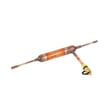
If you are troubleshooting temperature swings or frost, the refrigerator defrost sensor assembly 6615JB2005C is one of the common components involved in the defrost system on this model.
Why it matters
A refrigerator that runs longer to maintain temperature uses more energy and wears out key parts faster. Simple upkeep (coils, seals, airflow) reduces compressor run time and helps your Kenmore Elite refrigerator reach its full life expectancy.
Last updated: January 2026
What size is Kenmore refrigerator model 79576083600?
The Kenmore Elite refrigerator model 79576083600 is a bottom-freezer design in the Kenmore 795.7608 model family. For exact exterior dimensions (width, depth, height), we use the measurements listed for your specific unit in the 79576083600 owner's manual.
How to confirm the exact dimensions on your unit
Because this manual covers multiple closely related models, the most reliable way to confirm size is to match your model and then measure the cabinet.
- Check the model/serial label inside the fresh food compartment (typically on the right-hand side wall).
- Measure width at the widest point of the cabinet (not the handles).
- Measure height from floor to top of cabinet (include hinges if they extend above the top).
- Measure depth two ways: cabinet only, and cabinet plus handles.
- Allow extra space behind the refrigerator for airflow and the water line if you have an ice maker.
Typical size range for this style of Kenmore 795 bottom-freezer refrigerator
Most Kenmore 795 bottom-freezer refrigerators are in this general range (use this for planning only, then confirm with your own measurements):
| Measurement | Typical range |
|---|---|
| Width | About 33 inches |
| Height | About 68 to 70 inches |
| Depth | About 30 to 34 inches (varies with handles) |
Why it matters
Correct dimensions help prevent delivery and installation problems, including door clearance issues, cabinet fit problems, and inadequate airflow that can affect cooling performance.
Installation tip if you have a water/ice connection
If your refrigerator is connected to a water supply, the manual calls out using 1/4-inch outer diameter copper tubing and leaving extra coiled tubing so the refrigerator can be moved for service. See the 79576083600 owner's manual for the full water supply hookup requirements.
Last updated: January 2026
Why is my Kenmore Elite refrigerator leaking water out of the bottom?
On Kenmore Elite refrigerator model 79576083600, water leaking from the bottom is usually caused by a defrost drain that is clogged and overflowing into the cabinet, or a leak in the water supply path for the ice maker and dispenser (tubing, fittings, or valve connections). Use the 79576083600 owner's manual to locate access points and shutoff steps.
Most common causes (and what you will see)
- Clogged defrost drain: water collects under crisper drawers or runs out at the front after a defrost cycle.
- Cracked or loose water tubing: dripping behind the unit or under the fresh food section, often worse when dispensing water or when the ice maker fills.
- Water line connection issue: slow seep at compression nuts/ferrules or the refrigerator water valve connection.
- Drain tube problem: water misses the drain pan and ends up on the floor (check the refrigerator drain tube 5251JA3003D).
- Door not sealing fully: excess frost leads to heavy defrost water that can overwhelm a partially restricted drain.
Quick checks we recommend (10 to 20 minutes)
- Unplug the refrigerator and pull it out enough to inspect the back and floor.
- Check for a clear source:
- Water only after defrost or puddles inside: focus on the defrost drain.
- Water only when using dispenser or ice maker: focus on supply tubing and fittings.
- Inspect the water supply line setup:
- Confirm it is connected to cold water only.
- Look for kinks, rubbing, or wet spots on the line.
- Look at the drain pan area (rear bottom): confirm water is landing in the pan and not missing it.
What to do based on where the water is
| Where you find water | Most likely issue | Best next step |
|---|---|---|
| Under crisper drawers | Defrost drain restriction | Clear the drain path and flush with warm water |
| Back of fridge, near water line | Loose fitting or tubing leak | Tighten fittings, replace damaged tubing |
| Front floor, no dispenser use | Drain tube/pan alignment | Reseat/replace drain tube and verify pan position |
Why it matters
A small leak can turn into floor damage and can also lead to icing, poor cooling, and repeated defrost overflow. The manual also notes that water line installation and plumbing issues (such as water hammer) can contribute to leakage and flooding risk.
Helpful DIY guidance
Last updated: January 2026