Owner’s manual
 Error Codes


Is a top or bottom mount fridge better?
A top-mount (top-freezer) refrigerator is usually the better pick for energy efficiency and simple, reliable cooling, while a bottom-mount like the Amana ABB2524DEW is often better for everyday convenience because fresh food sits at eye level. The “better” choice depends on how you use the refrigerator.
Quick comparison: top-mount vs bottom-mount
| Feature | Top-mount (top-freezer) | Bottom-mount (bottom-freezer) |
|---|---|---|
| Everyday access | Freezer is easiest to reach | Fresh food is easiest to reach |
| Typical efficiency | Often slightly better | Often slightly lower, but varies by model |
| Organization | Simpler layout | Often more drawers/baskets |
| Ergonomics | More bending for fridge items | More bending for freezer items |
When a top-mount is the better choice
- You want the simplest design with fewer convenience features to maintain.
- You open the freezer frequently (frozen meals, ice trays, etc.).
- You prioritize lower operating cost over layout.
- You want strong airflow and straightforward temperature performance.
When a bottom-mount is the better choice (like ABB2524DEW)
- You use the fresh-food section most and want it at a comfortable height.
- You prefer drawer-style freezer storage and easier organization.
- You want less bending for produce, drinks, and leftovers.
- You are willing to trade a small amount of efficiency for convenience.
Why it matters (real-world performance)
Even more than “top vs bottom,” day-to-day efficiency and food preservation depend on setup and habits. Our ABB2524DEW manual emphasizes allowing proper air circulation clearances, avoiding overcrowding (so air can move), and keeping door gaskets clean so the doors seal tightly. Those factors can make a noticeable difference in temperature stability and run time. See the owner's manual for placement, clearance, and energy-saving tips.
Last updated: February 2026
What are the disadvantages of a bottom freezer refrigerator?
A bottom-freezer refrigerator like the Amana ABB2524DEW keeps fresh food at eye level, but it can be less convenient if you use the freezer often because you typically bend and pull out a heavy drawer. The drawer-style freezer can also put more wear on slides, baskets, and door seals over time (see the owner's manual).
Common disadvantages (what you will notice day to day)
- More bending for frozen foods: you reach down for most freezer items.
- Heavier access: a fully loaded pullout drawer can feel heavy and awkward.
- Organization can be trickier: items stack in a deep bin; small packages get buried.
- More cold air loss during browsing: the wide drawer opening can dump cold air quickly.
- Potentially higher repair costs: drawer hardware and seals can wear if the freezer is overloaded or slammed.
Wear points to watch on ABB2524DEW
Bottom-mount designs commonly stress a few areas when the freezer drawer is packed or opened frequently:
| Area | What happens | What to do |
|---|---|---|
| Door gaskets | Gaps let warm air in, causing frost and longer run times | Clean and inspect seals; replace if torn or warped |
| Freezer baskets/rails | Extra weight can crack plastic or bend supports | Avoid overloading; redistribute heavy items |
| Cooling airflow | Overcrowding blocks circulation and warms food | Leave space between packages for airflow |
| Temperature stability | Frequent openings warm the compartment | Minimize open time; keep freezer about 2/3 full |
Tips that reduce the downsides
- Keep “daily-use” frozen items in the top basket so you open the drawer for less time.
- Avoid overloading with warm food; it slows freezing and raises temperatures.
- Leave space between packages so cold air circulates.
- Store hard-to-freeze items (like ice cream) deeper inside the freezer, not on the door area.
- If you notice frost buildup or warm temps, adjust controls one step at a time and allow 24 hours to stabilize.
Why it matters
Most bottom-freezer complaints come down to ergonomics (bending and lifting) and temperature swings from longer door openings. Managing load and airflow helps the ABB2524DEW run more efficiently and keeps freezer burn and frost problems to a minimum.
Last updated: February 2026
What is the best bottom mount fridge?
The “best” bottom-mount refrigerator is the one that fits your kitchen opening, holds temperature steadily, and has the features you will actually use. For an Amana bottom-mount like model ABB2524DEW, we focus first on correct clearances, proper leveling, and reliable cooling and ice maker performance.
What to look for in a “best” bottom-mount refrigerator
- Fit and clearances: Measure the opening and allow airflow space (top and behind) so the compressor and condenser can cool properly.
- Temperature stability: Look for consistent fresh food and freezer temps with minimal swings.
- Freezer usability: Smooth drawer/basket operation and enough basket space for how you store food.
- Serviceability: Common wear parts (fans, control board, ice maker) should be available.
- Noise and efficiency: A clean condenser area and healthy fan motors keep noise down and efficiency up.
Fit matters most (and it prevents problems)
Your refrigerator performs best when it has the right installation clearances and is level. The ABB2524DEW manual calls out measuring carefully and allowing space at the top and behind the machine compartment cover for air circulation; it also notes the refrigerator should be level for appearance and performance. Check the exact guidance in the owner's manual.
Quick fit checklist
| Item to verify | Why it matters | What to do |
|---|---|---|
| Opening width/height/depth | Prevents binding doors and poor airflow | Measure before buying or moving |
| Clearance top/behind | Protects cooling performance | Leave the recommended space |
| Leveling | Helps doors seal and reduces vibration | Adjust leveling legs/rollers |
Features that usually make a bottom-mount “best”
- Strong door sealing: Prevents warm air leaks and frost.
- Good airflow: Evaporator fan and damper control keep temps even.
- Ice maker reliability (if equipped): Consistent fill and harvest.
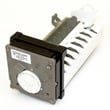
If you are comparing models and want fewer ice issues, prioritize a design with a proven ice maker and easy access to service parts like the refrigerator ice maker D7824706Q.
Why it matters
Bottom-mount refrigerators are popular because the fresh food section sits at eye level, but they only feel “best” when they are installed correctly and maintain stable temperatures. Fit, airflow clearance, and leveling prevent many cooling, noise, and frost complaints.
Last updated: February 2026
What is the average lifespan of an Amana refrigerator?
Most Amana refrigerators last 10 to 15 years. With consistent care (good airflow, clean seals, correct temperatures), it’s common to reach the upper end of that range before major repairs like a control issue or sealed-system problem become more likely. See the care and efficiency guidance in the ABB2524DEW owner's manual.
Typical lifespan and what affects it
A refrigerator’s life is mostly driven by how hard it has to work and how well it can move heat.
- Maintenance habits: keeping the unit clean and organized helps airflow and run time
- Door seal condition: clean gaskets help the doors seal and reduce compressor run time
- Room conditions: heat sources and direct sunlight make the refrigerator work harder
- Loading habits: overcrowding reduces air circulation and can slow cooling
- Component wear: fans, controls, and defrost parts often fail before the cabinet itself
Maintenance that helps you reach 10 to 15 years
The ABB2524DEW manual emphasizes efficiency basics that also support longer life.
- Keep shelves not overcrowded so air can circulate
- Avoid putting large amounts of warm food in at once
- Do not use foil, wax paper, or paper towels as shelf liners (they restrict airflow)
- Keep the freezer about two-thirds full for efficient operation
- Clean door gaskets every 3 months so the doors seal properly
- Level the refrigerator so doors close securely
Common “age-related” symptoms and likely areas
| Symptom | Common cause area | Example part on this model page |
|---|---|---|
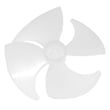
| Warm fresh food section, freezer OK | Airflow or evaporator fan issue | Evaporator motor (WPW10128551) or evaporator fan blade (WP2169142) |
| Frost buildup, warming over time | Defrost system issue | Defrost heater (WP67002493) |
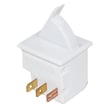
| Lights do not respond to door | Door switch issue | Refrigerator light switch (W11396033) |
| No ice production | Ice maker or water supply issue | Refrigerator ice maker (D7824706Q) |
Why it matters
A refrigerator that runs longer due to restricted airflow or poor door sealing uses more energy and puts extra wear on the compressor and controls. Simple upkeep (especially gasket cleaning and avoiding overcrowding) directly supports stable temperatures and longer service life.
Last updated: February 2026