 Error Codes



How do I tell what model Kenmore dishwasher I have?
To identify your Kenmore dishwasher model, open the door and look for the rating label on the inside edge of the tub or door frame. The label lists the model number and serial number; for this parts page, the model format looks like 58715393100A.
Where to look on the dishwasher
Check these common label locations first:
- Along the left side of the door opening (most common)
- Along the right side of the door opening
- On the top edge of the tub opening (under the countertop lip)
- On the inner door panel edge (near the latch area)
- On the side wall of the tub near the front
What you should write down
Use the label to capture the exact identifiers below (copy them character-for-character):
| Item on label | What it’s used for | Example |
|---|---|---|
| Model number | Matching parts and diagrams | 58715393100A |
| Serial number | Dating the unit and service history | Varies |
| Electrical ratings | Confirming power requirements | Varies |
Why it matters
Kenmore dishwashers often look similar across multiple series, but parts like a pump, heater, or control board can differ by model revision. Using the exact model number helps us match the correct replacement part the first time.
If the label is hard to read
Try these quick fixes before you give up:
- Wipe the label gently with a damp cloth and mild dish soap
- Use a flashlight at an angle to reduce glare
- Take a close-up photo and zoom in
- Copy the model number exactly, including any letters at the end
If you’re troubleshooting after you find the model, our Kenmore he dishwasher error codes guide is a good next step.
Last updated: February 2026
How do I tell if my dishwasher pump is bad?
A bad pump in your Kenmore 58715393100A dishwasher usually shows up as standing water in the tub, weak wash action, or loud grinding or humming during drain or wash. Before replacing parts, we recommend checking for a clog in the filter and drain path first.
Quick symptoms checklist
- Water remains in the bottom after the cycle ends (poor or no draining)
- Dishes come out dirty because spray pressure is weak (poor circulation)
- You hear grinding, rattling, or a loud buzz/hum from the sump area
- The unit drains very slowly or in short bursts
- You notice a burning smell or the motor sounds strained (stop the cycle and shut power off)
What to check first (fast, no-parts steps)
- Cancel/drain the cycle and listen: a steady hum with little or no water movement often points to an obstruction or failing pump.
- Inspect and clean the filter area; debris can block flow and mimic a bad pump.
- Check the drain hose routing for kinks, crushing, or a low loop issue; a restriction can prevent proper draining.
- Look for leaks at the pump seals; a worn O-ring can drip and eventually affect pump performance.
Common causes and the most likely fix
| What you observe | Most common cause | What we typically replace |
|---|---|---|
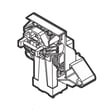
| Standing water, no drain | Clog in drain path or failing drain pump | Drain hose 807117001 or pump A00126401 |
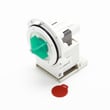
| Loud grinding during drain | Debris in pump impeller area | Pump A00126401 |
| Weak wash spray, dirty dishes | Circulation issue (pump or blockage) | Pump A00126401 or dishwasher filter 5304532206 |
| Water leaking near sump | Seal/O-ring leak | Dishwasher pump o-ring, front 154247001 or dishwasher pump o-ring, rear 154246901 |
Why it matters
A restricted or failing pump can leave dirty water in the tub, reduce cleaning performance, and strain the motor. Catching a clog early can prevent a pump replacement and helps protect the electronic control from repeated drain errors.
Helpful DIY guidance
If your dishwasher is showing an error or beeping pattern along with draining problems, use our Kenmore he dishwasher error codes guide to match the symptom to the most likely failure area.
Last updated: February 2026
Is it worth repairing a Kenmore dishwasher?
Yes, it’s usually worth repairing a Kenmore dishwasher like model 58715393100A when the problem is a single failed part (such as a pump, heater, or door gasket) and the tub and racks are still in good shape. If repairs are becoming frequent or the unit is near the end of its typical lifespan, replacement is the better value.
Quick rule of thumb (repair vs. replace)
We use these practical checkpoints to decide:
- Repair when the issue is isolated (leak, no drain, no heat) and the dishwasher otherwise runs normally
- Repair when the fix is a common wear part (seal, hose, valve, float switch)
- Replace when multiple major symptoms show up at once (won’t fill, won’t wash, won’t drain) and you’ve already repaired it recently
- Replace when the tub is rusted, cracked, or badly leaking from the frame area
- Replace when racks are severely deteriorated and several internal parts also need work
Common repairs that are often worth it on 58715393100A
These are frequent, straightforward fixes that can restore performance:
- Leaks at the door: replace the door gasket 809006501
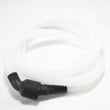
- Not draining or slow draining: inspect/replace the drain hose 807117001
- Poor washing or no circulation: consider the pump A00126401
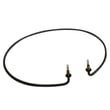
- No heat or poor drying: check the heater 154825001
- Overfilling or not filling correctly: test the dishwasher water inlet valve 154637401
Cost-to-value comparison
Use this table to weigh the repair decision quickly.
| Situation | What it usually means | Best next step |
|---|---|---|
| One clear failure (leak, no drain, no heat) | Single component likely failed | Repair with the correct part |
| Repeated breakdowns in a short period | Multiple components aging | Consider replacement |
| Control issues plus other symptoms | Higher complexity and cost | Price out repair vs. replace |
| Tub or structural leak | Not a practical repair | Replace |
Why it matters
A targeted repair keeps your kitchen functional with less disruption than replacing the dishwasher, and it often restores cleaning and drying performance quickly. The key is avoiding “stacked” repairs where several high-impact parts fail close together.
Helpful DIY guidance
If you’re deciding based on symptoms (not just age), our troubleshooting content helps you pinpoint the most likely failure:
Last updated: February 2026
What size is a Kenmore dishwasher model 58715393100A?
The Kenmore dishwasher model 58715393100A is a standard built-in dishwasher size: about 24 inches wide, 35 7/8 inches high, and 26 3/16 inches deep. For a guaranteed fit, we match those dimensions to your cabinet opening and leveling range.
What to measure for a correct fit
Measure the opening before you replace the dishwasher or plan an install:
- Opening width (inside cabinet to inside cabinet)
- Opening height (floor to underside of countertop)
- Opening depth (back wall to front of cabinet frame)
- Flooring changes (tile, transitions, added underlayment)
- Door swing clearance (handles, adjacent drawers, and corners)
Quick sizing guide
| Measurement | What you’re checking | Typical target for this model type |
|---|---|---|
| Width | Cabinet opening side-to-side | 24-inch class opening |
| Height | Countertop clearance and leveling legs | Up to 35 7/8 inches installed height |
| Depth | How far the unit sits back and door clearance | Up to 26 3/16 inches overall depth |
Why it matters
Correct sizing prevents a dishwasher that will not slide in fully, a door that rubs cabinets, and tub stress from improper leveling that can contribute to leaks and noise.
While you’re measuring: prevent common leak and drain issues
If you pull the unit forward to measure, it’s smart to inspect wear items that affect fit and performance:
- Check the lower door seal for flattening or tears
- Confirm the drain line is not kinked or crushed
- Look for moisture at the inlet connection and under the toe panel
If you’re seeing drips at the bottom of the door, the door gasket 809006501 is the correct lower door seal option listed for this model.
For install stability tips that help maintain proper alignment, use how to anchor a dishwasher to the floor video.
Last updated: February 2026





