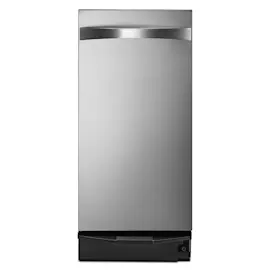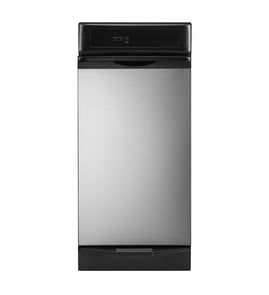

Where is the model number on a Kenmore trash compactor?
On a Kenmore trash compactor like model 6651398580, the model number is usually on a rating label inside the cabinet opening. We most often see it on the frame behind the drawer (with the drawer pulled out) or along the door opening near the lower front edge.
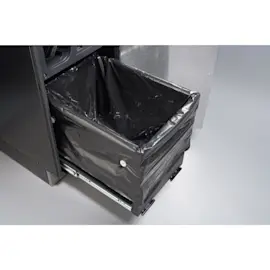
- Pull the drawer out and look on the cabinet frame just inside the opening
- Check the left and right side walls of the opening near the front
- Look behind the drawer front area (label may face inward)
- Check near the bottom front of the unit, close to the kick plate
Most Kenmore compactors use a small sticker or metal tag that lists:
- Model number (for example, 6651398580)
- Serial number
- Electrical rating (volts/amps)
- Sometimes a manufacturing code
A stuck or difficult drawer can keep you from seeing the label. Use this guide to free it up safely: troubleshooting a stuck trash compactor drawer
The exact model number ensures we match the correct Kenmore parts and diagrams for your compactor, especially for fit-critical items like a switch, latch, or drawer slide.
| What you find | What it means | What to do |
|---|---|---|
| A short number on a part | Part number | Keep it for ordering that part, but still locate the model label |
| A long code with letters/numbers | Serial number | Use it with the model number for age and production info |
| “665…” format | Kenmore model prefix | Use the full number exactly as printed |
Last updated: February 2026
What is a common problem with trash compactors?
A very common problem on Kenmore trash compactors like model 6651398580 is a drawer that gets stuck or becomes hard to open and close. This usually happens when debris blocks the drawer tracks, the bag is overfilled, or the drawer latch and slides are worn or misaligned.
- Overfilled bag or bulky items: Remove the drawer and redistribute the load.
- Debris in the track area: Look for glass, labels, or food scraps along the rails and bottom pan.
- Drawer latch not catching or releasing: Inspect the latch for wear or looseness.
- Worn drawer slides: If the drawer binds, sags, or feels rough, the slides can be the culprit.
- Ram interference: If the ram is not fully up, the drawer may not move freely.
- Unplug the compactor.
- Pull the drawer out and check for anything wedged under the drawer or near the ram.
- Clean the rails and the bottom area; wipe away sticky residue.
- Check that the drawer closes squarely and the latch engages smoothly.
- If the drawer still binds, inspect the slides and latch hardware for wear.
| Symptom | Likely area | Example part for this model |
|---|---|---|
| Drawer won’t stay closed | Latch mechanism | Kenmore elite trash compactor drawer latch assembly 775665 |
| Drawer drags or binds | Drawer slides | Slide WP9870975 |
| Drawer hard to pull open | Handle or grip point | Trash compactor container handle WP608732 |
A sticking drawer is more than an annoyance; it can prevent the safety interlock from engaging, stop a cycle from starting, or cause extra strain on the drive system. Keeping the drawer aligned and moving smoothly helps the compactor run reliably and reduces wear on switches, gears, and the motor.
For step-by-step diagnosis, use troubleshooting a stuck trash compactor drawer.
Last updated: February 2026
What is the life expectancy of a trash compactor?
A Kenmore trash compactor like model 6651398580 typically lasts 10 to 15 years with normal household use. Lifespan depends most on how often you run compaction cycles, how well the drawer and ram stay aligned, and whether worn switches, slides, or drive parts are replaced promptly.
Most residential trash compactors fall into a predictable range:
| Use pattern | Typical life expectancy | What usually wears first |
|---|---|---|
| Light (few cycles/week) | 12 to 15 years | Drawer slides, switches, latch parts |
| Average (daily) | 10 to 12 years | Drive components, switches, bearings |
| Heavy (multiple cycles/day) | 7 to 10 years | Motor/drive chain, gears, limit switch |
These are the most common causes of early failure in compactors:
- Overloading the drawer or compacting hard items (glass, metal, large bones)
- Running repeated cycles back-to-back without letting the motor cool
- A sticky or misaligned drawer that strains the drive system
- Odor and liquid leaks that corrode wiring, switches, and bearings
- Ignoring “won’t stop running” or “ram won’t move” symptoms (they often point to a failing limit switch or drive issue)
When the compactor still has good structure but operation is inconsistent, these model-compatible parts are common fixes:
- Trash compactor top limit and directional switch WP777811 (helps the unit stop and reverse correctly)
- Kenmore elite trash compactor drive chain 780477 (restores ram movement when the motor runs but the ram does not)
- Slide W11722978 (helps a dragging drawer open/close smoothly and reduces strain)
A trash compactor’s motor and drive system are designed for smooth, aligned movement. When the drawer binds or the ram does not stop at the right point, the compactor keeps working against resistance, which accelerates wear on the motor, chain, gears, and switches.
Last updated: February 2026
Why can't I press the trash compactor button?
If you can’t press the button on your Kenmore trash compactor model 6651398580, the drawer usually is not fully closed or something is blocking the drawer from seating. When the drawer does not close completely, the safety interlock prevents the start button from working.
- Pull the drawer out and remove any trash or debris that could be wedged behind it.
- Re-seat the bag and bag carrier so nothing is bulging above the rim.
- Push the drawer in firmly until it fully latches.
- Check the drawer front and kick area for anything rubbing or catching.
- If the drawer feels stiff or misaligned, inspect the slides for binding.
If the drawer closes correctly and the button still won’t actuate or start a cycle, a switch or latch issue is common.
| What you notice | Likely area to inspect | Example part for this model |
|---|---|---|
| Button presses but nothing happens | On/off switch or interlock circuit | Switch 675382 |
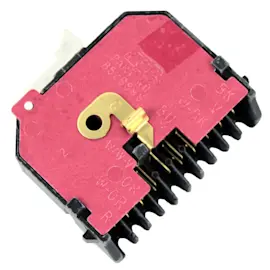
| Unit runs oddly, stops early, or won’t change direction | Limit/directional switch | Trash compactor top limit and directional switch WP777811 |
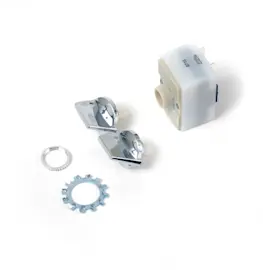
| Drawer won’t stay shut or won’t “click” closed | Drawer latch mechanism | Kenmore elite trash compactor drawer latch assembly 775665 |
Trash compactors use a door or drawer safety switch so the ram cannot move with the drawer open. A small obstruction, a worn latch, or a failing switch can make the button feel “dead” even though power is present.
For step-by-step troubleshooting paths, use: trash compactor won't start and troubleshooting a stuck trash compactor drawer.
Last updated: February 2026
How much does it cost to fix a trash compactor?
For Kenmore trash compactor model 6651398580, most repairs cost $100 to $400 for parts and labor. Bigger drive-system repairs (motor, chain, gear kit) typically run $250 to $600+, mainly based on diagnosis time and which component failed.
Repair cost is usually a mix of troubleshooting time, labor access (built-in units take longer), and the failed part.
- Service call and diagnosis fee (often charged before parts are installed)
- Labor time to pull the compactor and access the drive or switches
- Part type (switches cost less than motors and gear kits)
- Secondary damage (stripped gears, worn bearings, broken latch)
- DIY vs. pro repair (DIY saves labor but still requires safe electrical handling)
These are common totals for trash compactors like the Kenmore 6651398580.
| Repair type | Common symptom | Typical total cost (parts + labor) |
|---|---|---|
| Power or limit switch replacement | Won’t start, stops mid-cycle | $100 to $250 |
| Drawer latch or slide repair | Drawer won’t close, hard to open | $150 to $350 |
| Drive system repair (motor, chain, gears) | Motor runs but ram doesn’t move | $250 to $600+ |
If your symptoms match, these parts are frequent fixes for the 6651398580.
- Switch 675382 (power on/off problems)
- Trash compactor top limit and directional switch WP777811 (ram position sensing, direction control)
- Kenmore elite trash compactor drive chain 780477 (ram not moving, slipping)
- Motor W10439651 (no drive power, weak or stalled compaction)
- Kenmore elite trash compactor drawer latch assembly 775665 (won’t latch, won’t start due to safety interlock)
A trash compactor can look “dead” from a simple switch or drawer-interlock issue, while a worn chain or gear problem can quickly become a higher-cost drive repair. Matching the symptom to the right system prevents unnecessary part replacement.
For symptom-based troubleshooting, use trash compactor won't start or trash compactor motor runs but the ram doesn't move.
Last updated: February 2026