 Installation guide
 Owner’s manual
 Error Codes
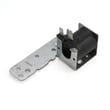


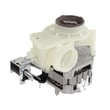


How to check GE dishwasher model number?
On your GE dishwasher model GSD2100V55WW, the model number is printed on the rating label located on the tub wall just inside the door. Open the door fully and look along the inside edge of the tub opening for the label that lists both the model and serial numbers (use the GSD2100V55WW owner's manual as a locator reference).
- Open the dishwasher door and keep it fully open.
- Look on the tub wall just inside the door opening.
- Check the left and right inner edges of the tub opening if you do not see it immediately.
- Find the label that shows Model and Serial.
- Write the model number exactly as shown (letters and numbers).
Having the correct model number lets us match the right GE dishwasher parts and diagrams for your unit, including common replacements like the dishwasher door switch WD21X10261 or the dishwasher drain hose WD24X10014.
| You need | Why it matters | Example for this unit |
|---|---|---|
| Model number | Ensures correct parts fit | GSD2100V55WW |
| Serial number | Helps identify production details | Printed on same label |
GE often uses similar-looking designs across multiple dishwashers, and small model-number differences can change the correct control module, timer, racks, or drain components. Using the rating label prevents ordering the wrong part and saves repair time.
Last updated: February 2026
What is the most common problem with GE dishwashers?
The most common problem we see on GE dishwashers like model GSD2100V55WW is a drain or “won’t run” complaint caused by a clog, a drain component issue, or a simple power/control interruption. Start with the quick checks in the GSD2100V55WW owner's manual before replacing parts.
- Not draining: standing water in the tub at end of cycle, gurgling, slow drain
- Won’t start / won’t run: breaker tripped, wall switch off, control timing out between button presses
- Poor cleaning: spray arm not turning, low water flow, heavy soil buildup
- Suds/overflow: wrong detergent (hand soap), too much detergent
- Film/odor: hard water minerals, iron deposits, or a dirty interior
- Reset power: check the breaker or fuse; many “dead” dishwashers are a tripped circuit.
- Check for a wall switch: some installs feed dishwasher power through a nearby switch (often by the disposer).
- Use the right detergent: automatic dishwasher detergent only; wrong soap creates suds and can stop washing/draining.
- Clean and de-odorize: run a cleaner cycle using citric acid or dishwasher cleaner to break up mineral film.
- Confirm the door is closing fully: a misaligned latch or switch can prevent starting.
| Symptom | Common cause | Part to consider for GSD2100V55WW |
|---|---|---|
| Hums but won’t drain | drain valve/solenoid not actuating | GE dishwasher drain solenoid assembly WD21X10268 |
| Won’t start even with power | door switch not closing | Dishwasher door switch WD21X10261 |
| Weak wash, poor circulation | pump/motor not moving water | GE dishwasher pump and motor assembly WD26X10051 |
Drain and start problems often look “electronic,” but they are frequently caused by power supply, detergent/suds, or a single failed component. Fixing the root cause prevents repeat clogs, leaks, and incomplete cycles.
For display or beep diagnostics on GE models, use the GE dishwasher error codes reference to match symptoms to likely causes.
Last updated: February 2026
How to remove the filter and spinner on GE dishwasher?
On the GE GSD2100V55WW dishwasher, we remove the lower rack first, then lift out the sump cover area to access and remove the coarse filter screen and the spray arm (spinner). This gives you access for cleaning clogs that can cause poor washing or draining.
- Turn off power at the breaker; let the unit cool at least 20 minutes after a cycle.
- Pull out the lower rack to clear the tub bottom.
- At the tub bottom, remove the plastic sump cover (it typically lifts out after releasing the retaining tabs).
- Lift out the coarse filter screen beneath the cover.
- Remove the spray arm (spinner) by turning the retaining nut or cap counterclockwise (if equipped), then lift the arm straight up.
- Rinse the filter and spray arm under warm water; clear spray holes with a toothpick if needed.
| Item | What to look for | What it affects |
|---|---|---|
| Coarse filter screen | Food, labels, glass bits | Cleaning performance, pump protection |
| Spray arm (spinner) | Clogged jets, cracks, wobble | Spray pressure and coverage |
| Sump area | Debris around intake | Circulation and draining |
If the dishwasher still is not cleaning well or is leaving debris behind, these parts commonly relate to low spray or poor circulation:
- Dishwasher spray arm WD22X10055 (damaged or stripped hub)
- Dishwasher circulation pump WD19X10020 (weak circulation)
- GE dishwasher pump and motor assembly WD26X10051 (motor or pump failure)
A clogged filter or spray arm reduces water flow, which leads to dirty dishes, detergent left in the cup, and sometimes draining complaints. Regular cleaning keeps the wash system working efficiently.
For diagrams and model-specific component locations, follow the GSD2100V55WW owner’s manual.
Last updated: February 2026
Can I replace dishwasher parts myself?
Yes, for the GE GSD2100V55WW dishwasher, we can replace many common parts ourselves if we shut off power and water first and follow the step-by-step procedures in the GSD2100V55WW owner’s manual and GSD2100V55WW installation guide. For electrical diagnostics or hard-wired connections, we use a qualified technician.
These repairs are typically straightforward with basic hand tools:
- Dishracks and rack-related hardware (fit and slide issues)
- Spray arm and wash components (clogs, poor cleaning)
- Drain hose (leaks, kinks, restrictions)
- Door switch (won’t start when door is closed)
- Drain solenoid assembly (drain valve actuation problems)
Common DIY replacement parts for this model
| Symptom | Part to check | Example part for GSD2100V55WW |
|---|---|---|
| Not draining or drains intermittently | Drain path and drain actuator components | GE dishwasher drain solenoid assembly WD21X10268 |
| Leaking at the back or under unit | Drain hose and clamps | Dishwasher drain hose WD24X10014 |
| Poor wash performance | Spray arm and circulation components | Dishwasher spray arm WD22X10055 |
The manual calls out shock risk and directs disconnecting power before maintenance. We also avoid touching hot components right after a cycle.
- Turn off the dishwasher’s power at the breaker (or wall switch if your setup uses one)
- Shut off the water supply valve under the sink
- Let the heating element cool before reaching into the tub
- Pull the unit only after confirming slack in the drain hose and wiring
- Keep small parts (clips, posts) away from children
If the dishwasher door hits the tub or racks roll by themselves, leveling is a DIY fix. The installation instructions describe adjusting the four legs and checking that the door closes without interference.
- Adjust the 4 leveling legs until all contact the floor
- Confirm the door closes without rubbing the tub sides
- Pull racks halfway out; they should stay put
- Re-level if racks roll or the door shifts
DIY replacement can restore cleaning, draining, and safe operation quickly, but correct grounding, wiring, and leak prevention are critical. Using the correct procedure helps prevent repeat failures and unnecessary service calls.
Last updated: February 2026





