Error Codes



How to find model number on Viking Stove?
On a Viking VDSC365 range, the model number is typically on a rating label on the range frame, most often around the oven door opening or on a side frame area you can see after opening the door. If your VDSC365 has open burners with removable burner bowls, you may also find the label under the left rear grate and burner bowl. Use the full model number from the label when shopping parts.
Check these common label locations first:
- Open the oven door and look along the front frame (left or right side) around the door opening
- Check the lower drawer area (if equipped) and the frame behind it
- Look on a side frame edge that becomes visible when the door is open
- For open-burner tops: remove the left rear grate and lift out the left rear burner bowl; look down in the opening
Record the information exactly as shown on the label:
- Model number (example: VDSC365)
- Any suffix letters or extra digits after the base model
- Serial number (helpful for production variations)
- Gas type notes (natural gas vs LP) if listed
| Label item | Why it matters |
|---|---|
| Model number | Ensures diagrams and parts lists match your exact range |
| Suffix/version | Can change knobs, valves, igniters, and trim fit |
| Serial number | Helps confirm the correct revision when ordering |
Viking ranges often have multiple versions that look similar. Using the exact model number from the rating label helps us match the correct burner components, oven controls, and hardware for your VDSC365.
If you are replacing a missing or damaged control knob after confirming the model, a common related part category is a cooktop knob such as the Viking range cooktop burner knob PA010039.
Last updated: January 2026
Is Viking a high-end brand?
Yes. For the Viking VDSC365 dual-fuel range, Viking is generally considered a high-end (premium) appliance brand; these ranges are typically positioned as “pro-style” cooking products with higher build quality, performance-focused features, and higher replacement-part costs than many mainstream brands.
High-end is less about one single feature and more about the overall category and ownership experience.
Common high-end signals you’ll see with Viking ranges like the VDSC365:
- Pro-style design and heavier-duty components
- Higher heat output and stronger simmer control (varies by configuration)
- More expensive OEM replacement parts and trim pieces
- More complex gas and ignition systems than basic ranges
- Longer service life expectations when properly maintained
Because the VDSC365 is a premium range, repairs often involve higher-cost components and more labor time.
Here are a few examples of parts that can affect performance and cost:
- Viking range gas valve PB010004 (controls gas flow to a burner or circuit)
- Viking range regulator PA070003 (helps maintain correct gas pressure)
- Viking range cooktop burner cap PA080016 (affects flame shape and even heating)
- Viking range cooktop burner igniter switch PA020015 (common cause of clicking or no-ignite symptoms)
| Category | Premium/pro-style (like Viking VDSC365) | Mainstream range |
|---|---|---|
| Parts cost | Typically higher | Typically lower |
| Complexity | More components, tighter tolerances | Simpler systems |
| Service needs | More benefit from model-specific parts | More interchangeable parts |
| Ownership | Performance-focused | Value and convenience-focused |
Knowing Viking is a high-end brand helps set expectations: using model-correct parts, keeping burners clean, and addressing ignition or gas-pressure issues early can prevent bigger performance problems later.
Last updated: January 2026
Is Wolf or Viking more expensive?
Wolf is typically more expensive than Viking when you compare similar pro-style ranges; for a Viking VDSC365 dual-fuel range, pricing usually lands below a comparable Wolf model, although exact cost depends on size, burner configuration, finishes, and dealer promotions.
- Brand positioning: Wolf is often priced as a premium tier within the pro-style category.
- Feature packages: Differences in burner output, oven modes, and controls can shift pricing.
- Build and trim options: Stainless, custom colors, and handle styles can add cost.
- Service and distribution: Dealer networks and included services vary by region.
- Model-to-model matching: A fair comparison is dual-fuel vs dual-fuel (or gas vs gas) at the same width.
| What you compare | Viking (example: VDSC365) | Wolf (comparable class) |
|---|---|---|
| Upfront price | Usually lower | Usually higher |
| Options and upgrades | Varies by configuration | Varies by configuration |
| Best way to compare | Match fuel type and width | Match fuel type and width |
If you are budgeting for a pro-style range, comparing Wolf vs Viking at the same size and fuel type helps you avoid overpaying for features you will not use, and it keeps your parts and repair planning aligned with the exact model you own.
When you are maintaining your Viking VDSC365, small wear items can affect day-to-day feel and operation. For example, if a control knob is cracked, loose, or missing, replacing the correct OEM-style knob can restore safe, precise control.
- If the thermostat knob is damaged, check Viking range range thermostat knob PB010129.
- If a surface burner knob is worn or stripped, compare your knob style to Viking range cooktop burner knob PA010039.
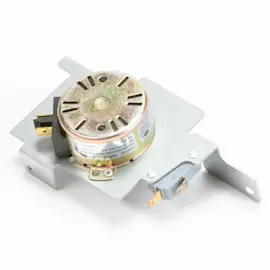
- If the oven door is not latching correctly during certain functions, a failing latch motor may be involved; see Viking range door latch motor PE050053.
Last updated: January 2026
What are common problems with Viking ranges?
On the Viking VDSC365 dual-fuel range, the most common problems we see are cooktop burner ignition troubles (clicking or no spark), weak or uneven burner flames, oven temperature control issues, and normal wear items like knobs, door gasket sealing, and door hardware. Many issues start with cleaning and inspection before parts replacement.
- Burner clicks but won’t light: dirty burner ports/cap, wet igniter area, or a failing igniter switch
- Burner lights but flame is weak/uneven: clogged orifice, mis-seated cap, or gas pressure/regulator issue
- Oven runs hot/cold or won’t hold temp: thermostat/control thermostat problem
- Knob is cracked/loose or won’t turn smoothly: worn knob or damaged shaft interface
- Door won’t latch (self-clean models): latch motor issue
- Heat leaks around oven door: worn door gasket or bumper
If troubleshooting points to a component, these model-specific parts are commonly involved:
- Cooktop burner igniter switch PA020015
- Gas valve PB010004
- Regulator PA070003
- Range oven control thermostat PB010035
- Gasket PB070041
- Turn off power at the breaker; for gas, close the shutoff valve if you’ll be disassembling burner parts.
- Remove grates and caps; clean burner ports and dry everything fully.
- Confirm caps are seated correctly and the burner head is aligned.
- If all burners click continuously, suspect a stuck/wet igniter switch circuit.
- For oven temperature complaints, verify with an oven thermometer over multiple cycles.
| Symptom | Most likely area | Example model-specific part |
|---|---|---|
| Constant clicking | Ignition switch circuit | PA020015 |
| Weak flame on multiple burners | Gas supply/regulation | PA070003 |
| No gas flow to burner | Gas valve | PB010004 |
| Oven temperature swings | Oven thermostat/control | PB010035 |
| Door not sealing | Door gasket/bumper | PB070041 |
A dual-fuel range like the Viking VDSC365 combines gas burner performance with electric oven controls; small issues (moisture in ignition, clogged ports, a drifting thermostat) can quickly show up as lighting failures, uneven cooking, or temperature instability.
Last updated: January 2026
What is the life expectancy of a Viking oven?
A Viking oven in a range like model VDSC365 typically lasts 15 to 20 years. With consistent cleaning, correct burner setup, and timely replacement of wear parts, many owners get longer service life from professional-style Viking cooking appliances.
- Heat and grease exposure: heavy broiling and frequent high-heat cooking shortens component life.
- Cleaning habits: baked-on spills and blocked airflow raise operating temperatures.
- Door seal condition: a leaking gasket makes the oven work harder and can cause uneven baking.
- Gas quality and flame stability: poor combustion can stress valves and ignition components.
- Electrical health: loose or overheated wiring can damage controls and switches.
If you want your VDSC365 oven to reach the high end of its lifespan range, we recommend:
- Keep the oven cavity and vents clean; avoid letting grease build up.
- Inspect the door seal for gaps, tears, or hardening.
- Address temperature swings early (calibration issues often become control issues).
- Keep burner ports and caps seated correctly after cleaning.
- Fix small problems before they cascade into control or gas-system failures.
These parts do not set the lifespan by themselves, but they often determine whether the oven stays reliable and efficient:
| Symptom | Likely area to check | Example compatible part for VDSC365 |
|---|---|---|
| Oven won’t hold temp or runs hot/cold | Temperature control | Range oven control thermostat PB010035 |
| Heat leaks, longer preheat, uneven baking | Door sealing | Gasket PB070041 |
| Self-clean door won’t lock/unlock | Door latch system | Door latch motor PE050053 |
A range that is “still heating” can still waste energy, cook unevenly, and overwork expensive components. Basic upkeep and replacing a failing thermostat, gasket, or latch motor at the right time can extend the useful life of your Viking range and improve cooking results.
Last updated: January 2026
Why won't my Viking oven heat up?
If your Viking range model VDSC365 will not heat, the most common causes are a loss of power to the oven section, a failed temperature control, or an ignition or gas-supply problem (depending on whether your oven uses electric heat or a gas bake system). Start with basic power and control checks, then move to component testing.
- Confirm the oven is not in a timed-delay or Sabbath-type mode (if equipped).
- Verify the display and oven light work; a dead control panel often points to a power issue.
- Try Bake and Broil; if neither works, suspect a control or power problem.
- If the cooktop works but the oven does not, focus on oven controls and oven-specific wiring.
- If the oven starts but never reaches temperature, suspect temperature sensing or control.
We cannot identify the exact failed component without testing, but these model-compatible parts are commonly involved when an oven will not heat:
- Range oven control thermostat PB010035
- Range thermostat knob PB010129 (if the knob is cracked, slipping, or not turning the thermostat shaft correctly)
| Part | What it affects | Typical symptom |
|---|---|---|
| PB010035 | Regulates oven temperature and calls for heat | No heat or unstable temperature |
| PB010129 | Lets you set temperature by turning the control | Temperature setting does not “take” |
- Shut off power at the breaker before removing panels or testing wiring.
- Check for a tripped breaker or blown house fuse (dual-fuel ranges can still “look on” with partial power).
- Inspect the thermostat knob fit; if it spins freely, it may not be engaging the control shaft.
- If you have a multimeter, test suspect components and wiring connections; use how to use a multimeter to test electrical parts video as a refresher.
- If your oven uses a gas bake system and you do not hear ignition or smell gas, stop and have a technician check the ignition and gas valve circuit.
An oven that will not heat is often a control, power, or ignition issue. Checking the simple items first helps avoid unnecessary part replacement and gets your VDSC365 back to safe, reliable baking temperatures faster.
Last updated: January 2026