Installation guide
 Error Codes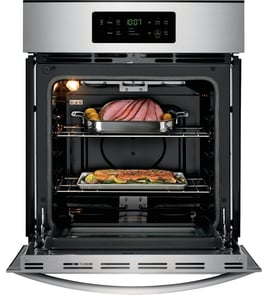




Does Whirlpool make wall ovens?
Yes. Whirlpool makes wall ovens, including electric wall ovens like model RBS305PDQ12. Whirlpool wall ovens are built for recessed cabinet installation and require proper electrical grounding and a correctly sized cabinet cutout for safe, reliable operation (details are in the installation guide).
For Whirlpool RBS305PDQ12, “wall oven” means the oven is designed to be installed into a cabinet opening (not used as a freestanding range). Key installation expectations include:
- A solid, level support surface that is flush with the bottom of the cabinet cutout
- A complete enclosure around the recessed portion of the oven
- Placement away from strong drafts (windows, doors, heating vents)
- Electrical grounding and a junction box location that matches the installation method
We see the best results when these items are confirmed before the oven is set in place:
| Item to confirm | Typical requirement for this Whirlpool wall oven type | Where to verify |
|---|---|---|
| Cabinet cutout | Use the specified opening dimensions and minimum clearances | Installation guide |
| Junction box location | Usually within a few inches below the support surface for wall-cabinet installs; undercounter installs often use an adjacent cabinet | Installation guide |
| Wiring method | 4-wire connection is common in many homes; follow local code requirements | Installation guide |
| Grounding | Electrical ground is required | Installation guide |
Wall ovens are heavy, high-heat, high-voltage appliances. Correct cabinet dimensions, secure mounting, and proper electrical connections help prevent overheating, poor baking performance, nuisance shutdowns, and unsafe wiring conditions.
Last updated: February 2026
How long do Whirlpool wall ovens last?
Whirlpool wall ovens like model RBS305PDQ12 typically last 15 years with normal household use and basic care. Keeping the oven clean, avoiding slamming the door, and fixing heating or temperature issues early helps many units reach 15 to 20 years.
A wall oven’s life is mostly driven by heat stress on electrical parts and how hard it’s used.
- Usage frequency: daily baking and high-heat broiling shortens life faster than occasional use
- Heat management: blocked vents and heavy grease buildup trap heat and stress wiring
- Door seal condition: a poor seal makes the oven run longer to hold temperature
- Power quality and wiring: loose connections can overheat terminals and controls
- Timely repairs: replacing a failing sensor or thermostat prevents bigger damage
Most Whirlpool electric wall ovens do not fail all at once; they show repeat symptoms.
| Symptom | Common cause | Typical fix path |
|---|---|---|
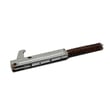
| Oven temperature swings or won’t hold set temp | Temperature sensing problem | Test/replace wall oven temperature sensor WPW10131825 |
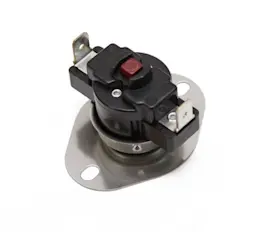
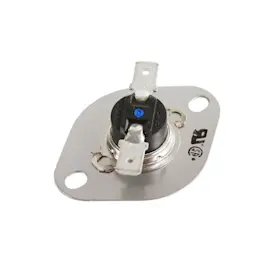
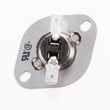
| Oven shuts off or overheats | Safety limit opening | Check/replace range high-limit thermostat WP9759243 |
| No power or intermittent power | Loose/burned connection | Inspect/replace terminal block WP8203546 and wiring |
- Wipe spills after the oven cools; baked-on grease holds heat and odors
- Keep the door closing smoothly; do not use the door as a shelf
- If you notice longer preheat times, diagnose early (sensor, element, airflow)
- Use the correct bulb and avoid touching glass with bare fingers when replacing
- Follow the cabinet and electrical requirements in the installation guide to prevent overheating and wiring issues
A wall oven that is running hot, running long, or cycling erratically uses more energy and can overheat components like the sensor circuit, high-limit thermostat, and terminal connections. Catching those symptoms early is the easiest way to get the full expected lifespan.
Last updated: February 2026
Why did my Whirlpool wall oven stop working?
If your Whirlpool RBS305PDQ12 wall oven stopped working, the most common causes are a power supply problem (tripped breaker, blown fuse, loose junction-box connection) or a failed safety/control component such as the temperature sensor, high-limit thermostat, or terminal block. Use the checks in the installation guide to confirm power and wiring first.
- Verify the oven’s circuit breaker is ON and fully reset (switch OFF then ON).
- Check for a house fuse issue if your home uses fuses.
- If the display is blank, confirm the oven is getting 240V at the junction box (a multimeter test).
- Look for a “PF” (power failure) indication after restoring power; that points to an interruption.
- If the oven was recently installed or moved, recheck that the junction box location and cable routing are correct.
When power is confirmed, these parts are frequent culprits for “dead” or “won’t heat” symptoms:
| Symptom | Most likely area | What it affects |
|---|---|---|
| No display, no response | Power connection, terminal block | Entire oven power feed |
| Heats erratically, shuts off | High-limit thermostat | Safety shutoff on overheat |
| Temperature way off, won’t regulate | Oven temperature sensor | Temperature feedback to control |
- Terminal block WP8203546 (burned/loose connections can kill power to the oven)
- Range high-limit thermostat WP9759243 (can open if overheating occurs)
- Wall oven temperature sensor WPW10131825 (bad sensor can prevent proper heating and control)
A wall oven can appear “broken” when it is actually not receiving stable power. Confirming the breaker, fuse, and junction-box wiring first prevents unnecessary part replacement and helps you avoid repeat failures caused by a loose or overheated connection.
Last updated: February 2026