Owner’s manual
 View engine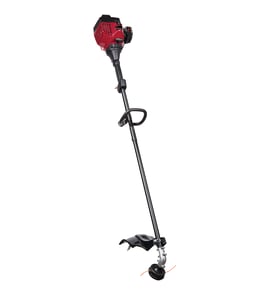


Are string trimmer heads interchangeable?
Most string trimmer heads are not automatically interchangeable across brands and models; on the Craftsman 917773423 high wheel line trimmer, we recommend using the head style and line setup shown in the 917773423 owner's manual to avoid vibration, poor cutting, or unsafe operation.
What “interchangeable” really means
A trimmer head can only swap over cleanly when the mounting and operating requirements match.
- The head must fit the shaft/arbor mounting (bolt pattern, thread size, direction)
- The head must be designed for line trimmer use only (no blades, wire, or flails)
- The head must support the correct line diameter and length
- The head must stay balanced so the machine does not vibrate abnormally
- Guards and shields must remain installed and compatible
What we know for model 917773423
This Craftsman high wheel line trimmer is designed for line only. The manual specifies:
- Line diameter: 0.155 inch
- Cut line length: 18-3/4 inches per piece
- Replace line when worn to half its original length
- Keep installed lines within 1 inch of each other to maintain balance
If you install a different head that cannot run 0.155-inch line correctly, you can get frequent line breakage, poor trimming performance, or excessive vibration.
Quick compatibility checklist
Use this as a go or no-go check before buying a different head.
| Check | Must match | Why |
|---|---|---|
| Mounting | Arbor/bolt/thread and rotation | Prevents loosening and damage |
| Line spec | 0.155-inch line capability | Ensures proper feed and cutting |
| Balance | Even line lengths, stable carrier | Reduces vibration |
| Safety | Works with guards/shields installed | Lowers injury risk |
Why it matters
A “close enough” head fit can still create vibration (a common warning sign of trouble) and can accelerate wear on the trimmer head components. Staying with the correct line-only setup also helps keep the unit operating as designed.
Last updated: February 2026
How do you reload a trimmer spool?
On the Craftsman high wheel line trimmer model 917773423, you typically do not reload a spool; you replace the pre-cut trimmer lines by removing the worn line from the carrier plate, folding a new line, and seating it under the retainer clip. Follow the steps in the 917773423 owner's manual.
How to replace the trimmer line (no spool winding)
- Stop the engine and let all moving parts fully stop.
- Disconnect the spark plug wire and keep it away from the plug.
- Remove the worn trimmer line from the line carrier plate.
- Cut new trimmer line to 18-3/4 inches, then fold it in half.
- Insert the folded end through the carrier plate opening to the back side of the retainer clip.
- Pull the line outward until it is fully seated under the retainer clip; repeat for the other side.
- Confirm both lines are the same length (within about 1 inch) to reduce vibration.
Correct line type and safety notes
Use only the specified trimmer line for this trimmer head. Do not substitute wire, rope, or similar materials.
| Item | What to use | Why |
|---|---|---|
| Line length | 18-3/4 in (each piece) | Fits the carrier plate correctly |
| Line matching | Both sides same length | Keeps the head balanced |
| Material | Trimmer line only | Prevents dangerous break-off |
If the line will not stay in place
These issues commonly cause the line to slip out or break quickly:
- Line not fully seated under the retainer clip
- Incorrect line diameter for the carrier plate openings
- Retainer clip damage (line will not “lock”)
- Uneven line lengths causing excess vibration
If you are rebuilding the cutting head, the high-wheel line trimmer spindle housing assembly 532174543 is the model-matched cutting head assembly listed for 917773423.
Why it matters
Correctly installed, equal-length trimmer lines help the trimmer cut cleanly and reduce vibration that can loosen hardware and wear the trimmer head faster.
Last updated: February 2026
What is the difference between a 2.4 and 2.7 trimmer line?
On the Craftsman 917773423 high wheel line trimmer, the difference between 2.4 mm and 2.7 mm line is diameter: 2.7 mm is thicker, so it lasts longer and hits harder in heavier weeds; 2.4 mm is thinner, so it’s better for lighter trimming. This model is designed for 0.155-inch line (about 3.9 mm), so both 2.4 mm and 2.7 mm are too small.
What your 917773423 is designed to use
Our manual spec for this trimmer calls for:
- Line diameter: 0.155 in
- Cut length: 18-3/4 in per piece
- Replacement timing: replace when worn to about half the original length
Those specs and the line replacement steps are in the 917773423 owner's manual.
2.4 mm vs 2.7 mm: what changes in real use
- Durability: 2.7 mm resists breakage better than 2.4 mm
- Cutting force: 2.7 mm knocks down thicker weeds more effectively
- Engine load: thicker line adds drag and can reduce RPM
- Trim finish: 2.4 mm can leave a cleaner edge in light grass
- Compatibility: both sizes can slip or pull out on heads designed for 0.155 in line
Quick comparison
| Line size | Diameter (inches) | Best use | Fit for 917773423? |
|---|---|---|---|
| 2.4 mm | ~0.095 in | light grass, touch-up trimming | No (too small) |
| 2.7 mm | ~0.106 in | heavier grass, moderate weeds | No (too small) |
| 0.155 in | 0.155 in | heavy weeds, designed spec | Yes |
Why it matters
Using undersized line reduces cutting performance and commonly causes “line won’t stay in” problems because the carrier plate and retainer clip are sized for the specified diameter.
Last updated: February 2026
What size fuel line for Craftsman leaf blower?
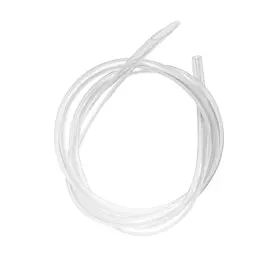
Fuel line size is model-specific. The model on this page, Craftsman 917773423, is a high wheel line trimmer (not a leaf blower); its manual lists a fuel line (engine part 34357) but fuel hose inside and outside diameter are selected by matching the original line and fittings shown in the 917773423 owner's manual.
How we recommend choosing the correct fuel line size
Use the existing line and the fitting diameters as your guide so the new hose seals and primes correctly:
- Confirm the equipment type and model number on the ID tag (leaf blower vs. line trimmer matters)
- Remove the old fuel line and measure its inside diameter (ID) and outside diameter (OD)
- Match the ID to the carburetor and tank nipples so it pushes on firmly without splitting
- Match the OD to any tank grommet or pass-through so it seals without fuel seepage
- Use fuel-rated small-engine tubing (not clear vinyl air hose)
- Replace any brittle clamps or grommets at the same time
Typical small-engine fuel line sizes you may see
These are common ranges used on many Craftsman small engines; always confirm by measuring and test-fitting.
| Fuel line ID (common) | Where it’s often used | Fit check |
|---|---|---|
| 3/32 in to 1/8 in | Carburetor feed/return on many small engines | Snug push-on, no air leaks when priming |
| 1/8 in to 3/16 in | Larger tank fittings or some primer circuits | Tight seal, no wetness at connections |
Quick install tips to prevent leaks and hard starting
- Drain fuel and work in a ventilated area away from ignition sources
- Cut hose ends square; soften the end with warm water for easier installation
- Route the line exactly like the diagram so it does not kink or rub
- Prime and inspect for wet spots around the tank, primer, and carburetor
Why it matters
A loose fuel line pulls air and causes hard starting, surging, or stalling. A line that is too tight can crack, restrict fuel flow, and leak.
Last updated: February 2026