Installation guide
 Owner’s manual
 Error Codes



Can I replace my fridge shelves?
Yes. On the Frigidaire LGHD2369TF7 bottom-mount refrigerator, you can replace and reposition fresh food shelves yourself by removing food, lifting the front edge, and sliding the shelf out; most shelf swaps are tool-free, but handle tempered glass carefully.
How to remove and reinstall a shelf (LGHD2369TF7)
We follow the shelf-change method shown in the LGHD2369TF7 owner's manual.
- Remove all food from the shelf.
- Lift the front edge of the shelf up.
- Pull the shelf straight out.
- Reinstall by inserting the rear mounting bracket hooks into the desired support slots.
- Lower the shelf to lock it into position.
- If the shelf is glass, let it warm to room temperature before cleaning and avoid sudden temperature changes.
Important fit detail: the rear air seal
Some shelves use an air seal at the back edge. For proper airflow and to prevent interference with the rear air tower:
- Left-side shelves: keep the air seal on the far left.
- Right-side shelves: keep the air seal on the far right.
- Apply the same idea to crisper-area shelves.
What to buy: shelf replacement checklist
To get a shelf that fits and supports weight correctly, match these details:
- Model number: LGHD2369TF7
- Shelf location: upper, middle, crisper cover, or flip shelf (if equipped)
- Shelf style: glass shelf, wire shelf, or door bin
- Trim/frame style (some glass shelves use separate trim pieces)
- Any rear air seal or bracket style
| Shelf type | Typical replacement approach | Common mistake to avoid |
|---|---|---|
| Fresh food glass shelf | Replace with the exact shelf and trim style | Nicking glass or shocking it with hot items |
| Crisper cover shelf | Match the cover style and air seal position | Blocking vents or misplacing the air seal |
| Door bin | Match bin shape and mounting tabs | Forcing tabs and cracking the liner |
Why it matters
Correct shelves keep airflow paths open, prevent temperature swings, and reduce the chance of glass breakage from stress or sudden temperature changes.
Last updated: February 2026
Are top mount or bottom mount fridges better?
Bottom-mount refrigerators like the Frigidaire LGHD2369TF7 usually feel more convenient day to day because fresh food sits at eye level, while top-mount models often cost less and can be a bit more energy-efficient. The “better” choice depends on your kitchen layout, budget, and how often you access the freezer.
Quick comparison
| Feature | Top-mount refrigerator | Bottom-mount refrigerator (like LGHD2369TF7) |
|---|---|---|
| Fresh food access | Lower, more bending | Higher, less bending |
| Freezer access | Easy, at eye level | Lower drawer, more bending |
| Typical price | Lower | Higher |
| Typical energy use | Often slightly lower | Often slightly higher |
| Storage style | Shelf freezer | Drawer freezer baskets |
What we see customers prefer (practical pros and cons)
- Bottom-mount pros: easier access to everyday items, wide refrigerator shelves, freezer drawer helps organize frozen foods.
- Bottom-mount cons: freezer items are lower, freezer drawer needs clearance to fully open.
- Top-mount pros: simple design, usually lighter on the budget, freezer is easy to reach.
- Top-mount cons: you bend more for refrigerator items, less “wide shelf” space in many designs.
Fit and usability checks that matter for LGHD2369TF7
Your decision should include how the refrigerator fits and functions in your space. For this Frigidaire bottom-mount design, plan for door and drawer clearance and proper airflow.
- Leave space for air circulation and service access.
- Make sure doors can open enough for full drawer and basket access.
- Leveling matters; an unlevel refrigerator can cause doors to not close correctly.
For model-specific clearance and installation details, use the LGHD2369TF7 installation guide.
Why it matters
Choosing the right mount style affects comfort (bending and reaching), food visibility (what gets used vs. forgotten), and how well the doors and freezer drawer work in your kitchen. A bottom-mount can be a big quality-of-life upgrade if you use the fresh-food section most.
Last updated: February 2026
Should my fridge be on F or C?
For your Frigidaire LGHD2369TF7 bottom-mount refrigerator, the display can be set to F or C; it is purely a preference. We recommend setting temperatures to 37°F (3°C) for fresh food and 0°F (-18°C) for the freezer, then choosing the unit you find easiest to read (see the LGHD2369TF7 owner’s manual).
How to switch between Fahrenheit and Celsius
On this model, the control panel includes an F/C (or C/F) key.
- Open the refrigerator door so the controls are active
- Touch F/C to toggle the display between Fahrenheit and Celsius
- Confirm the temperature numbers change units (the setpoints stay aligned to the same target temps)
- If you recently had a power interruption, acknowledge any alerts first so the panel responds normally
Recommended temperature targets (and the control range)
Use these targets for food safety and consistent cooling; adjust only if you see freezing or warming issues.
| Compartment | Recommended setting | Typical safe range | Control range on LGHD2369TF7 |
|---|---|---|---|
| Fresh food | 37°F (3°C) | 33 to 40°F (0 to 4°C) | 33 to 47°F (1 to 8°C) |
| Freezer | 0°F (-18°C) | -5 to 5°F (-21 to -15°C) | -6 to 6°F (-21 to -15°C) |
If food is freezing in the fresh food section
Freezing usually means the fresh food setpoint is too cold or airflow is blocked near the sensor.
- Raise the fresh food temperature a few degrees
- Keep items from blocking air ports and vents
- Avoid packing food tightly against the right-side sensor area
- Recheck temps after 24 hours (cooling changes take time to stabilize)
Why it matters
Using either unit is fine, but hitting the right setpoints helps prevent food spoilage, reduces frost and moisture issues, and keeps the compressor and evaporator fan system running efficiently.
Last updated: February 2026
What is the most common problem with Frigidaire refrigerators?
The most common Frigidaire refrigerator problem is a cooling complaint: the fresh food section runs warm, temperatures swing, or the freezer cools better than the refrigerator. On the Frigidaire LGHD2369TF7, the most frequent root causes are airflow problems (fan or blocked vents), dirty condenser coils, and defrost-related ice buildup.
Most common symptoms we see
- Refrigerator section warm but freezer still cold
- Frost or ice buildup on the back wall or inside the freezer
- Food freezing near the air ports in the fresh food section
- Loud fan noise, weak airflow, or no airflow from vents
- Ice maker or water dispenser issues (slow fill, no ice, odd taste)
Quick checks you can do first (no tools)
- Confirm temperature settings: Frigidaire’s recommended starting point is 37°F fresh food and 0°F freezer. If food is freezing in fresh food, raise the fresh food setting 1 to 2 degrees and keep items at least 1 inch from air ports (see the LGHD2369TF7 owner’s manual).
- Check airflow: Make sure vents are not blocked by containers or bags.
- Clean condenser coils: Dust buildup underneath or behind the unit commonly causes warm temps.
- Look for frost patterns: Heavy frost often points to a defrost problem that restricts airflow.
Common causes and the parts that often fix them
| Problem area | What you notice | Parts commonly involved for LGHD2369TF7 |
|---|---|---|
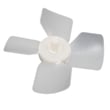
| Evaporator airflow | Warm fridge, noisy or weak fan | Frigidaire refrigerator evaporator fan motor 809069206, evaporator fan blade |
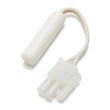
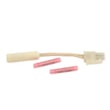
| Temperature sensing | Temps swing, inconsistent cooling | Refrigerator temperature sensor |
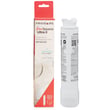
| Ice maker water supply | No ice, slow ice, dispenser issues | Refrigerator water inlet valve assembly 242253002, water filter |
Why it matters
Cooling problems usually start as an airflow or maintenance issue, but if ignored they can lead to food spoilage, ice buildup, and extra strain on the compressor. Keeping vents clear, coils clean, and settings correct prevents many “warm refrigerator” service calls.
Helpful DIY resources
Last updated: February 2026
What is the bottom part of a refrigerator called?
On a Frigidaire LGHD2369TF7 bottom-mount refrigerator, the “bottom part” most people mean is the toe grille (the vented panel at the lower front) or the compressor area behind it and underneath the cabinet. The compressor is the sealed-system pump that keeps the refrigerator cold.
What you might be referring to
- Toe grille (lower front vent panel): lets air flow for proper operation; do not block it.
- Compressor compartment (bottom/back area): houses the compressor and other cooling components.
- Bottom-mount freezer section: the freezer drawer at the bottom of the refrigerator.
- Leveling/roller area: the feet or rollers used to level the cabinet.
Quick ID guide
| If you mean this… | Common name | What it does |
|---|---|---|
| Vented panel at the very bottom front | Toe grille | Allows airflow; helps the unit run efficiently |
| Heavy “motor” area underneath/back | Compressor (in compressor compartment) | Pumps refrigerant through the sealed system |
| Drawer section at the bottom | Freezer drawer (bottom-mount freezer) | Stores frozen food |
Why it matters
Knowing which “bottom part” you mean helps you avoid common problems. For example, blocking the toe grille can restrict airflow and lead to poor cooling performance.
Helpful next steps for this model
- Confirm clearances and airflow guidance in the LGHD2369TF7 owner’s manual.
- Follow leveling and toe grille cautions in the LGHD2369TF7 installation guide.
- If cooling is weak and you suspect a control issue, check for display messages and use the Frigidaire refrigerator error codes reference.
Last updated: February 2026
Can a chiller be used as a fridge?
Yes, a chiller can be used like a fridge for short-term food storage as long as it holds safe refrigerator temperatures (about 35°F to 38°F). For your Frigidaire LGHD2369TF7 bottom-mount refrigerator, we recommend using the temperature settings and storage guidance in the LGHD2369TF7 owner’s manual to keep food safely chilled.
What “chiller” means vs. a refrigerator
A “chiller” is simply a cooled compartment or appliance designed to stay above freezing. A full refrigerator is built to maintain stable, food-safe temperatures across multiple zones (fresh food, crisper, deli, and freezer) with proper airflow.
Typical temperature targets
| Use case | Best target temp | Why |
|---|---|---|
| Fresh food (fridge) | 35°F to 38°F | Slows bacteria growth and keeps food quality |
| Chiller compartment | 32°F to 40°F (varies) | Can be safe if it stays consistently cold |
| Freezer | 0°F | Keeps food frozen solid |
How to tell if your chiller is safe to use as a fridge
Use a refrigerator thermometer and check the temperature in the center of the compartment after it has stabilized.
- Confirm it stays at 35°F to 38°F for at least 24 hours
- Avoid overpacking; leave space so cold air can circulate
- Keep the door closed as much as possible
- Store raw meat/seafood on a tray to prevent leaks
- If temps rise above 40°F, treat it as unsafe for perishable foods
Why it matters (food safety and performance)
Food safety depends on consistent temperature control. Even if a chiller feels cold, warm spots, frequent door openings, or blocked vents can push parts of the compartment above 40°F, which speeds spoilage.
Tips for your LGHD2369TF7 to keep “fridge-like” cooling
These habits help your refrigerator cool efficiently and keep temperatures steady:
- Do not block vents or the toe grille; airflow is required for proper operation
- Level the refrigerator so doors close tightly
- Keep it out of direct sunlight and away from heat sources
- Use “quick freeze” when adding a lot of unfrozen food to the freezer
For model-specific control settings and recommended use, follow the LGHD2369TF7 owner’s manual.
Last updated: February 2026
What does H mean on a refrigerator?
On the Frigidaire LGHD2369TF7 bottom-mount refrigerator, H or HI on the temperature display means the High Temp alarm is active; the refrigerator or freezer has been too warm for a period of time (commonly after a door is left ajar). Check that both doors are fully closed and sealing.
What to do right away
- Confirm the fresh food and freezer doors are closing completely (no bins or food packages blocking them).
- Check the door gaskets for gaps, folds, or debris along the sealing surface.
- Press the set key to reset/acknowledge system alarms (if your control panel has it).
- If the alarm follows a power outage, acknowledge it using Mute Alarm or any key (depending on the control style).
- Give temperatures time to recover after loading groceries; avoid frequent door openings.
What “High Temp” typically means (and common causes)
| What you see | What it indicates | Most common cause |
|---|---|---|
| H or HI (often blinking) | Cabinet temperature is above the safe range | Door left open or not sealing |
| High temp after outage | Unit warmed during power loss | Recent power failure |
| High temp during holiday settings | Alarm can still be active | Sabbath Mode allows High Temp alarm |
Why it matters
When the High Temp alarm is on, food safety and ice production can be affected. A poor door seal or frequent door openings can also make the compressor run longer and waste energy.
Helpful model-specific references
- Use the alarm and temperature sections in the LGHD2369TF7 owner’s manual to identify your exact display behavior and the correct key sequence for acknowledging alarms.
- If you suspect the doors are not sealing well, follow the steps in how to fix a fridge door seal to inspect, clean, and reshape gaskets.
Last updated: February 2026
How do I know if my refrigerator is low on refrigerant?
Low refrigerant in your Frigidaire LGHD2369TF7 usually shows up as poor cooling (especially in the freezer), longer run times, and sometimes oily residue on refrigerant lines from a leak. Because the sealed system is specialized, we treat these symptoms as a “service needed” condition.
Common signs that point to a sealed-system (refrigerant) problem
- Freezer temperature rises first; fresh food section may follow.
- Compressor seems to run most of the time with little improvement.
- Frost pattern looks abnormal (for example, heavy frost in one spot or very little frost on the evaporator).
- You notice oily stains or greasy dust buildup on copper lines or around joints (oil can travel with refrigerant).
- You hear more gurgling or boiling sounds than usual during operation (some gurgling is normal). See the sound descriptions in the LGHD2369TF7 owner’s manual.
Quick checks we recommend before assuming low refrigerant
These checks rule out common airflow and temperature-control issues that mimic low refrigerant.
- Confirm the doors seal and close fully.
- Make sure air vents are not blocked by food packages.
- Verify temperature settings; allow 24 hours after changes.
- Listen for the evaporator fan; if it is not moving air, cooling will suffer.
- If you have ice and water issues too, check for a restricted filter or water supply problem.
Symptom comparison
| What you notice | More likely cause | What to do next |
|---|---|---|
| Warm fridge and freezer, compressor runs a lot | Sealed-system issue (possible low refrigerant) | Schedule sealed-system service |
| Fridge warm, freezer cold enough | Airflow/damper or fan issue | Check vents and fan operation |
| Temps swing, food freezes in fresh food | Sensor/thermistor issue | Inspect sensor area; follow diagnostics |
| Ice maker slow, water flow slow | Clogged water filter or low water pressure | Replace filter; check supply line |
Why it matters
A refrigerant leak can reduce cooling and increase energy use. Also, refrigerant handling requires proper equipment and recovery procedures, so sealed-system work is best left to a qualified technician.
Parts that are often involved in “not cooling” complaints (not always refrigerant)
If your symptoms point to airflow or control problems instead of low refrigerant, these model-compatible parts are commonly checked:
- Frigidaire refrigerator evaporator fan motor 809069206 (moves cold air through the compartments)
- Refrigerator electronic control board 5304510308 (manages cooling functions)
- Refrigerator temperature sensor 5303918775 (feeds temperature data to the control)
Last updated: February 2026