Owner’s manual
 Error Codes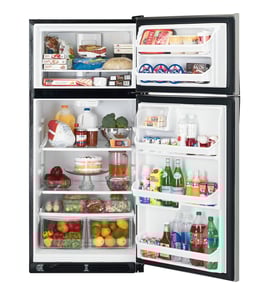




What is the cubic foot of my Kenmore refrigerator model 10660933901?
Your Kenmore refrigerator model 10660933901 has a total capacity of about 21.9 cubic feet. This is the combined storage volume of the fresh food (refrigerator) section and the freezer section.
How to confirm capacity for your exact configuration
We recommend checking the capacity listing in the product literature for your specific unit, especially if your refrigerator has optional features (like an ice maker) that can slightly change usable space.
- Look for “capacity,” “total volume,” or “cu. ft.” in the specifications section
- Check both “refrigerator” and “freezer” volumes if they are listed separately
- Use the model number 10660933901 when comparing specs
- If shelves or bins were changed, capacity stays the same but usable space can feel different
Reference: 10660933901 owner's manual
What “21.9 cu. ft.” means in everyday use
Cubic feet is a measurement of interior volume, not shelf width or door bin size. Two refrigerators with the same capacity can store food differently depending on shelf layout, crisper design, and door storage.
| Spec term | What it describes | What it does not describe |
|---|---|---|
| Total capacity (cu. ft.) | Overall interior volume | Exact shelf dimensions |
| Refrigerator capacity | Fresh food section volume | Door bin size |
| Freezer capacity | Freezer section volume | Ice maker output |
Why it matters
Knowing the cubic feet helps when you are planning kitchen fit, comparing replacement models, or deciding whether storage issues are caused by layout problems (bins, shelves, drawers) versus true capacity.
Last updated: February 2026
What is the upper part of a fridge called?
On the Kenmore 10660933901 top-mount refrigerator, the upper compartment is the freezer. It is the section designed to keep foods frozen, and it also supplies cold air that circulates down into the fresh food (refrigerator) compartment.
What the freezer does in this model
In this style of Kenmore top-mount refrigerator, the freezer is more than storage for frozen food; it is also part of the cooling system for both sections.
- Cold air enters and circulates through the freezer first
- Some of that air then moves into the refrigerator section through vents
- Blocking vents with packages can restrict airflow and cause temperature or moisture problems
- Odors can transfer between sections because air circulates between them
Common names you may see in manuals and parts diagrams
You will typically see these terms used for the “upper part”:
| What you call it | Common manual/diagram term | What it includes |
|---|---|---|
| Upper part | Freezer compartment | Freezer shelf, ice maker area, vents |
| Lower part | Refrigerator compartment | Shelves, crisper, meat/deli drawer, door bins |
For the exact feature names and layout for your refrigerator, use the 10660933901 owner's manual.
Why it matters
When the freezer airflow is restricted or the freezer temperature is off, the refrigerator section often warms up too. Knowing the upper section is the freezer helps you troubleshoot cooling issues in the right order (freezer first, then fresh food section).
Last updated: February 2026
What are the common problems with Kenmore Elite refrigerators?
Common Kenmore Elite refrigerator problems are loss of cooling, ice maker not working, water leaks, and noisy operation. On Kenmore model 10660933901, these symptoms most often trace back to airflow issues, a defrost-system problem, a door seal that is not sealing, or a fan that is not running; our 10660933901 owner's manual troubleshooting section helps you narrow it down.
Most common symptoms and what they usually mean
- Warm refrigerator or freezer: blocked vents, dirty condenser area, evaporator fan not running, or frost buildup from a defrost failure
- Ice maker not making ice: water supply issue, frozen fill path, or ice maker module failure
- Water under the refrigerator: clogged/iced defrost drain, water line connection leak, or condensation from poor door sealing
- Clicking or humming: compressor start components, fan blade hitting ice, or normal operating sounds
- Lights not working when door opens: failed door switch such as the refrigerator light switch W11384469
Quick checks we recommend first (10 to 20 minutes)
- Confirm airflow: make sure packages are not blocking return vents; the manual calls out “ensuring proper air circulation.”
- Check door closing and alignment: if doors do not close easily, adjust the front rollers/leveling so the cabinet tilts slightly back.
- Listen for the evaporator fan (freezer area): if it is silent with the compressor running, suspect the refrigerator evaporator fan motor WP2315539.
- Look for frost on the freezer back wall: heavy frost points to a defrost issue (heater, bi-metal, timer/control).
- Inspect for leaks: look for ice or debris in the drain trough and signs of dripping at water connections.
Common “problem to part” map (for this model)
| Problem | Most likely area | Parts often involved |
|---|---|---|
| Frost buildup, warm temps | Defrost system | Refrigerator defrost bi-metal WPW10225581, refrigerator heater WP2263749, defrost timer |
| No airflow, warm fresh food | Evaporator fan/vents | Refrigerator evaporator fan motor WP2315539 |
| Lights stay off/on incorrectly | Door switch | Refrigerator light switch W11384469 |
Why it matters
A small airflow restriction or a weak defrost system can quickly turn into temperature swings that spoil food and overwork the compressor. Catching the cause early usually prevents bigger repairs.
Helpful model-family guidance
If you see an error display on a Kenmore 106-series unit, use our Kenmore 106 model refrigerator error codes reference to match the code to the likely failure area.
Last updated: February 2026
How to read Kenmore model numbers?
Kenmore model numbers tell us who built the appliance and which design family it belongs to. For your Kenmore top-mount refrigerator model 10660933901, the 106 prefix identifies the manufacturer group, and the remaining digits narrow down the exact configuration we use to match the correct parts and service information in the 10660933901 owner's manual.
What each section of a Kenmore model number means
Most Kenmore model numbers follow a predictable pattern:
- Prefix (first 3 digits): manufacturer identifier (example: 106)
- Middle digits: base design series (helps identify the platform)
- Ending digits: feature and production variations (color, options, revisions)
- Full model number: always use the entire string when ordering parts
Where to find the model number on a top-mount refrigerator
On Kenmore top-mount refrigerators like 10660933901, we typically see the model/serial tag in one of these spots:
- Inside the fresh food compartment on a side wall
- Along the door frame near the gasket
- Behind the crisper drawers on the cabinet liner
- On the back exterior panel (less common for daily access)
Why the prefix matters when buying parts
Kenmore is a brand label; different manufacturers built different Kenmore series. The prefix helps us avoid look-alike parts that do not fit.
| Example prefix | What it helps us do | What you should do |
|---|---|---|
| 106 | Match the correct parts platform for many Kenmore refrigerators | Use the full model number when selecting parts |
| Other prefixes | May indicate a different manufacturer and parts design | Do not assume parts interchange |
Quick tips to avoid ordering the wrong part
- Copy the model number exactly, including all digits
- If there is a revision letter on the tag, record it too
- Match parts by model first, then confirm by part ID
- For cooling or defrost issues, use the troubleshooting section in the 10660933901 owner's manual before replacing parts
Why it matters
A single digit difference can change the door bins, gasket style, defrost system, or ice maker wiring. Reading the model number correctly is the fastest way to get the right Kenmore refrigerator parts the first time.
Last updated: February 2026
What is the average lifespan of a Kenmore refrigerator?
Most Kenmore refrigerators average 10 to 15 years of service life. For a Kenmore top-mount like model 10660933901, lifespan depends most on airflow, door sealing, and staying ahead of cooling-system wear; our 10660933901 owner's manual covers routine care topics that help extend life.
Typical lifespan ranges (what to expect)
- 10 to 15 years: typical for most household refrigerators
- 15 to 20 years: common when maintenance is consistent and the unit is kept clean and level
- Under 10 years: most often tied to poor ventilation, dirty condenser coils, frequent door openings, or delayed repairs
| Refrigerator type | Typical lifespan | Notes |
|---|---|---|
| Top-mount (freezer on top) | 10 to 15 years | Often simpler design, fewer failure points |
| Side-by-side | 10 to 15 years | More door seals and dispenser components |
| French door | 9 to 14 years | More electronics and airflow management |
Maintenance that adds years (high impact)
We see the biggest lifespan gains when these basics are handled consistently:
- Keep proper air circulation around the refrigerator (don’t block vents; allow space behind the cabinet)
- Clean dust from condenser area on a regular schedule
- Keep doors closing tightly; fix a loose or torn gasket early
- Set temps correctly (fresh food about 37°F, freezer about 0°F)
- Address frost buildup or warm temps quickly to avoid compressor strain
Parts that commonly affect longevity
When cooling performance drops, these parts are frequent contributors on many Kenmore top-mount designs:
- Refrigerator evaporator fan motor WP2315539 (moves cold air through the compartments)
- Refrigerator defrost bi-metal WPW10225581 (helps control defrost heating)
- Refrigerator heater WP2263749 (melts frost off the evaporator during defrost)
- Refrigerator defrost timer 4388931 (controls defrost cycles on timer-based systems)
Why it matters
A refrigerator that is running warm, frosting up, or not circulating air correctly can force longer run times. That extra load shortens the life of major components like the compressor and can increase energy use.
Last updated: February 2026