Installation guide
 Owner’s manual
 Error Codes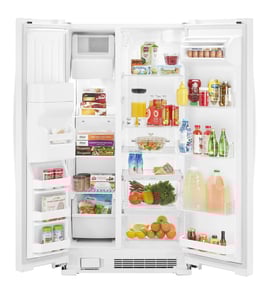






How to figure out a Frigidaire refrigerator model?
To figure out your Frigidaire refrigerator model number, look for the model and serial tag on the cabinet liner inside the fresh food (refrigerator) compartment. On the FFSS2622NB5, it is typically on a label along an inside wall near the top or side; match the full model number exactly.
Where to look first
Check these common tag locations before pulling the refrigerator out:
- Inside the fresh food compartment on the left wall
- Inside the fresh food compartment on the right wall
- Along the upper interior ceiling area near the front
- On a side wall behind the crisper drawers (you may need to slide drawers out)
- On the hinge-side cabinet liner near the door opening
What to write down (and why)
Record the information exactly as shown on the tag so we can match the correct parts list and diagrams.
| Item on tag | Example | Why it matters |
|---|---|---|
| Model number | FFSS2622NB5 | Identifies the exact refrigerator design and parts |
| Serial number | (varies) | Helps confirm production run and compatible revisions |
| Electrical ratings | (varies) | Useful for diagnosing power and control issues |
Tips to avoid ordering the wrong part
Small differences in model numbers can change the ice maker, control board, or door gasket fit.
- Copy the model number character-for-character (letters and numbers)
- Use the full model number, not just the series (for example, FFSS2622)
- If the label is worn, take a clear photo and zoom in
- Use the model number when checking procedures in the FFSS2622NB5 owner's manual
Why it matters
Your model number is the key to getting the right Frigidaire refrigerator parts and the right troubleshooting steps. For example, the correct water filter and dispenser setup can vary by model; the manual also covers checks like making sure the filter is fully seated.
Last updated: February 2026
How wide is a 25.6 cubic foot refrigerator?
Most 25.6 cubic foot side-by-side refrigerators are about 36 inches wide. For your Frigidaire FFSS2622NB5, confirm the exact cabinet width and required installation clearances in the installation guide before measuring doorways or planning a built-in opening.
Typical width range (what you should expect)
For a 25 to 26 cu. ft. side-by-side refrigerator, the most common widths are:
- 35 7/8 to 36 1/4 inches (typical “36-inch class”)
- Some models run slightly narrower or wider depending on door design and trim
- The space you need is usually wider than the cabinet because of door swing and airflow clearance
Measure the right way (cabinet vs. doors)
Use a tape measure and check these points:
- Cabinet width: metal box only, not the doors
- Overall width with doors: can be wider than the cabinet
- Depth with doors and handles: important for tight kitchens
- Door swing clearance: needed to fully open doors and pull out drawers
- Pathway width: doorways, hallways, and turns on delivery day
Quick comparison table
| What you’re measuring | Why it matters | What to use |
|---|---|---|
| Cabinet width | Fit in the opening | Tape measure across the case |
| Width with doors | Avoid rubbing cabinets/walls | Measure at the widest point |
| Required side clearance | Proper air circulation | Specs in the installation guide |
Installation clearance to plan for
For FFSS2622NB5, the installation guidance calls for clearance to support airflow and hookups:
- Sides and top: 3/8 inch
- Rear: 1 inch
- Doors should be able to fully open for drawer and basket access
Why it matters
If you size the opening only to the cabinet width, the refrigerator can end up hard to install, unable to ventilate properly, or unable to open the doors far enough to use crisper drawers and freezer baskets comfortably.
Last updated: February 2026
Do side-by-side refrigerators have a freezer?
Yes. A side-by-side refrigerator like the Frigidaire FFSS2622NB5 has a freezer compartment; the unit is split into two full-height vertical sections, with one side for fresh food and the other for frozen food.
How a side-by-side layout is set up
In a side-by-side design, both compartments run from top to bottom, so you get freezer access without bending down to a bottom drawer.
Common features you may see on this style include:
- A full-height freezer section with shelves and door bins
- A full-height fresh food section with shelves, crisper drawers, and door bins
- In-door ice and water dispensing on some configurations
- Separate temperature controls for freezer and refrigerator sections
Quick comparison: side-by-side vs other common styles
| Refrigerator style | Where the freezer is | What it’s best for |
|---|---|---|
| Side-by-side | Full-height vertical compartment | Easy access to both fresh and frozen items |
| Top-freezer | Upper compartment | Simple layout, often more shelf width |
| Bottom-freezer | Lower drawer/door | Fresh food at eye level |
Why it matters
Knowing that your FFSS2622NB5 includes a dedicated freezer helps when you are troubleshooting cooling issues, setting temperatures, or checking door seal alignment. For example, if one side is warm and the other is normal, that often points to airflow or temperature-sensing issues rather than a total loss of cooling.
Helpful next steps for owners
- Confirm your temperature settings and allow 24 hours after changes for temperatures to stabilize.
- Use a separate thermometer in each compartment if you need an accurate reading.
- Make sure both doors seal fully on all sides; poor sealing can cause temperature swings.
- For operating and temperature-control details specific to this model, use the FFSS2622NB5 owner's manual.
Last updated: February 2026
What does CF mean on a Frigidaire refrigerator?
On a Frigidaire FFSS2622NB5 refrigerator, CF indicates the electronic control has detected a cooling performance problem. In most cases, the issue is related to communication between the user interface and the main control, a wiring connection problem, or a failing control board.
What to do first (quick checks)
- Power reset: Unplug the refrigerator (or switch off the breaker) for 5 minutes, then restore power.
- Confirm doors seal and close fully: A door left slightly open can cause temperature problems and trigger performance alerts.
- Check airflow: Make sure vents inside the fresh food and freezer sections are not blocked by food packages.
- Verify temperature settings: Set freezer to about 0°F and fresh food to about 37°F, then allow 24 hours to stabilize.
- Listen for normal operation: Fans and the compressor cycling on and off is normal; unusual silence or repeated clicking points to a control or start issue.
Common causes of a CF code
| Likely cause | What you may notice | What typically fixes it |
|---|---|---|
| Loose or damaged wiring between controls | Code appears intermittently, display glitches | Reseat connectors, repair harness |
| Main electronic control problem | Cooling is erratic, code returns after reset | Replace control board (model-specific part) |
| User interface issue | Buttons unresponsive, display abnormal | Replace interface (if applicable) |
| Actual cooling system performance issue | Warm temps, food softening, long run times | Diagnose fans, defrost, sealed system |
Parts that often relate to cooling performance symptoms
If CF is accompanied by warm temperatures, these model-related parts are commonly involved in diagnosis:
- Refrigerator electronic control board A01078804 (control logic and temperature management)
- Refrigerator temperature sensor 240597220 (feeds temperature data to the control)
- Refrigerator air damper control assembly 242303001 (controls cold air flow into fresh food section)
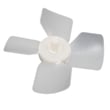
- Refrigerator evaporator fan blade 5308000010 (moves cold air through the compartments)
Why it matters
A CF code is the refrigerator telling you it is not maintaining temperature the way it should. Addressing it quickly helps protect food quality, prevents excessive run time, and reduces frost or moisture issues caused by unstable cooling.
Where to confirm code meaning and run model-specific checks
Use the FFSS2622NB5 owner's manual for the exact display behavior, recommended resets, and any model-specific diagnostic steps.
Last updated: February 2026
What is the most common problem with a Frigidaire refrigerator?
The most common issue we see on Frigidaire refrigerators like model FFSS2622NB5 is a cooling complaint, often “freezer is cold but fresh food is warm.” This typically traces to restricted airflow (dirty condenser coils, a weak evaporator fan, or an air damper problem) or a defrost issue that lets frost block the evaporator.
Quick checks we recommend first
- Confirm the doors seal fully and close without gaps; warm air leaks force long run times.
- Make sure temperature settings are correct and give the unit 24 hours to stabilize after changes.
- Check for blocked vents inside the fresh food section (packages pushed against air outlets).
- Listen for the evaporator fan running when the compressor is on (a failed fan reduces airflow).
- Inspect for heavy frost on the freezer back wall (often points to a defrost problem).
- Clean the condenser area; a dirty condenser commonly causes poor cooling and frequent cycling.
Common symptoms and the parts that often relate
| Symptom | What it usually means | Parts that commonly relate on FFSS2622NB5 |
|---|---|---|
| Freezer OK, refrigerator warm | Air not moving to fresh food | Refrigerator air damper control assembly 242303001, evaporator fan system |
| Frost buildup, weak airflow | Defrost system not clearing ice | Refrigerator defrost bi-metal thermostat 5303918214 |
| Runs a lot, temps drift | Heat not being rejected well or door leak | Refrigerator condenser coil 5304526057, door gasket |
| Water/ice issues | Filter not seated, air in line, supply issue | Refrigerator water filter WF3CB |
Why it matters
Cooling problems are usually airflow problems. When airflow is restricted, the freezer can still feel cold while the refrigerator section warms up, food spoils faster, and the compressor may run longer than normal.
Where to confirm model-specific operating details
For FFSS2622NB5, we use the owner's manual to verify normal operating sounds, temperature guidance, and troubleshooting steps (including moisture, gasket, and condenser cleaning guidance).
Last updated: February 2026