 Installation guide
 Owner’s manual
 Error Codes


How to read GE model numbers?
GE model numbers identify the product type and feature set; the model number (for example, GTDX200EM1WW) tells us what parts and instructions match your exact dryer. To estimate the unit’s age, we use the serial number on the same data tag, not the model number.
Where to find the model and serial tag on a GE dryer
On GE electric dryers like GTDX200EM1WW, the data tag is typically found:
- On the door opening (door jamb) when you open the dryer door
- On the inside face of the door
- On the cabinet front just behind the door
- Occasionally on the rear panel
Use the model number when ordering parts; use the serial number when decoding the manufacture date.
How to decode the serial number date code (the practical method)
GE serial numbers use a date code system. The most reliable approach is to match the first one or two characters of the serial number to GE’s date code chart.
- The first character commonly indicates the month (letter code)
- The second character commonly indicates the year (letter or number code)
- The remaining characters are production sequence information
Because GE has used different coding schemes over time, the exact month and year mapping depends on the chart used for your serial prefix. Keep your serial number handy and confirm the mapping in the owner's manual.
Why reading the model number correctly matters
Using the exact model number prevents ordering the wrong part or following the wrong wiring or venting instructions. Even a small suffix change can affect components such as the heating system, controls, or drum support parts.
| What you’re reading | What it’s used for | Example for this dryer |
|---|---|---|
| Model number | Correct parts list and documentation | GTDX200EM1WW |
| Serial number | Manufacture date code and production run | (varies by unit) |
Parts that must match the exact model
When you shop parts for GTDX200EM1WW, match by model number first, then confirm the part ID. Common examples on this model include:
- Drum support wear items like the dryer drum glide bearing (green) WE03X37317
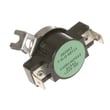
- Temperature control parts like the dryer high-limit thermostat WE4M137
- Heating components like the mica unit WE11M10001
Last updated: February 2026
What is the most common problem with a GE dryer?
The most common GE dryer complaint is poor drying performance (clothes take too long to dry). On a GE electric dryer like model GTDX200EM1WW, the top causes are restricted airflow from the venting system or a heat control issue such as a thermostat opening early.
Most common symptoms we see (and what they usually mean)
- Long dry times or damp loads: vent restriction, crushed duct, lint buildup, weak airflow
- No heat or low heat: heating circuit problem (heater, thermostat, wiring)
- Noisy operation: worn drum support parts (glides, bearings), blower wheel issues
- Drum not turning: drive system problem (belt, idler, motor)
Quick checks you can do first (no parts needed)
- Clean the lint screen before every load.
- Confirm the dryer is exhausted outdoors and the vent hood flap opens fully.
- Check for a kinked, crushed, or overly long vent run; longer runs increase dry time and can trap lint.
- Use only 4-inch rigid metal duct for best airflow and safety.
- Make sure the laundry room temperature is above 50°F so the control system operates normally.
When it points to a part on GTDX200EM1WW
If airflow is good but drying is still slow, these model-matched parts are common suspects:
| Symptom | Likely area | Example part for this model |
|---|---|---|
| Dryer heats then shuts off too soon | Overheating protection or cycling control | Dryer high-limit thermostat WE4M137 or dryer operating thermostat WE4M216 |
| Rattling, thumping, scraping | Drum support or blower | Dryer drum glide bearing (green) WE03X37317 or dryer blower wheel WE16X20393 |
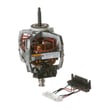
| Runs but won’t tumble | Drive system | Dryer drive motor WE17X22217 (motor-related failures are less common than belt/idler issues) |
Why it matters
Restricted venting is the number one reason dryers “act broken” when the real issue is airflow. It increases drying time and energy use, and it can overheat the dryer, which can trip thermostats and shorten component life.
Specs and installation details to follow
For the correct vent diameter, duct material, and maximum vent length guidance for GTDX200EM1WW, follow the installation guide.
Last updated: February 2026
What's the life expectancy of a GE dryer?
A GE electric dryer like model GTDX200EM1WW lasts 10 years with normal household use. The biggest factor in reaching that lifespan is keeping airflow strong (clean lint screen, correct 4-inch venting, and avoiding long, restrictive duct runs); see the installation guide.
What most affects dryer lifespan
- Airflow and venting: Restricted exhaust makes the dryer run hotter and longer.
- Lint control: Lint buildup increases heat stress on thermostats and the heater.
- Load size: Overloading strains the drive motor and drum support parts.
- Heat management: Repeated overheating shortens the life of heating and safety controls.
- Wear parts: Drum glides and bearings wear gradually and can be replaced to extend service life.
Maintenance that helps you reach the full lifespan
We recommend these habits for GTDX200EM1WW:
- Clean the lint screen before every load.
- Use 4-inch (102 mm) metal ducting and exhaust the dryer outdoors.
- Keep the vent run as short and straight as practical; long runs increase dry time and wear.
- Vacuum lint from the cabinet and blower area periodically.
- If the dryer overheats or shuts off repeatedly, correct airflow issues before continued use.
Common “wear-out” symptoms and likely parts
| Symptom | What it often means | Example part on this model page |
|---|---|---|
| Squealing, scraping, thumping | Drum support parts wearing | Dryer drum glide bearing (green) WE03X37317 |
| Long dry times, weak airflow | Vent restriction or airflow component issue | Dryer blower wheel WE16X20393 |
| Overheating or shutting off | Heat control/safety device opening | Dryer high-limit thermostat WE4M137 |
Why it matters
Poor airflow forces longer heat cycles, which increases energy use and accelerates wear on the heating element, thermostats, and motor. Proper 4-inch venting and reasonable duct length directly support dryer performance and service life.
Last updated: February 2026





