Owner’s manual
 Error Codes



How many cubic feet is my Kenmore refrigerator by model number?
For Kenmore Elite model 10651183112, the most reliable way to get the exact cubic-foot capacity is to look it up in the model’s specifications section in the 10651183112 owner's manual. If you need a quick estimate, we can calculate interior volume from measurements, but that will be lower than the advertised capacity.
Fast ways to find the capacity
- Check the specifications section in the 10651183112 owner's manual.
- Look for a rating label inside the fresh food compartment (often on a side wall or near the crisper area); it sometimes lists capacity.
- Search the model number exactly as 10651183112 (all digits) when comparing specs.
- If labels are missing or unreadable, estimate capacity by measuring the interior.
How to estimate cubic feet (good for a ballpark)
- Measure the usable interior of the fresh food section: width x height x depth (in inches).
- Do the same for the freezer section.
- Add the two volumes together.
- Convert cubic inches to cubic feet:
| What you have | Formula | Notes |
|---|---|---|
| Cubic inches | L x W x H | Measure usable space, not door bins if you want consistency |
| Cubic feet | (cubic inches) / 1728 | 1728 = 12 x 12 x 12 |
Why your estimate may not match the advertised number
- Shelves, drawers, the ice maker, and air ducts reduce usable space.
- Manufacturers often rate “total capacity” differently than what you can practically fill.
- Side-by-side designs can feel smaller in usable width even when total cubic feet is high.
Why it matters
Knowing cubic feet helps us match the right refrigerator parts and accessories (like an air filter or ice maker) and helps you compare replacement models accurately.
Last updated: January 2026
What year did the Kenmore Elite come out?
Kenmore Elite was introduced as a premium Kenmore line in 1999. Your specific Kenmore Elite refrigerator model 10651183112 could have been manufactured years later, so the most accurate way to date it is by decoding the serial number using the information in the 10651183112 owner's manual.
How to find the manufacture date on your refrigerator
We recommend using the model and serial tag on the cabinet (commonly inside the fresh food compartment, near the ceiling or side wall). Then match the serial format to the decoding guidance.
- Locate the model and serial label (inside the refrigerator section is most common)
- Write down the full serial number exactly as shown
- Check the serial decoding section in the 10651183112 owner's manual
- If the unit was Whirlpool-built (common for many Kenmore 106 models), the serial often includes a date code (week and year)
- Use the decoded date to estimate the appliance age and plan maintenance (filters, ice maker, door gaskets)
Quick timeline (brand line vs. your model)
| Item | What it tells you | Typical use |
|---|---|---|
| Kenmore Elite launch (1999) | When the Elite line first appeared | Historical reference only |
| Model number 10651183112 | Identifies the exact design family and parts | Parts matching and service |
| Serial number date code | When your specific refrigerator was built | True “age” of your unit |
Why it matters
Knowing the build date helps us match the correct refrigerator parts and troubleshoot issues more accurately, especially for common wear items like the ice maker, water inlet valve, and air filtration.
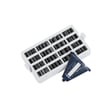
If you are tracking odors or airflow performance, the refrigerator air filter W10311524 is a common maintenance item for this model family.
Last updated: January 2026
What are the common problems with Kenmore Elite refrigerators?
Common problems on the Kenmore Elite 10651183112 side-by-side refrigerator are no or weak cooling, frost buildup in the freezer, water or ice dispenser issues, and unusual noises. Most fixes start with airflow and defrost checks, then move to parts like the evaporator fan, defrost thermostat, or water inlet valve; see the 10651183112 owner's manual for model-specific locations and procedures.
Most common symptoms and what usually causes them
- Not cooling or warm temperatures: blocked vents, dirty condenser coils, failed evaporator fan, or a control issue
- Freezer frosting or ice buildup: door not sealing, frequent door openings, or a defrost system problem (heater, thermostat, or control)
- Water dispenser slow or not working: low house water pressure, clogged filter, frozen reservoir line, or a bad inlet valve
- Ice maker not making ice: freezer too warm, fill tube frozen, inlet valve problem, or ice maker failure
- Buzzing, clicking, or rattling: fan blade hitting ice, loose panels, or compressor start components cycling
Quick checks we recommend before replacing parts
- Set temps to typical targets: 0°F freezer and 37°F fresh food.
- Confirm air can circulate: do not block return vents with food packages.
- Clean condenser coils and verify the condenser fan runs (if equipped).
- Inspect door gaskets for gaps; close a dollar bill in the door and check for easy pull-out.
- Look for frost on the freezer back panel (a strong clue of a defrost or airflow problem).
Parts that commonly solve these issues (when testing confirms)
| Symptom | Common part area | Example part for this model |
|---|---|---|
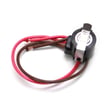
| Frost buildup, warm fridge | Defrost system | Refrigerator defrost bi-metal WPW10225581 |
| Musty odors | Air filtration | Refrigerator air filter W10311524 |
| No water to dispenser/ice maker | Water supply control | Refrigerator water inlet valve WPW10341320 |
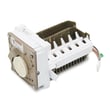
| No ice production | Ice maker assembly | Refrigerator ice maker WPW10251076 |
Why it matters
Cooling and ice-making problems often start small (restricted airflow, a weak door seal, or a slow water fill) but can lead to heavy frost, temperature swings, and food spoilage. Catching the root cause early helps protect the compressor and keeps the refrigerator running efficiently.
Last updated: January 2026
What is the average lifespan of a Kenmore Elite refrigerator?
Most Kenmore Elite refrigerators, including model 10651183112, typically last 10 to 15 years with normal household use. With consistent maintenance (cleaning coils, keeping door gaskets sealing, and changing filters), it’s common to reach the upper end of that range.
What affects lifespan the most
- Condenser coil cleanliness (dirty coils make the compressor work harder)
- Door gasket condition (air leaks cause longer run times and frost issues)
- Ice maker and water system upkeep (clogs and leaks create secondary damage)
- Airflow inside the cabinet (overpacking blocks vents and warms sections)
- Room conditions (hot garages and tight built-ins shorten life)
Maintenance checklist that helps you get 10 to 15 years
Use this as a simple schedule for a Kenmore side-by-side:
- Vacuum coils and the toe-kick area every 6 to 12 months
- Keep doors closing squarely; fix sagging hinges and bins that interfere
- Replace the air filter on schedule; use the refrigerator air filter W10311524
- Inspect gaskets for gaps, tears, or hardened spots; clean with mild soap and water
- If you have dispenser or ice issues, follow the steps in the 10651183112 owner’s manual
When repair vs replace usually makes sense
| Situation | Typical recommendation | Why |
|---|---|---|
| Minor issues (bins, switches, filters) | Repair | Low cost, quick improvement |
| Cooling problems tied to airflow or frost | Diagnose and repair | Often a fan/defrost issue |
| Major sealed-system or compressor failure | Replace is often practical | High labor and parts cost |
Why it matters
A refrigerator that runs longer to hold temperature uses more energy and puts extra wear on the compressor, evaporator fan, and defrost system. Basic upkeep (filters, seals, coils) is the most reliable way to extend service life.
Last updated: January 2026