 Owner’s manual
 Error Codes



How do I know what water filter my Kenmore refrigerator needs?
If you have a Kenmore refrigerator, the only reliable way to identify the correct water filter is to use the refrigerator’s full model number and match it to the filter listed for that model. The Kenmore 625384610 documentation applies to a two-stage drinking water filter system, not a refrigerator filter; use the 625384610 owner's manual only if that is your product.
- Find the refrigerator model number on the rating label (commonly inside the fresh food compartment, on a side wall, ceiling, or near the crisper area).
- Write the model number exactly as shown (letters and numbers matter).
- Check the filter currently installed for a printed part number or cartridge number.
- Match by model number first, then confirm the filter style (push-in, twist-in, or inline).
- If your water tastes or smells off, replace the filter and flush water through the dispenser after installation.
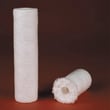
This model uses replaceable cartridges and is typically serviced every 6 months. The manual lists replacement cartridge 42-38480 (sediment, 5 micron) and also references 42-38478 as an optional sediment cartridge. On this model page, the matching cartridge options include cartridge 3848007 (part number 42-38480) and cartridge 3847807 (part number 42-38478).
| What to check | Typical for 625384610 | Why it matters |
|---|---|---|
| Replacement interval | Every 6 months | Maintains taste and flow |
| Water pressure | 30 to 100 psi | Prevents leaks and housing damage |
| Water temperature | 40°F to 100°F | Avoids damage; do not use hot water |
| Rated capacity | 4,500 gallons | Helps estimate change timing |
Using the correct filter protects water quality and helps prevent leaks, low flow, and poor taste. Matching by model number also avoids buying a filter that fits physically but does not seal or filter correctly.
Last updated: January 2026
Do water faucet filters actually work?
Yes. A Kenmore faucet water filter can noticeably improve taste and odor by reducing chlorine and trapping sediment, and many systems also target finer contaminants depending on the cartridge used. Performance depends on using the correct cartridge and replacing it on schedule per the 625384610 owner's manual.
Most faucet-mounted and under-sink drinking water filters are designed for everyday water-quality issues, not every possible contaminant.
- Reduces chlorine taste and odor (common with carbon cartridges)
- Captures sediment and particles that cause cloudiness
- Improves water for drinking, cooking, and ice (when used as directed)
- Works best when water pressure is normal and cartridges are installed correctly
Filters are cartridge-specific; one cartridge can be great for taste and odor but not designed for other concerns.
| Water concern | Many faucet filters help? | Notes |
|---|---|---|
| Chlorine taste/odor | Yes | Carbon media commonly targets this |
| Sediment/particles | Yes | Depends on micron rating and flow |
| Cysts | Sometimes | Depends on cartridge design and certification |
| Dissolved minerals (hardness) | No | Needs softening or RO, not a faucet filter |
A filter that is overdue or installed incorrectly can lose performance and may restrict flow.
- Shut off the water supply before servicing; then open the faucet to relieve pressure
- Never remove housings (sumps) while the system is under pressure
- Clean the sump with hot, soapy water and rinse thoroughly during cartridge changes
- Install the cartridge in the correct orientation; some only fit one way
- After installing a new carbon cartridge, run water until carbon fines clear (often about 10 minutes)
If you need a replacement, match the cartridge to your Kenmore system; for this model, a common option is the cartridge 3848007 (part number 42-38480).
Using the right Kenmore cartridge and changing it correctly protects water quality, helps prevent leaks at the housings, and keeps flow rate consistent so you actually get the filtration benefits you expect.
Last updated: January 2026
What is the best faucet water filter to buy?
For most homes, the “best” faucet water filter is the one that matches your water concerns and your sink setup. If you already own the Kenmore 625384610 system, the best buy is typically the correct replacement cartridge for your contaminant goals and flow needs, installed per the 625384610 owner's manual.
- Start with what you want to reduce: chlorine taste/odor, sediment, or lead/cysts.
- Confirm fit and connection type (faucet-mount vs under-sink system).
- Compare rated flow; this Kenmore system is rated at 0.6 gpm.
- Compare capacity and replacement cost; this system is rated for 4,500 gallons.
- Plan for maintenance space; allow at least 1-1/2 inch under the system to remove sumps for cartridge changes.
This model is a two-stage under-sink drinking water filter. In most cases, the best “buy” is simply the cartridge set that matches your water issue.
| If your main issue is... | Typical best cartridge type | What you’ll notice most |
|---|---|---|
| Sand, silt, visible particles | Sediment cartridge | Cleaner-looking water, less grit |
| Chlorine taste/smell | Taste and odor (carbon) cartridge | Better taste and odor |
| Lead/cysts plus chlorine taste/odor | Lead/cyst + carbon style cartridge | Broader reduction, often lower flow |
Model-matched cartridge options we commonly see for this system include cartridge 3848007 (part number 42-38480) and cartridge 3847807 (part number 42-38478).
Buying a “top-rated” faucet filter that does not match your installation type or your contaminant goal can waste money and still leave taste, odor, or sediment problems. Matching the cartridge type to your water issue keeps flow, capacity, and performance where you expect them.
- Turn off the water and relieve pressure by opening the faucet before changing cartridges.
- Cut tubing square and fully seat it in the quick-connect fittings.
- Tighten sumps carefully to avoid cross-threading.
- After installing a carbon cartridge, run water until carbon fines clear (often about 10 minutes).
Last updated: January 2026
What does NSF mean on a water filter?
NSF on a water filter means the product (or specific performance claims) has been tested to a published standard by NSF International, an independent certification organization. For the Kenmore 625384610 system, the manual notes it conforms to NSF/ANSI 42 for specific performance claims.
NSF marking is about verified performance claims, not a guarantee that every contaminant is removed.
- It indicates third-party testing to a specific NSF/ANSI standard (for example, taste and odor reduction).
- It applies to specific claims and conditions (flow rate, capacity, and test water), not every possible water issue.
- It can apply to the system, a cartridge, or both, depending on what is listed.
- It does not replace regular cartridge changes; performance drops as media loads up.
- It does not mean the filter fixes plumbing problems like low pressure or leaks.
Your Kenmore 625384610 is a two-stage drinking water filter. The manual states the system conforms to NSF/ANSI 42 for the specific performance claims verified by test data, and it also describes NSF testing/certification for chlorine taste and odor reduction when used with certain replacement cartridges.
| Item | What it means for you |
|---|---|
| NSF/ANSI standard (example: 42) | The category of performance being verified (often aesthetic effects like chlorine taste/odor) |
| Rated capacity | How much water the system is designed to treat before performance drops |
| Rated service flow | The flow rate used for performance testing |
NSF language helps you match the filter to your goal (for example, chlorine taste and odor reduction) and set realistic expectations for cartridge life and performance.
The manual recommends replacing the filter cartridges about every 6 months of use (actual life varies with water usage and water quality). For a compatible replacement, use the correct cartridge for your system, such as the cartridge 3848007, and follow the steps in the 625384610 owner’s manual.
Last updated: January 2026