Error Codes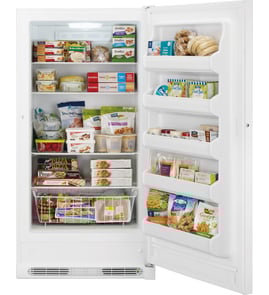

What is the average lifespan of an upright freezer?
Most upright freezers, including the Wc Wood V07WA upright freezer, typically last 10 to 15 years. With steady indoor temperatures, good airflow around the cabinet, and clean condenser surfaces, many units reach the high end of that range.
Typical lifespan and what changes it
In real-world use, lifespan depends more on operating conditions than the nameplate.
- 10 to 15 years: typical service life for an upright freezer
- Shorter lifespan when used in hot garages, dusty areas, or tight enclosures
- Longer lifespan when kept indoors, level, and well-ventilated
- Heavy door opening and warm food loads increase compressor run time
- Poor door sealing (air leaks) forces longer run cycles and faster wear
Maintenance that helps you reach 15 years
These steps reduce compressor strain, frost issues, and temperature swings.
- Keep 2 to 4 inches of clearance around the freezer for airflow
- Clean dust and pet hair from vents and accessible coils (if equipped)
- Keep the freezer level so the door seals evenly
- Avoid overpacking; leave space for air circulation between shelves
- Defrost and remove ice buildup if your model is not frost-free
- Keep the door closed; organize food so you can grab items quickly
Quick “repair vs. replace” guide
Use this as a practical checkpoint once your freezer is past mid-life.
| If your freezer is... | Usually points to... | What we recommend |
|---|---|---|
| Under 8 years old | Worth repairing in many cases | Diagnose cooling, fan, or seal issues first |
| 10 to 15 years old | Normal end-of-life window | Compare repair cost vs. age and performance |
| Over 15 years old | Higher risk of sealed-system failure | Consider replacement if cooling is inconsistent |
Why it matters
A freezer that is nearing end-of-life often shows it through long run times, warming temperatures, heavy frost, or loud compressor cycling. Catching airflow and sealing problems early can prevent food loss and reduce energy use.
For help identifying the correct model number when ordering parts or researching symptoms, use how to find your appliance model number (and what it means for parts).
Last updated: February 2026
What is the best brand upright freezer to buy?
There is no single “best” upright freezer brand for everyone; the best choice depends on where you will use it (kitchen vs. garage), your capacity needs, and how much you value features like frost-free operation and temperature alarms. For most shoppers, GE, Frigidaire, and Whirlpool are consistently strong picks.
How we recommend choosing a brand (what matters most)
- Where it will live: If it is going in a garage, prioritize “garage-ready” performance for wider ambient temperature swings.
- Defrost type: Frost-free is the easiest day-to-day; manual defrost often costs less and can be slightly more efficient.
- Capacity and layout: Look for adjustable shelves, bins, and door storage that match how you freeze food.
- Reliability basics: A solid door seal, stable temperature control, and a simple control board design matter more than extra features.
- Noise and placement: Uprights can run more often than chest freezers; plan for ventilation clearance.
Quick brand fit guide
| If you care most about... | Brands to start with | Why it fits |
|---|---|---|
| Overall mainstream reliability and features | GE, Whirlpool | Strong all-around lineups and common serviceability |
| Value for the money | Frigidaire | Often competitive pricing with practical features |
| Garage use | GE (garage-ready lines), Gladiator | Better tolerance for temperature swings |
| Budget-friendly basic storage | Midea | Simple feature sets and good value |
What to look for when comparing specific models
- Temperature range and stability (especially for garage placement)
- Door-ajar alarm and high-temp alarm
- Interior lighting and shelf adjustability
- Reversible door (helps with tight spaces)
- Energy use (compare the EnergyGuide label across similar sizes)
Why it matters
An upright freezer is a long-term appliance purchase; choosing a brand and model that matches your environment and storage habits reduces temperature swings, freezer burn, and nuisance issues like excessive frost or door-seal leaks.
Helpful related reading
If you are still narrowing down options or want to make sure you are shopping the correct size and style, we recommend starting with top questions about Sears and Sears PartsDirect.
Last updated: February 2026
What is the disadvantage of an upright freezer?
An upright freezer (like the Wc V07WA) is easiest to organize, but its main disadvantages are higher cold-air loss when the door opens, less usable space for bulky items, and more frost or maintenance on many models compared with a chest freezer.
Common disadvantages (upright vs. chest)
- Cold air spills out when opened, so temperature can rise faster during loading and unloading.
- Less usable capacity for the footprint because shelves, drawers, and the evaporator area take up space.
- Bulky items fit worse (large turkeys, big boxes, tall roasts) due to fixed shelf spacing.
- More frost management on many units; manual-defrost uprights need periodic defrosting.
- More parts in the door and airflow system (gaskets, fan, defrost components) can mean more troubleshooting over time.
Upright vs. chest freezer: quick comparison
| Feature | Upright freezer | Chest freezer |
|---|---|---|
| Organization | Best (shelves/bins) | Harder (stacking) |
| Door-open temperature stability | Lower | Higher |
| Bulky item storage | Often limited | Usually better |
| Usable capacity per size | Often lower | Often higher |
| Defrost upkeep | Varies; often more noticeable | Often less noticeable |
Why it matters
If you open the freezer frequently or store lots of smaller items, an upright like the Wc V07WA is convenient. If you prioritize maximum storage, long temperature hold during outages, and fewer issues with bulky items, a chest freezer usually performs better.
Tips to reduce the downsides on an upright freezer
- Keep the freezer 70% to 85% full for steadier temperatures (use water jugs if needed).
- Minimize door-open time; plan what you need before opening.
- Check the door gasket seal regularly; a poor seal increases frost and run time.
- Leave airflow space around vents and avoid overpacking shelves.
- Use labeled bins so you can grab items quickly.
For more DIY basics that help with freezer troubleshooting and maintenance habits, see easy diy appliance repairs that anyone can do.
Last updated: February 2026
Why is the upright freezer not freezing?
If your Wc WOOD V07WA upright freezer is running but not freezing, the most common causes are restricted airflow (overpacked shelves or blocked vents), a door that is not sealing, or heavy frost buildup that prevents the evaporator fan from moving cold air.
Quick checks that fix many “not freezing” problems
- Make sure air vents inside the cabinet are not blocked by food packages.
- Avoid overpacking; leave space for air to circulate front-to-back.
- Confirm the temperature control is set colder (then allow 24 hours to stabilize).
- Check the door gasket for gaps, tears, or areas that do not grip the cabinet.
- Look for heavy frost on the back wall or around the fan cover (a defrost issue can stop cooling).
- Verify the freezer is in a normal room temperature area; extreme heat can reduce freezing performance.
What to listen and look for (symptom-based)
| What you notice | What it usually points to | What we recommend first |
|---|---|---|
| Compressor runs a lot, little or no frost inside | Low airflow or sealed-system cooling problem | Check vents, packing, and door seal; then inspect for dirty condenser area |
| Loud fan noise, then stops; frost everywhere | Evaporator fan hitting ice or defrost failure | Unplug and fully defrost 24 hours; restart and monitor |
| Freezer warm and quiet (no fan/compressor sound) | Power, control, or start component issue | Check outlet and breaker; then test electrical parts with a meter |
Safe DIY steps before replacing parts
- Unplug the freezer for safety.
- Fully defrost if you see heavy frost (leave doors open; protect floors from water).
- Clean the condenser area and ensure clearance around the cabinet for ventilation.
- After restarting, confirm you feel airflow from interior vents and hear the evaporator fan.
For electrical checks (like testing a thermostat, overload, or wiring), use our guides: how to use a multimeter to test electrical parts video and how to tell if a fuse is blown.
Why it matters
An upright freezer cools by moving air across the evaporator coil; when airflow is blocked or frost takes over, temperatures rise even if the compressor is running. Catching a door-seal or frost issue early helps prevent food spoilage and reduces compressor wear.
Last updated: February 2026