

How to identify a Kenmore washer model?
To identify your Kenmore washer model, we look for the model number tag on the machine itself. For Kenmore model 11092581800, the tag is typically under the lid on top-load washers or on the back panel near the power cord; the exact model number ensures you get the right parts.
Where to find the model number tag
Check these common locations first:
- Under the lid: along the rim of the washer opening (top-loaders)
- Back of the cabinet: near the power cord entry or rear panel
- Behind the control panel area: sometimes on the cabinet frame
- Inside the lid area: on a sticker or metal plate
What the model number looks like (Kenmore)
Kenmore washer model numbers often:
- Start with 110 (common on many Kenmore-built-by-Whirlpool designs)
- Use 11 or more characters (numbers, sometimes with additional digits)
- Appear next to a serial number on the same label
Quick ID table
| What you see on the tag | What it means | What to do next |
|---|---|---|
| Model number (example: 11092581800) | Identifies the exact washer design | Use it to match diagrams and parts |
| Serial number | Production identifier | Keep it for service history |
| Electrical ratings | Voltage/amps info | Useful for diagnosing power issues |
Why it matters
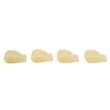
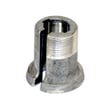
Kenmore washers can look similar across many years, but internal components (like the drive system, pump, or agitator parts) vary by model. Using the exact model number helps us match the correct replacement part the first time, such as an agitator dog 80040 if you are repairing an agitator that is not grabbing properly.
Last updated: February 2026
Is it worth repairing a Kenmore washing machine?
Yes, repairing a Kenmore washer is worth it when the fix restores reliable washing and spinning for far less than replacing the machine. For Kenmore model 11092581800, many common failures are caused by serviceable wear parts, so a targeted repair often delivers years of additional use.
Quick way we decide: repair vs. replace
Use this checklist to make a practical call before buying parts:
- The washer fills, agitates, and drains but slips, won’t spin well, or makes noise (often repairable)
- The tub and cabinet are solid with no major rust-through
- The repair is a single-system issue (drive, drain, or fill), not multiple failures at once
- You can confirm the symptom with a simple test (spin, drain, agitation)
- The cost of parts plus labor is comfortably below the cost of a comparable new washer
Common repairs that are usually “worth it” on 11092581800
These are frequent, high-impact fixes on direct-drive style Kenmore top-load washers:
- Agitation problems: worn agitator dog 80040 or agitator cam 285748
- Won’t agitate or spin: failed coupling 285753A
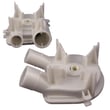
- Won’t drain or drains slowly: clogged or failing water pump WP3363394
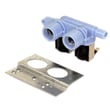
- Won’t fill or fills incorrectly: sticking inlet valve 285805
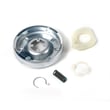
- Spin issues or burning smell: worn clutch 285785
Cost-to-benefit snapshot
| Symptom | Likely system | Typical repair value |
|---|---|---|
| Agitator moves poorly | Agitator drive | High (low-cost parts, big improvement) |
| Won’t spin but motor runs | Drive coupling/clutch | High (common, straightforward repair) |
| Water left in tub | Drain pump/hose | High (prevents odors and repeat failures) |
| Loud grinding in spin | Gear case/bearing | Medium to low (higher parts cost) |
Why it matters
A repair that restores proper agitation, drain, and spin protects clothing, prevents water from sitting in the tub, and reduces strain on the drive motor and gear case. Fixing a small wear part early can prevent a more expensive breakdown later.
Last updated: February 2026
What is the average lifespan of a Kenmore washer?
A Kenmore washer typically lasts 10 to 15 years with normal household use. For the Kenmore 11092581800, reaching the high end of that range usually comes down to avoiding overloads, keeping the washer level, and fixing early wear items before they damage major drive components.
What affects washer lifespan most
- Load size and balance: chronic overloading and off-balance loads strain the drive system.
- Drain performance: slow draining makes the pump work harder and can lead to leaks.
- Agitation wear: worn agitator parts reduce cleaning and can cause unusual noises.
- Spin system wear: slipping during spin accelerates clutch and gearcase wear.
- Water quality: sediment can shorten inlet valve life.
Common “end-of-life” symptoms and likely parts
| Symptom | What it often points to | Example part for this model |
|---|---|---|
| Agitator won’t “ratchet” or clothes don’t roll | Worn agitator dogs | Agitator dog 80040 |
| Washer won’t spin, loud grinding, or intermittent drive | Worn motor coupling | Coupling 285753A |
| Won’t drain or leaves water in tub | Failing drain pump or blockage | Water pump WP3363394 |
| Slow fill, no fill, or hot/cold issues | Inlet valve problem or clogged screens | Inlet valve 285805 |
Maintenance that helps you get 15 years
- Keep loads evenly distributed; wash bulky items with a few towels.
- Level the cabinet so it does not “walk” during spin.
- Clean inlet hose screens periodically (turn water off first).
- Address draining issues early (check for small items in the pump area).
- If agitation gets weak, replace the small wear parts before the splines strip.
Why it matters
A washer can run for years with minor wear, but ignoring early symptoms often turns a low-cost fix (like a coupling or pump) into major repairs (gearcase, basket drive, or tub components).
For troubleshooting unbalanced or spin-related issues, we use the same core checks described in Kenmore top load washer ue and ue error codes.
Last updated: February 2026