Owner’s manual
 Error Codes





Are bottom mount fridges better?
A bottom-mount refrigerator like Kenmore model 59669973012 is “better” for many households because the fresh-food section sits at eye level, so you reach for everyday items with less bending. The tradeoff is that the freezer is lower, so you bend more for frozen foods.
When a bottom-mount fridge is the better choice
- You use fresh foods more often than frozen foods.
- You want shelves and crisper drawers at a more comfortable height.
- You prefer wider refrigerator shelves for platters and meal prep.
- You want a freezer drawer that can organize items in baskets.
- You are replacing a top-freezer and want easier access to the refrigerator compartment.
Common downsides to consider
- Freezer access is lower, so it can be less convenient if you use frozen foods daily.
- Freezer drawers and slide rails add moving parts that can wear over time.
- If the freezer is overpacked, the drawer can feel heavy and harder to close fully.
Quick comparison
| Feature | Bottom-mount (bottom freezer) | Top-freezer |
|---|---|---|
| Fresh food access | Best (eye level) | Good (but lower shelves require bending) |
| Freezer access | More bending | Best (higher) |
| Organization | Strong (drawer, baskets) | Simple (shelves) |
| Typical use case | Fresh-food focused households | Frozen-food focused households |
Why it matters
Most day-to-day refrigerator use is in the fresh-food section. Putting that compartment higher reduces bending and makes it easier to see what you have, which helps with meal planning and reducing food waste.
Helpful next steps for owners
- Confirm your temperature settings and recommended ranges in the owner's manual.
- Keep air vents clear in both compartments to prevent warm spots.
- If you have ice maker or water issues, use our prevention checklist in how to prevent water dispenser and ice maker problems.
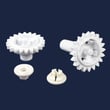
- If the freezer drawer is hard to open or close, inspect the drawer gear and rails; the refrigerator freezer drawer gear 12002497 is a common wear item on drawer systems.
Last updated: February 2026
How do I know what model Kenmore refrigerator I have?
Your Kenmore refrigerator’s model number is printed on the appliance ID tag; once you find it, match it exactly (letters and numbers) when ordering parts or looking up specs. For this parts page, the model number is 59669973012; confirm your tag matches that number.
Where to find the model number on a Kenmore refrigerator
Most Kenmore refrigerators place the model and serial tag in one of these spots:
- Inside the fresh food (refrigerator) compartment on a side wall
- On the ceiling of the fresh food compartment near the light
- Behind or beside the crisper drawers (you may need to pull a drawer out)
- Along the door frame (visible when the door is open)
- On the back exterior panel (less common, but possible)
Tip: Write the model number down exactly as shown; even one missing digit can pull up the wrong parts list.
What to do if the tag is hard to read
If the label is worn, smeared, or partially missing, these steps usually help:
- Wipe the tag gently with a damp cloth, then dry it (avoid harsh cleaners)
- Use a flashlight at an angle to make faint printing stand out
- Take a close-up photo and zoom in
- Look for the model number in your paperwork and compare it to the tag
- Check the model number format; Kenmore model numbers are typically all digits or a digit prefix plus digits
Why the exact model number matters
Kenmore uses different designs across model families; the model number controls which parts and diagrams apply. For example, a control board, door gasket, or evaporator fan motor can look similar but mount differently.
| If you need to… | Use the model number to… |
|---|---|
| Order replacement parts | Match the correct part for your exact configuration |
| Troubleshoot cooling or noise | Pull the right wiring diagram and component layout |
| Check features (ice maker, dispenser, lighting) | Confirm which options your unit was built with |
Helpful next step
Use the model number to reference the 59669973012 owner's manual for model-specific locations, diagrams, and identification details.
Last updated: February 2026
What are the most common problems with Kenmore refrigerators?
The most common problems we see on Kenmore refrigerators (including model 59669973012) are cooling issues, ice maker and water dispenser troubles, leaks, frost buildup, unusual noises, and intermittent control or lighting problems. Many of these start with airflow restrictions, dirty condenser coils, or a failing fan or control.
Most common symptoms and what usually causes them
- Not cooling or warm temperatures: dirty condenser coils, failed evaporator fan, failed start device, or compressor issues
- Freezer cold but fridge warm: blocked air vents, evaporator fan problem, frost-clogged evaporator area
- Water leaking or puddles: clogged defrost drain, loose water line connections, door not sealing
- Ice maker not making ice: water supply issue, frozen fill tube, ice maker failure
- Noisy operation: evaporator fan blade hitting ice, worn fan motor, condenser fan noise
- Lights or controls acting up: door switch issue, electronic control problem
Quick checks we recommend first (before replacing parts)
- Set temps to typical targets: 37°F fresh food, 0°F freezer
- Make sure vents inside the refrigerator are not blocked by food containers
- Clean condenser coils and confirm the condenser fan area is clear of dust
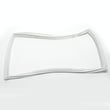
- Check door closing and gasket contact all the way around
- Listen for the evaporator fan running when the door switch is pressed
- If you have a display code, match it to the correct Kenmore error-code family
Parts that commonly fix these problems on model 59669973012
If troubleshooting points to a failed component, these are common repair parts for this model:
| Symptom | Common suspect part | Example part on this model |
|---|---|---|
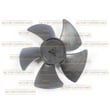
| Warm fridge, weak airflow | Evaporator fan motor or blade | Refrigerator evaporator fan motor WPW10128551, refrigerator evaporator fan blade WP2169142 |
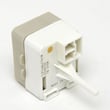
| Clicking, won’t start cooling | Start device | Start device WP2320150 |
| Noisy from back/bottom | Condenser fan motor | Refrigerator condenser fan motor W11613295 |
| Random temp swings or dead controls | Electronic control | Refrigerator electronic control WPW10503278 |
| Light stays off or won’t shut off | Door/light switch | Refrigerator switch W11384469 |
Why it matters
Catching airflow, fan, and door-seal problems early helps prevent food spoilage and reduces strain on the sealed system (compressor and evaporator). Small issues like a blocked vent or failing fan motor often look like “the fridge is dying” when they are actually straightforward fixes.
Helpful model-specific resources
- Use the owner's manual for temperature settings, control features, and basic troubleshooting steps.
- If your refrigerator shows an error code, use Kenmore 106 model refrigerator error codes to narrow down the likely failure.
Last updated: February 2026
What is the bottom part of a refrigerator called?
The “bottom part” of a refrigerator is most commonly the machine compartment, which houses key cooling components like the compressor, condenser fan, and start components. On Kenmore model 59669973012, this area is typically accessed from the rear lower panel; see the owner's manual for your exact layout.
What’s usually located in the bottom (machine compartment)
In most bottom-mount refrigerators, the lower rear area contains parts that remove heat and keep refrigerant moving.
- Compressor: pumps refrigerant through the sealed system
- Condenser fan motor: moves air across the condenser coils
- Start device and run capacitor: help the compressor start and run efficiently
- Filter dryer: helps keep moisture/contaminants out of the sealed system
- Wiring and controls: power and manage cooling functions
Parts on this model that relate to the “bottom section”
If you are troubleshooting noise, warm temperatures, or a compressor that will not start, these model-specific parts are commonly involved:
| Symptom | Bottom-area part to check | Example part for 59669973012 |
|---|---|---|
| Buzzing/clicking, won’t start | Start components | Start device WP2320150 |
| Humming, overheating, poor airflow | Condenser fan | Refrigerator condenser fan motor W11613295 |
| Hard start, intermittent running | Electrical support for compressor | Refrigerator run capacitor WPW10662129 |
| Sealed system opened for repair | Moisture control | Refrigerator uv filter dryer WPW10143759 |
Why it matters
Knowing the correct name helps you find the right diagram and parts faster. The machine compartment is also where many “no cool” and “loud noise” problems originate, so it is a smart first place to inspect (with power disconnected).
Last updated: February 2026