Owner’s manual
 View engine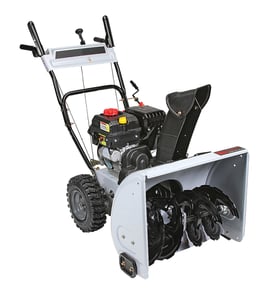



How many years should a snowblower last?
A gas snowblower like the Craftsman 536881113 typically lasts 10 to 20 years with normal residential use and consistent maintenance. Annual tune-ups, correct oil service, and proper off-season storage are the biggest factors that push lifespan toward the high end.
What most affects snowblower lifespan
A snow thrower usually “wears out” from neglected maintenance, corrosion, or running with worn drive components, not from age alone.
- Oil checks and oil changes (dirty or low oil shortens engine life)
- Fuel quality and storage practices (stale fuel causes hard starting and carb issues)
- Belt and shear pin wear (normal wear items that need periodic replacement)
- Rust prevention on the auger housing and impeller
- Proper lubrication of service points (especially after shear bolt replacement)
Maintenance schedule that supports a long life
The 536881113 owner's manual calls out key intervals that directly impact longevity.
| Task | Typical interval | Why it matters |
|---|---|---|
| Check engine oil level | Before use and about every 5 hours of run time | Prevents engine damage from low oil |
| Change engine oil | Every 25 hours or at least yearly | Reduces internal wear |
| End-of-season storage steps | If storing more than 30 days | Prevents fuel system damage and rust |
| Inspect wear items (belts, shear pins) | Each season | Maintains performance and prevents breakdowns |
Common “it’s wearing out” signs (and what to check)
These symptoms often mean the machine is still very repairable.
- Poor self-propelled movement: inspect the snowblower drive belt 1733324SM
- Auger or impeller not throwing well: inspect the snowblower gas belt 585416MA
- Excess vibration or intermittent auger stop: check shear bolts and auger lubrication points
- Hard starting after storage: address old fuel and follow the storage procedure in the manual
Why it matters
A snowblower that lasts 15+ years usually costs less per season and is more reliable during heavy snow. Replacing normal wear parts (belts, springs, pulleys) on time also helps protect bigger, more expensive assemblies.
Last updated: January 2026
How to read Craftsman snowblower serial number?
On a Craftsman snow thrower like model 536881113, the serial number is typically found on the product identification label on the machine, and you use it to identify the exact production run for parts and service. For label location and ID details, use the 536881113 owner’s manual.
Where to find the serial number label
On most Craftsman snowblowers, the identification label is on the rear or lower frame area near the axle and wheels.
- Check the back side of the base frame between the rear wheels
- Look along the rear housing panel behind the engine
- Inspect the lower frame rails near the wheels and axle
- Brush off packed snow, salt, and grime so the label is readable
- Use a flashlight; labels are often low and partially shaded
How to “read” the serial number (what it tells you)
The serial number format varies by production year, but it generally helps confirm the unit’s build sequence and can be required when matching parts like belts, chute hardware, or control components.
| What you have | What it’s used for | When you need it |
|---|---|---|
| Model number (536881113) | Identifies the correct parts diagrams and lists | Always, before ordering parts |
| Serial number | Identifies the production run/version | When parts vary by serial range |
| Engine model/type/code (on engine tag) | Identifies engine-specific parts (carburetor, ignition, etc.) | When troubleshooting engine issues |
Tips if the label is missing or unreadable
- Look for a second label on the handle assembly or rear panel
- Write down the model number and compare key assemblies in the diagrams (auger housing, discharge chute, control panel)
- If you are ordering wear items, match by application: ground drive belt vs auger drive belt
Common parts that can depend on exact identification
- Snowblower drive belt 1733324SM (traction/ground drive)
- Snowblower gas belt 585416MA (auger drive)
- Chute and control hardware (retainer rings, springs, levers)
Why it matters
Using the correct model and serial information helps prevent ordering the wrong Craftsman parts, especially when a snowblower has mid-season design changes that affect belts, pulleys, or chute components.
Last updated: January 2026
How do I tell what year my snowblower is?
To tell the year of your Craftsman gas snow thrower model 536881113, we use the engine date code (sometimes called the engine code or serial/date code). That code identifies the engine’s manufacture date, which is the most reliable way to estimate the snowblower’s build year. See the 536881113 owner's manual.
Where to find the date information
Most snowblowers don’t have a simple “model year” label on the handlebar; instead, the engine and product tags do the work.
- Check the engine shroud/blower housing for a code/serial label or a stamped code.
- Look for a model and serial tag on the snowblower frame (often near the rear frame, axle area, or under the dash panel).
- If the unit has been serviced, compare the engine code to any service records.
- If the engine has been replaced, the engine code will reflect the replacement engine’s date, not the original machine.
How to interpret a common engine date code
Many small engines use a numeric date code format where the first digits indicate the year.
Example code: 99011556
| Code section | What it usually means | Example value |
|---|---|---|
| First 2 digits | Year of manufacture | 99 = 1999 |
| Next 2 digits | Month | 01 = January |
| Next 2 digits | Day | 15 = 15th |
Why it matters
Knowing the approximate year helps us match the correct drive belt, auger belt, friction drive parts, and control components for your Craftsman 536881113, especially when parts changed across production runs.
Quick tip if you are ordering parts
If you are troubleshooting traction or auger engagement while you confirm the year, these are common wear items for this model:
- Snowblower drive belt 1733324SM (ground drive)
- Snowblower gas belt 585416MA (auger drive)
Last updated: January 2026
What is the most common problem with snow blowers?
The most common problem we see with snow blowers is a no-start or hard-start condition caused by fuel issues (stale gas) and basic tune-up needs. On the Craftsman 536881113 gas snow thrower, chute clogs and auger or drive engagement problems (often belt-related) are also very common.
Most common causes (and what to check first)
- Stale or contaminated fuel: drain old fuel and refill with fresh unleaded gas.
- Spark plug and ignition: inspect the plug for fouling and set the gap to the spec listed in the 536881113 owner's manual.
- Carburetor restriction: varnish from old fuel can block jets and passages.
- Packed snow in the chute or auger housing: wet snow and ice can stop discharge.
- Slipping belts: worn belts reduce auger performance and traction.
Safe way to clear a clog
The manual procedure is important because the auger and impeller can start unexpectedly.
- Release the auger drive lever.
- Move the throttle lever to the stop position.
- Remove (do not turn) the ignition key.
- Disconnect the spark plug wire.
- Clear the blockage with a tool (not your hands).
When it is likely a belt problem
If the engine runs but the auger does not spin reliably or the unit will not move, inspect the belts and engagement.
| Symptom | Most likely area | What we do next |
|---|---|---|
| Engine runs, auger will not spin | Auger drive system | Inspect belt condition and tension |
| Poor throwing distance | Chute/impeller area or belt slip | Clear packed snow; check for belt slip |
| Unit will not move | Traction/drive system | Inspect ground drive belt and friction drive |
Model-matched parts that often solve belt-related issues include the snowblower gas belt 585416MA (auger drive belt) and the snowblower drive belt 1733324SM (ground drive belt).
Why it matters
Starting and clogging problems are usually quick fixes; running with a slipping belt or repeated clogging can lead to abnormal vibration and faster wear in the auger/impeller drive system.
Last updated: January 2026