Owner’s manual
 Error Codes



How to tell cubic feet of Kenmore refrigerator by model number?
For Kenmore model 79578306804, the model number alone usually does not state the exact cubic-foot capacity. The most reliable way is to look up the capacity in the 79578306804 owner's manual specifications section; if you need a quick estimate, calculate interior volume from measurements.
Fast ways to find the cubic feet
- Check the manual specs: Capacity is typically listed with other specs and features.
- Look for the rating label: Many refrigerators list capacity on the model and serial tag (often inside the fresh food section).
- Estimate by measuring: Measure usable interior space and convert to cubic feet.
How to estimate cubic feet (good for comparisons)
- Empty the section you are measuring (fresh food and freezer can be estimated separately).
- Measure width x depth x height of the usable interior space in inches.
- Multiply to get cubic inches.
- Divide by 1,728 to convert to cubic feet.
Quick conversion table
| What you have | Convert to cubic feet |
|---|---|
| Cubic inches | Divide by 1,728 |
| Cubic feet (fresh food) + cubic feet (freezer) | Add them for total capacity |
What the model number can and cannot tell you
Kenmore model numbers help identify the series, design family, and parts (for example, this is a Kenmore 795-prefix bottom-mount style), but they are not a dependable way to read the exact capacity without checking the published specs.
Why it matters
Knowing cubic feet helps you compare refrigerators accurately, choose the right storage accessories (bins, shelves), and confirm fit for your kitchen and food-storage needs.
Last updated: January 2026
What are the common problems with Kenmore Elite refrigerators?
Common problems we see on Kenmore Elite refrigerators like model 79578306804 are weak or uneven cooling, doors not sealing or closing correctly, frost buildup from airflow or defrost issues, water leaks from a clogged drain, and unusual noises. Many fixes start with cleaning condenser coils, confirming door closure, and adjusting temperatures correctly using the 79578306804 owner's manual.
Most common symptoms and what usually causes them
- Not cooling or warm temperatures: dirty condenser coils, blocked air vents, doors opened often, or controls not set for conditions (allow 24 hours after changes).
- Freezer too warm or slow ice production: blocked vents, heavy ice usage, frequent door openings, or temperature settings needing adjustment.
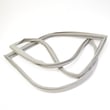
- Doors will not close completely: refrigerator not level, food packages blocking, bins or shelves out of position, or gaskets sticking.
- Water leaks or puddles: a clogged defrost drain is common; replacing the drain tube can help.
- Buzzing or clicking noises: normal operating sounds are possible, but repeated clicking can point to a start or compressor-related issue.
Quick checks we recommend first (fast, no parts)
- Set temperatures, then wait at least 24 hours before judging results.
- Push doors firmly shut; confirm shelves, pans, and bins are fully seated.
- Clean condenser coils (dust buildup makes the compressor work harder).
- Clear items away from air vents so cold air can circulate.
- If gaskets stick, clean the gasket and the surface it touches; a thin coat of paraffin wax helps.
When a part is commonly involved
| Symptom | Common part to inspect | What it affects |
|---|---|---|
| Interior light stays on, warm temps, door ajar behavior | Door switch | Tells the control the door is closed |
| Water under crisper or freezer, ice buildup near drain | Drain tube | Routes defrost water to the drain pan |
| No water to dispenser or ice maker | Water inlet valve | Controls water flow into the refrigerator |
If you suspect a drain restriction or recurring puddles, the refrigerator drain tube 5251JA3003D is a common fix on this platform.
Why it matters
Cooling complaints and frost buildup often trace back to airflow, door sealing, and coil cleanliness. Fixing those basics first prevents food spoilage, reduces compressor run time, and avoids repeat icing and leaking.
For display or diagnostic messages, use the Kenmore 795 model bottom freezer refrigerator error codes reference to match the code to the most likely cause.
Last updated: January 2026
Why is my Kenmore refrigerator leaking underneath?
On Kenmore bottom-mount refrigerator model 79578306804, leaking underneath is most often caused by water from the defrost system overflowing into the drain pan because the defrost drain is clogged or frozen. A second common cause is a water supply leak at the inlet valve or tubing.
Quick checks we recommend first
- Look for a sheet of ice or standing water on the freezer floor (points to a clogged defrost drain).
- Check the drain pan area for active dripping during or after a defrost cycle.
- Inspect the water line connection and shutoff valve if the refrigerator has an ice maker or dispenser.
- Make sure doors fully close; warm air intrusion increases frost and drain freeze-ups.
- Confirm the refrigerator is level and stable so water flows correctly into the drain pan.
Most common causes and what to do
| What you see | Most likely cause | What to do next |
|---|---|---|
| Water under the front, freezer floor icy | Defrost drain clogged or frozen | Thaw the drain area, then flush the drain with warm water until it flows freely |
| Water near back/bottom, especially after ice maker use | Water line or valve leaking | Inspect fittings and tubing; replace the valve if it seeps or drips |
| Water only occasionally, often after defrost | Normal water entering drain pan but pan shifted or overflowing | Reposition pan, clean it, and check for cracks |
Parts that commonly fix leaks on this model
If you find the leak is from the defrost drain outlet or tube, replacing the drain tube is a common repair: refrigerator drain tube 5251JA3003D.
If the leak is from the water supply system (ice maker/dispenser), the inlet valve is a common source: refrigerator water valve AJU55759303.
Why it matters
Water under the refrigerator can damage flooring and also signals airflow or defrost-drain problems that can lead to frost buildup, warmer temperatures, and poor ice production if left uncorrected.
Reference for model-specific guidance
Use the troubleshooting and care sections in the 79578306804 owner's manual for drain pan, door gasket care, and water line installation precautions.
Last updated: January 2026