Installation guide
 Owner’s manual




What is the capacity of the mhw8200fw0?
The Maytag MHW8200FW0 washer has a 4.5 cu. ft. capacity. That is the usable drum size for washing loads; it helps you estimate how much laundry you can wash per cycle without overloading.
Capacity is a volume rating, not a weight limit. For best cleaning and spin performance in a front-load washer like the MHW8200FW0:
- Load items loosely; do not pack them down
- Fill the drum about 3/4 full for mixed loads
- Wash bulky items (comforters, blankets) one at a time when possible
- Use HE detergent and measure carefully to reduce oversudsing
- If the washer vibrates or leaves items too wet, reduce load size
These examples help translate 4.5 cu. ft. into everyday loads.
| Load type | Typical fit in 4.5 cu. ft. | Best practice |
|---|---|---|
| Mixed everyday laundry | Large load | Leave space at the top |
| Towels | Large load | Avoid overstuffing to prevent imbalance |
| King/queen comforter | Often fits (depends on fill) | Use bulky cycle; wash alone |
When you match load size to the MHW8200FW0 capacity, you get better tumbling action, fewer out-of-balance spins, and less strain on parts like the door boot and suspension.
For cycle and loading recommendations specific to this washer, use the MHW8200FW0 user manual.
Last updated: January 2026
What is the most common problem with a Maytag washer?
For the Maytag MHW8200FW0 washer, the most common customer-reported issues we see across Maytag washers are “won’t drain/spin” symptoms (clothes stay wet) and excessive vibration or noise during spin. These problems are often caused by a clog, an installation/leveling issue, or a failing drain or door-lock related component.
- Washer won’t drain or leaves water in the tub: clogged pump filter, blocked drain hose, or a weak pump
- Washer won’t spin or stops mid-cycle: door not locking, load imbalance, or control sensing a fault
- Loud banging, shaking, or walking: washer not level, shipping/installation issues, or worn suspension
- Slow fill or fill errors: restricted inlet screens, kinked hoses, or low water pressure
- Leaks: loose hose connections, drain hose issues, or door boot sealing problems
Use these steps for the MHW8200FW0 to rule out the most common non-part causes:
- Confirm the washer is level and all feet are firmly on the floor
- Verify the drain hose setup is correct (not shoved too far into the standpipe)
- Run a rinse/spin cycle with a small load to see if symptoms repeat
- Check for kinked inlet hoses and make sure both hot and cold are connected
- If the washer is noisy, reduce load size and avoid washing single heavy items alone
For installation-related checks (leveling, drain hose depth, inlet hose connection), follow the steps in the MHW8200FW0 installation instructions.
If basic checks do not help, these model-compatible parts are often involved in the most common failures:
| Symptom | Common suspect part | Example model-compatible part |
|---|---|---|
| Won’t drain / water left in tub | Drain pump or pump restriction | Washer drain pump WPW10605427 |
| Door won’t lock / won’t start or spin | Door lock assembly | Washer door lock WPW10443885 |
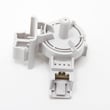
| Overfilling or odd water levels | Pressure sensing components | Washer water-level pressure switch WPW10448876 |
Drain/spin and vibration problems can quickly turn into bigger issues: wet laundry, longer cycle times, odors from standing water, and extra wear on the tub and suspension. Catching the root cause early usually keeps the repair simpler.
Last updated: January 2026
What's the average lifespan of a Maytag washer?
Maytag washers, including the Maytag MHW8200FW0, typically last 10 to 13 years with normal household use. Consistent care (proper loading, correct detergent, and routine cleaning) is what most often separates a washer that reaches that range from one that wears out early; see the MHW8200FW0 installation instructions for setup details that help reduce vibration and stress.
- Overloading or washing heavy items too often (extra strain on the tub, shocks, and bearings)
- Poor leveling (increases vibration and wear)
- Detergent issues (too much detergent or non-HE detergent can cause residue and odors)
- Drain problems (coins, lint, and debris stressing the pump)
- Moisture left in the door boot (can lead to odor and buildup)
- Level the washer and keep all feet firmly on the floor
- Use HE detergent and measure carefully
- Leave the door slightly open between loads to dry the drum and door boot
- Clean the drain pump filter periodically; replace a damaged cap such as the washer drain pump filter cap W11568579 if it won’t seal
- Address small leaks quickly (hoses, clamps, door boot)
| Usage pattern | Typical lifespan | What changes it most |
|---|---|---|
| Light (few loads/week) | 12 to 15 years | Good leveling, routine cleaning |
| Average (most households) | 10 to 13 years | Load size, detergent habits |
| Heavy (daily loads) | 7 to 10 years | Overloading, vibration, heat, wear |
A washer that is installed correctly and maintained tends to run quieter, drain better, and avoid repeat failures in high-wear areas like the drain system and suspension. That usually means fewer breakdowns and a longer service life.
Last updated: January 2026