Installation guide
 Owner’s manual
 Error Codes


Does my Kenmore top load washer have a filter?
Yes, your Kenmore top load washer model 11024622300 uses screens and internal trapping points rather than a single, user-cleanable “filter” like many front-load washers. The most common “filter-like” maintenance is cleaning the water inlet valve screens and checking the drain path for obstructions; see the 11024622300 owner's manual.
Where “filtering” happens on this washer
On this style of Kenmore top-load washer, lint and debris are typically managed in a few places:
- Water inlet valve screens at the hot and cold hose connections (catch sediment before it enters the washer)
- Drain pump and drain hose path (coins, socks, and debris can restrict draining)
- Tub and load (lint control depends heavily on sorting, water level, and detergent use)
If the washer is not filling well, the manual specifically calls out clogged inlet valve screens as a common cause.
Quick checks you can do safely
- Unplug the washer.
- Turn off both water faucets.
- Remove the fill hoses from the back of the washer.
- Inspect and gently clean the small screens in the inlet ports.
- Reinstall hoses, turn water back on, and check for leaks.
What to watch for
- Slow fill, weak spray rinse, or long fill times
- Sediment in hoses or screens
- Kinked inlet hose or partially closed faucet
Parts that are commonly involved (when symptoms point to them)
If cleaning screens and hoses does not restore normal filling or draining, these parts are common next steps:
| Symptom | Most likely area | Example part for this model |
|---|---|---|
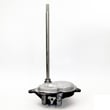
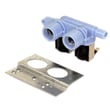
| Won’t fill or fills slowly | Inlet system | Washer inlet valve 285805 |
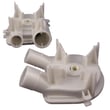
| Won’t drain or drains slowly | Drain system | Washer drain pump WP3363394 |
Why it matters
Keeping inlet screens and the drain path clear helps prevent no-fill, slow-fill, and draining problems, and it reduces strain on components like the inlet valve and drain pump.
Last updated: February 2026
How do I reset a Kenmore washer?
For Kenmore washer model 11024622300, the most reliable reset is a power reset: unplug the washer (or switch off the breaker) for about 1 minute, then restore power and restart the cycle. If the washer is paused mid-cycle, you can also stop and restart it using the Cycle Control knob as described in the 11024622300 owner's manual.
Quick reset options (start here)
- Power reset: Unplug for 1 minute, then plug back in.
- Cycle reset: Push in the Cycle Control knob to stop, then pull it out to restart.
- Lid reset: Close the lid fully; this model will not agitate or spin with the lid open.
- Pause reset: Wait about 2 minutes if the washer is in a normal cycle pause.
If it still will not start, agitate, spin, or drain
These checks solve most “won’t run” complaints on this style of Kenmore top-load washer:
- Confirm the outlet has power and avoid extension cords.
- Make sure the load is not overloaded; wash smaller loads.
- Re-center the basket if it was pulled forward during loading.
- Verify the washer is level; loose leveling locknuts can cause vibration and cycle problems.
- Check the drain hose height and routing; the hose end should not be higher than 96 in. above the floor.
Common symptom-to-check table
| What you see | What to check first | Likely next step |
|---|---|---|
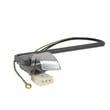
| Won’t agitate or spin | Lid fully closed | Test/replace washer lid switch WP3949238 |
| Won’t drain or spin | Drain hose height/clog | Inspect/replace washer drain pump WP3363394 |
| Stops or seems “stuck” | Normal 2-minute pause | Let cycle continue, then power reset |
Why it matters
A reset clears a temporary control or cycle state, but issues like an open-lid signal, a drain restriction, or an out-of-level cabinet can keep the washer from advancing normally. Leveling and drain setup details are also covered in the 11024622300 installation guide.
Last updated: February 2026
How many cubic feet is a Kenmore model 11024622300 washer?
Kenmore washer model 11024622300 is a Whirlpool-built, top-load direct-drive style washer; washers in this Kenmore 110 series typically run about 3.2 to 3.5 cubic feet of capacity. For the exact capacity rating for your specific configuration, check the model specifications in the 11024622300 owner’s manual.
How to confirm the exact capacity for your washer
We recommend using the model-specific specs section so you are matching the correct tub size and basket style.
- Look for a “capacity” or “cubic feet” listing in the specifications section
- Check the model/serial label under the lid to confirm you are using the correct manual
- If your washer has multiple cycle options and water levels, use the rated capacity, not the fill level
- If you are comparing to a replacement washer, compare capacity and basket diameter, not just exterior size
Typical capacity range for Kenmore 110 top-load washers
These are common ranges customers see when shopping parts and planning loads.
| Washer type (Kenmore 110 family) | Typical capacity range | What you’ll notice in use |
|---|---|---|
| Standard top-load, direct-drive | 3.2 to 3.5 cu. ft. | Full-size loads, traditional agitator action |
| Larger-capacity variants | 3.6 to 4.0+ cu. ft. | More room for bulky items, higher basket volume |
Why it matters
Capacity affects how much you can wash per load and how well items circulate around the agitator. Overloading a smaller-capacity basket can lead to poor cleaning, out-of-balance spinning, and extra wear on drive components like the clutch and motor coupling.
Related installation notes that impact real-world load size
Even with the same rated cubic feet, installation and setup can change performance.
- Use a level floor to reduce vibration and out-of-balance issues
- Make sure water supply meets typical requirements (hot water around 120°F and adequate pressure)
- Allow recommended clearances for noise reduction and service access
For setup details, follow the 11024622300 installation guide.
Last updated: February 2026
How to identify a Kenmore washer model?
For Kenmore washer model 11024622300, the model number is printed on the model and serial number label located under the washer lid. Once you match that full number exactly, we can help you choose the correct Kenmore washer parts and installation instructions.
Where to look on Kenmore washers
On this Kenmore top-load design, the label is typically easy to spot after you lift the lid.
- Lift the washer lid and look along the underside of the lid opening
- Check the rim of the tub opening near the hinge area
- Look for a sticker or metal plate that lists Model and Serial
- Write the model number exactly as shown (include all digits)
- Record the serial number too; it helps confirm production details
What the model number looks like
Many Kenmore washers use a numeric model format that starts with 110.
| What you see on the label | What it means | Example |
|---|---|---|
| Model number | Identifies the exact washer design for parts matching | 11024622300 |
| Serial number | Identifies the specific unit built | Varies by unit |
| Purchase date (your records) | Helps with service history and maintenance tracking | Your date |
Why it matters
Kenmore model numbers can look similar, but small differences change the correct fit for parts like a lid switch, drain pump, or inlet valve. Using the exact model number prevents ordering the wrong replacement part and avoids repeat repairs.
Next best step
Use the model label information to confirm your documentation and parts list in the 11024622300 owner’s manual.
Last updated: February 2026
Is it worth repairing a Kenmore washing machine?
Yes, repairing a Kenmore washer is worth it when the fix restores reliable washing and spinning for far less than replacing the machine. For Kenmore model 11024622300, common wear items like the lid switch, drain pump, and motor coupling are straightforward repairs that often extend service life.
Quick way we decide: repair vs replace
- Repair it when the washer still fills, agitates, drains, and spins after a targeted fix.
- Replace it when the tub, basket, or gearcase damage causes repeated leaks, loud grinding, or chronic out-of-balance issues.
- Repair it when the problem matches a known, common failure (lid switch, pump, coupling, clutch).
- Replace it when multiple major systems are failing at once (drive system plus leaks plus electrical issues).
- Repair it when the cabinet and basket are solid and rust-free.
High-value repairs for model 11024622300
These are frequent, cost-effective fixes on this style of Kenmore top-load washer:
| Symptom | Likely cause | Example part for this model |
|---|---|---|
| Won’t spin or drain | Lid safety circuit not closing | Washer lid switch WP3949238 |
| Won’t drain, humming, water left in tub | Pump jammed or worn | Washer drain pump WP3363394 |
| Agitates but won’t spin (or vice versa), burning rubber smell | Drive coupling worn | Washer motor coupling 285753A |
| Weak agitation, clothes not moving well | Agitator dogs worn | Agitator dog 80040 |
What to check before spending money
- Confirm the symptom: no drain, no spin, no agitation, leak, or noise.
- Do a basic safety inspection: unplug the washer; do not reach into the tub if anything is moving.
- Look for simple causes: kinked drain hose, overloaded tub, unbalanced load.
- Use the model instructions for operation, loading, and service cautions in the 11024622300 owner's manual.
Why it matters
A correct diagnosis prevents “parts swapping.” On a dependable direct-drive Kenmore washer like 11024622300, replacing one failed component (such as a lid switch or pump) often restores full performance and avoids the cost of a new washer.
Last updated: February 2026
What is the life expectancy of a Kenmore washer?
Most Kenmore washers last 10 to 15 years. For the Kenmore 11024622300 top-load washer, regular care and avoiding overloads helps you stay in that range, and the warranty coverage on major components (like the basket, tub, and gearcase parts) supports long service life when the washer is maintained.
Typical lifespan and what affects it
A washer’s lifespan depends more on use and maintenance than the badge on the lid.
- Loads and frequency: daily use and heavy loads shorten life
- Overloading: strains the drive system, clutch, and gearcase
- Water quality: sediment can wear the inlet valve and pump faster
- Leveling and balance: reduces vibration and suspension wear
- Basic upkeep: cleaning, checking hoses, and using the right detergent amount
What the 11024622300 warranty tells you
The Kenmore 11024622300 manual includes longer coverage on certain components, which is a good indicator of what’s built for extended service.
| Component (coverage type) | Coverage window | What it means for lifespan |
|---|---|---|
| Porcelain basket (limited lifetime) | Lifetime of washer | Basket is designed for long-term durability |
| Plastic tub (limited) | Years 2 to 10 | Tub is expected to hold up long-term |
| Gearcase parts (limited) | Years 2 to 5 | Drive system is serviceable over time |
For the exact warranty terms and maintenance guidance, use the 11024622300 owner’s manual.
Signs it is nearing end of life (repair vs replace)
These symptoms often show up as a washer ages:
- Loud grinding or oil leaks from the drive system (often gearcase related)
- Won’t spin or drains poorly even after clearing the drain path
- Agitation is weak or stops (common wear items in the agitator)
- Frequent out-of-balance shaking despite proper leveling
- Repeated electrical no-start issues (lid switch, timer, wiring)
Common wear parts that can extend service life
On this model, a few repairs are common and often restore normal washing without replacing the washer.
| Symptom | Common part to check | Example part for this model |
|---|---|---|
| Won’t spin or start | Lid switch | Washer lid switch WP3949238 |
| Won’t drain | Drain pump | Washer drain pump WP3363394 |
| Agitator slips or “ratchets” | Agitator dogs | Agitator dog 80040 |
Why it matters
Knowing the typical 10 to 15 year lifespan helps you decide whether a repair makes sense. If your 11024622300 is within that window, replacing a high-wear part (like a lid switch, drain pump, or agitator dogs) often restores performance and prevents bigger drive-system damage.
Last updated: February 2026