 Owner’s manual
 View engine






What engine is in a Husqvarna MZ61-967277501-01?
The Husqvarna MZ61-967277501-01 uses a four-stroke overhead valve (OHV) engine. For the exact engine brand, displacement, and spec details installed on your mower, match the engine ID plate information to the specifications listed in the owner's manual.
How to identify the exact engine on your mower
We recommend confirming the engine by reading the identification plate in the engine compartment. This is the most accurate way because engine variants can differ by production run.
- Open the engine compartment and locate the printed ID plate.
- Record the type designation and serial number from the plate.
- Compare those details to the technical data section in the manual.
- Use the mower model and serial information when ordering parts.
- If the mower will not crank, check the starting circuit components first.
What the manual tells you about the engine type
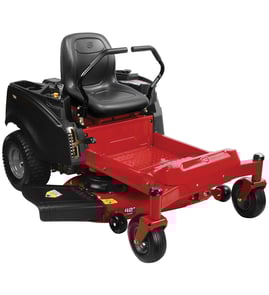
The operator manual for this Husqvarna zero-turn rider describes the machine as being fitted with a four-stroke overhead valve engine, with power transmitted through belt-driven hydraulic pumps (hydrostatic drive).
Quick reference
| Item | What we can confirm for MZ61-967277501-01 |
|---|---|
| Engine design | 4-stroke OHV |
| Fuel | Gasoline (internal combustion engine) |
| Drive system | Belt-driven hydraulic pumps (hydrostatic) |
| Best way to confirm exact engine model | Read engine ID plate and cross-check manual technical data |
Why it matters
The exact engine model determines the correct maintenance parts (spark plug, air filter, fuel system parts) and the right service specs (oil type, capacity, tune-up settings). Confirming the engine ID also prevents ordering the wrong components.
Related part that can affect starting (if you are troubleshooting)
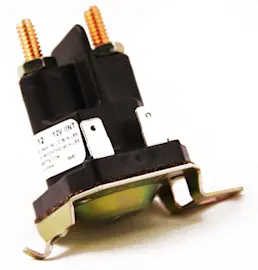
If the engine type is confirmed but the mower will not crank, a common electrical cause is a failed solenoid.
Last updated: February 2026
Is the Husqvarna MZ61-967277501-01 a good mower?
Yes. The Husqvarna MZ61-967277501-01 is built to mow large areas efficiently, with operator-friendly controls and a hydrostatic drive system that supports smooth, responsive handling. Following the maintenance and safety guidance in the owner's manual helps keep performance strong and extends mower life.
What “good” means for this model
A good mower is one that matches your property size and delivers consistent cut quality with reliable starting, safe operation, and manageable upkeep.
Common strengths owners look for:
- Efficient mowing for larger lawns and open areas
- Hydrostatic drive with steering controls for smoother maneuvering
- Serviceable deck and blade system for consistent cut quality
- Clear safety interlocks (seat and PTO behavior)
- Straightforward routine maintenance (belts, blades, lubrication)
Quick checklist: is it a good fit for you?
Use this as a practical decision guide.
| Your situation | Fit for MZ61-967277501-01 | Why it matters |
|---|---|---|
| Large, mostly open property | Strong fit | Designed for rapid mowing of large areas |
| Lots of tight obstacles | Mixed | Zero-turn style handling helps, but trimming still needed |
| You want easy DIY upkeep | Strong fit | Routine items (blades, belts, battery care) are standard service tasks |
| You need dependable starting | Strong fit with good electrical health | Battery, wiring, and solenoid condition are key |
Maintenance items that most affect performance
Keeping these areas in shape is what makes the mower feel “good” season after season:
- Blades: Sharp, balanced blades improve cut quality; replace bent or cracked blades.
- Blade bolt torque: When servicing blades, tighten the blade bolt to 45 to 55 lb-ft.
- Belts: Belts are not adjustable; replace them if they begin to slip from wear.
- Battery storage: For off-season storage, remove, clean, charge, and store the battery in a cool place.
- Safety checks: Verify seat and park brake related components are intact and functioning.
Helpful model-matched parts we commonly see used in starting and safety circuits:
Why it matters
This mower’s design focuses on efficient mowing and controlled handling; when blades, belts, and safety interlocks are maintained correctly, you get better cut quality, fewer interruptions, and longer component life.
Last updated: February 2026
Is the Husqvarna MZ61-967277501-01 a commercial mower?
Yes. The Husqvarna MZ61-967277501-01 is designed for high-efficiency mowing of primarily large areas, with operator-friendly controls and a hydrostatic transmission regulated by steering controls (a common zero-turn, commercial-style layout). For intended-use and safety details, use the owner's manual.
How to interpret “commercial” for the MZ61-967277501-01
“Commercial” is best understood as capability and design features that support frequent, demanding mowing, not a guarantee of any specific duty rating.
- Built to mow primarily large areas efficiently
- Hydrostatic drive controlled by steering levers for precise maneuvering
- Controls designed to be easily accessible to the operator
- Maintenance and service routines are laid out for ongoing upkeep
- Parts ordering is based on model, type designation, and serial number
Quick fit guide
Use this to match the mower to your workload.
| Use case | Fit for MZ61-967277501-01 | What to focus on |
|---|---|---|
| Large residential property | Excellent | Routine blade and belt checks |
| Frequent mowing (multiple properties) | Strong | Strict maintenance schedule |
| Rough terrain and obstacles | Good with care | Avoid impacts; inspect deck and blades |
| Occasional light mowing | More mower than you need | Storage and fuel management |
Why it matters
If you run the MZ61-967277501-01 like a commercial mower (long run times, frequent starts, heavy cutting), maintenance and correct replacement parts protect cut quality and safety. For blade installation orientation and the correct blade bolt torque, follow the specifications in the owner's manual.
Parts that often come up with heavy use
These are common wear or control items to check when troubleshooting starting, safety interlocks, or PTO engagement:
- Starting circuit: lawn tractor starter solenoid 582042802
- Operator presence and safety interlocks: sweat switch 532421062
- PTO engagement control: switch.pto.8 582107601
Last updated: February 2026
What is the difference between a front engine and rear engine riding lawn mower?
A front-engine riding mower has the engine ahead of the operator under a hood; a rear-engine riding mower places the engine behind the seat. Your Husqvarna MZ61-967277501-01 is a zero-turn rider, so steering and weight distribution feel very different than either traditional tractor-style layout (review operating basics in the MZ61-967277501-01 owner's manual).
Quick comparison
| Type | Engine position | Steering style | Best fit for |
|---|---|---|---|
| Front-engine riding mower (lawn tractor) | Front | Steering wheel | General mowing, towing, familiar controls |
| Rear-engine riding mower | Rear | Steering wheel | Smaller yards, tighter storage, basic mowing |
| Zero-turn rider (like MZ61-967277501-01) | Typically rear | Dual lap bars | Fast trimming, tight turns, large open areas |
What changes in real use
- Turning and trimming: Zero-turn riders pivot tightly using independent wheel control; tractors and rear-engine riders turn in a wider arc.
- Operator view: Tractors have a hood in front; zero-turn decks are more “out front,” which helps when trimming around obstacles.
- Traction and slope behavior: Engine placement and drive layout change how the machine feels on hills; follow the slope limits and safety rules in the manual.
- Service access: Front-engine tractors often service from the hood area; rear-engine and zero-turn designs usually service from the rear and deck areas.
- Pushing/transporting: Many hydrostatic machines use bypass linkages or release levers for manual movement; the manual for this model covers “moving machine by hand.”
Why it matters
Engine location is only part of the decision. The bigger difference is tractor-style steering vs zero-turn steering, which affects mowing speed, turning radius, and how you handle obstacles and slopes.
Practical buying and maintenance tips
- Choose a tractor (front-engine) if you want towing capability and familiar steering.
- Choose a rear-engine rider for simpler mowing in smaller spaces.
- Choose a zero-turn for frequent trimming and faster coverage on larger lawns.
- For safe handling, let the engine and muffler cool before working near the rear of the machine.
Last updated: February 2026