


How much is a new AC unit for a 1800 sq ft house?
For a typical 1,800 sq ft home, a new central AC system commonly lands in the $5,600 to $14,700 installed range, depending on efficiency (SEER2), equipment tier, and whether ductwork or electrical upgrades are needed. Many homes this size end up around 3 tons, but sizing must be confirmed by a load calculation.
What drives the price most
- System size (tons): Many 1,800 sq ft homes use 2.5 to 3.5 tons; climate, insulation, and windows can shift this.
- Efficiency rating (SEER2): Higher SEER2 usually costs more up front but can reduce operating cost.
- Ductwork condition: Leaky, undersized, or damaged ducts can add significant labor and materials.
- Electrical and controls: New disconnect, whip, breaker, thermostat, or low-voltage wiring can add cost.
- Installation complexity: Pad, line-set routing, condensate drainage, and access to the air handler/furnace matter.
Typical installed cost bands (what you can expect)
| System tier | Common SEER2 range | Typical installed cost for ~1,800 sq ft |
|---|---|---|
| Basic | ~12 to 13 | $5,600 to $8,000 |
| Mid-range | ~14 to 15 | $8,000 to $11,500 |
| Premium | ~16+ | $11,500 to $14,700 |
How this relates to your York D1EB060A25
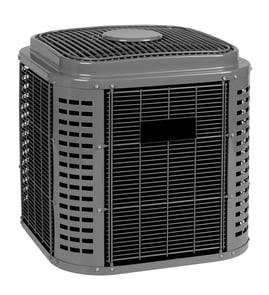
If you are replacing a York D1EB060A25 central air conditioner, the most accurate next step is matching the new condenser and indoor coil/air handler for capacity and refrigerant type, then confirming airflow and duct sizing. If your current system is not starting or is short-cycling, a failed run capacitor is a common, lower-cost fix.
- If the outdoor fan or compressor struggles to start, check the Capacitor TRCF5 as a likely service part.
- If the system runs but does not cool, focus on airflow (filter, coil cleanliness) before assuming replacement.
Why it matters
Oversizing can cause short cycling and humidity problems; undersizing can run constantly and still miss setpoint. A proper load calculation protects comfort, efficiency, and equipment life.
Last updated: February 2026
How to reset a York air conditioner?
To reset your York central air conditioner model D1EB060A25, turn the system off at the thermostat and cut power at the breaker or outdoor disconnect for a few minutes, then restore power and call for cooling. This clears many control lockups and short-cycling issues.
Safe reset steps (recommended)
- Set the thermostat to OFF.
- Turn OFF the A/C breaker(s) (and the outdoor disconnect if present).
- Wait 3 to 5 minutes (lets controls fully power down).
- Turn power ON again.
- Set thermostat to COOL and lower the setpoint 3 to 5 degrees.
- Wait 5 to 10 minutes for the outdoor unit to start (many systems have a built-in delay).
If it still will not restart
These checks cover the most common “won’t come back on” causes after a reset:
- Replace thermostat batteries (if your thermostat uses them).
- Check the indoor air handler door is fully closed (some have a safety switch).
- Confirm the condensate drain is not tripping a float switch (if equipped).
- Inspect for a blown fuse in the disconnect (if your setup uses fuses).
- Listen for humming at the outdoor unit; a weak capacitor can prevent the fan or compressor from starting.
Capacitor note (common no-start part)
A failed run capacitor is a frequent reason an outdoor fan motor or compressor will not start.
| Symptom | What it often points to | What to do next |
|---|---|---|
| Outdoor unit hums but fan does not spin | Weak/bad capacitor | Test capacitor; replace if out of spec |
| Fan starts only if “spun by hand” (power off first) | Weak/bad capacitor | Replace capacitor |
| Breaker trips on start | Shorted component or wiring | Stop and have wiring/components checked |
If you need a replacement that matches what is listed for this model, use the capacitor TRCF5.
Why it matters
Resetting the D1EB060A25 the right way prevents nuisance breaker trips and protects the compressor from rapid restarts. The built-in delay and proper power-down time are especially important during hot-weather cycling.
Last updated: February 2026
What size AC do I need for 1300 sq ft?
For a typical 1,300 sq ft home, we size central air conditioning in the 2.5 to 3.0 ton range (about 30,000 to 36,000 BTU/hr), then fine-tune based on climate, insulation, windows, and ductwork. For York D1EB060A25, correct sizing also depends on your home’s heat gain and airflow.
Quick sizing rule of thumb (starting point)
Use this as a first pass, then confirm with a load calculation:
- Mild climates / good insulation: ~18 to 20 BTU per sq ft
- Mixed climates / average insulation: ~20 to 25 BTU per sq ft
- Hot climates / lots of sun or older insulation: ~25 to 30 BTU per sq ft
- High ceilings (over 8 ft): increase capacity to account for extra volume
- Leaky ducts or poor returns: fix airflow issues before upsizing
Example for 1,300 sq ft
| Home conditions | BTU estimate | Approx. tons |
|---|---|---|
| Efficient, shaded, tight home | 23,400 to 26,000 | 2.0 to 2.2 |
| Typical home | 26,000 to 32,500 | 2.2 to 2.7 |
| Hot/sunny or less efficient | 32,500 to 39,000 | 2.7 to 3.25 |
Why “bigger” is not better
Oversizing a central AC often causes short cycling, higher humidity, uneven temperatures, and unnecessary wear on the compressor and electrical components.
What to check before you choose a size
These items change the correct tonnage more than most people expect:
- Your climate zone and how much afternoon sun hits the home
- Insulation levels (attic and walls) and air sealing
- Window area, window type, and shading
- Ceiling height and open floor plan volume
- Duct sizing and static pressure (airflow problems mimic “not enough AC”)
Parts note for York D1EB060A25
If you are troubleshooting cooling or starting issues while sizing or planning service, a weak run capacitor can cause hard starts or no-start symptoms. The model-specific part we show for this unit is the capacitor TRCF5 (part number 024-20043-000).
For electrical testing and safe diagnosis steps, use our how to use a multimeter to test electrical parts video.
Last updated: February 2026