Owner’s manual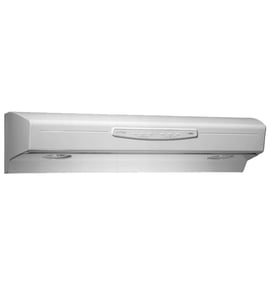




Is 350 cfm enough for a range hood?
Yes, 350 CFM is enough for many kitchens, especially for light to moderate cooking. If you regularly sear, stir-fry, grill indoors, or generate a lot of smoke and grease, you will get better capture and odor control with higher airflow and efficient ducting (important for the Kenmore Elite 23359960400 downdraft blower).
How to decide if 350 CFM fits your cooking
- Light cooking (simmering, boiling, occasional sauté): 350 CFM typically performs well.
- Moderate cooking (daily sautéing, some frying): 350 to 500 CFM is a better target.
- Heavy cooking (high-heat searing, frequent frying, wok cooking): 500+ CFM is the better fit.
- Downdraft systems often need strong, steady airflow because they pull smoke sideways and down.
- Duct design matters as much as CFM; long runs and elbows reduce real airflow.
Ducting and installation factors that change real performance
Your 23359960400 system is designed around ducting choices that strongly affect how much air actually moves.
| Factor | What to aim for | Why it matters |
|---|---|---|
| Duct size | 3-1/4" x 10" (can transition to 6" round) | Undersized duct restricts airflow |
| Duct length | 40 ft equivalent or less | Longer runs reduce capture |
| Elbows/transitions | Minimum possible | Each turn adds resistance |
| Venting | Ducted to outdoors | Recirculating does not remove heat and moisture the same way |
For model-specific ducting and wiring requirements (including the 120 VAC circuit and planning the outlet location), follow the owner's manual.
Quick checks if your hood feels weak at 350 CFM
- Clean grease filters and grease-laden surfaces frequently.
- Confirm the vent is rising fully and the speed control is working smoothly.
- Inspect ductwork for crushed sections, loose joints, or excessive elbows.
- Make sure the blower is turned on before cooking and runs a few minutes after.
- If the blower ramps up on its own, Heat Sentry may be increasing speed due to high exhaust temperature.
Why it matters
Choosing the right CFM and keeping duct resistance low helps your downdraft blower capture smoke and grease before it spreads through the kitchen; it also reduces buildup on cabinets and helps the blower run more efficiently.
Last updated: February 2026
How do I know what model range hood I have?
To identify your Kenmore Elite downdraft blower model, find the appliance rating label and match the model number printed there to your paperwork. For model 23359960400, the label is typically on the downdraft housing, often under the vent cover or near the filter area; confirm the exact label location in the owner's manual.
Where to look for the model number label
Check these common spots on downdraft and range hood systems:
- Under the vent cover or intake grille (look along the metal frame)
- Behind or near the filter area (if your setup uses filters)
- On the side of the downdraft housing inside the cabinet
- Near the wiring/power cord entry point (where the cord routes into the unit)
- On the underside edge where the unit meets the countertop cutout
What the model number should look like
Kenmore Elite downdraft blower model numbers are usually printed as a full numeric string.
| What you see on the label | What it means | What to do next |
|---|---|---|
| 233.59960400 | Same model as 23359960400 (dot formatting varies) | Use 23359960400 when ordering parts |
| 233.59966400 | A different size/version in the same series | Use the exact number shown on your label |
| Partial or worn digits | Label is damaged or hard to read | Compare to your paperwork and the diagrams in the manual |
Why it matters
We use the exact model number to match the correct Kenmore parts list, wiring layout, and mechanical components (like slide rails, crank arms, and switches). Even small model differences can change fit, mounting points, or electrical connections.
Quick tips before you order parts
- Write the model number exactly as shown (include all digits)
- Take a clear photo of the label for reference
- Use the manual parts diagrams to confirm the part name and location
- If you are replacing a moving mechanism part, match it to the diagram first (for example, a crank arm or slide rail)
Last updated: February 2026
What is the best range hood for an induction cooktop?
For an induction cooktop, the best range hood is the one that captures steam and smoke effectively for your cooking style; we typically recommend a higher-capacity, variable-speed hood (often 600 CFM or more) paired with the shortest, smoothest duct run you can install. For your Kenmore Elite 23359960400 downdraft blower setup, duct layout and clearances matter as much as fan power, so confirm your installation requirements in the owner's manual.
What to look for (induction-specific)
Induction itself does not create combustion byproducts, but it can still generate heavy steam, aerosolized grease, and smoke. A hood performs best when it can capture that plume quickly and vent it efficiently.
- Airflow (CFM) and speed control: Variable speed lets you run low for simmering and high for searing.
- Capture area: A canopy hood should cover the cooking surface; downdrafts rely on proximity and can be less forgiving.
- Ducting efficiency: Short duct runs with fewer elbows move air better than long, twisty runs.
- Noise: Higher CFM can mean more sound; good ducting helps reduce strain and noise.
- Makeup air considerations: Very high airflow can require makeup air in some installations.
If you are using a downdraft (like model 23359960400)
This Kenmore Elite downdraft blower system is designed to exhaust airborne contaminants from gas or electric cooktops and is commonly installed in island, peninsula, or wall locations. For best performance, we follow the manual guidance to use ducting that keeps the run short and minimizes elbows and transitions; it is designed around 3-1/4 x 10-inch ductwork (with the option to transition to 6-inch round). Also, accurate cooktop alignment is important so the vent can raise and lower without interference.
Quick comparison: canopy hood vs downdraft
| Feature | Canopy hood (overhead) | Downdraft blower |
|---|---|---|
| Smoke/steam capture | Strong (captures rising plume) | Good for light to moderate loads; depends on proximity |
| Best for | Frequent high-heat cooking | Open kitchens, island layouts, design constraints |
| Key performance driver | Hood size + CFM | Duct layout + cooktop/vent alignment |
Why it matters
A powerful blower cannot overcome restrictive ductwork or poor capture. Matching airflow, duct design, and placement keeps your kitchen clearer, reduces grease buildup, and helps the blower run at a lower (quieter) speed more often.
Last updated: February 2026
Do you need make up air for a 400 cfm range hood?
Yes. For a 400 CFM range hood, makeup air is commonly required once the hood is over 400 CFM; at exactly 400 CFM, requirements depend on your local code and how tight your home is. For your Kenmore Elite 23359960400 downdraft blower, we recommend confirming airflow and installation details in the owner's manual.
What codes typically require (quick rule)
Many jurisdictions follow the International Residential Code (IRC) approach:
- Over 400 CFM: makeup air is typically required
- 400 CFM or less: makeup air may still be needed in tight homes or where local rules are stricter
- Any CFM: if you notice backdrafting or poor combustion, treat makeup air as necessary
Typical decision table
| Hood airflow rating | Makeup air expectation | What to do next |
|---|---|---|
| 0 to 400 CFM | Sometimes required | Check local code and home tightness |
| Over 400 CFM | Commonly required | Plan a dedicated makeup air path |
| Unknown/variable | Treat as potentially over 400 | Verify blower setting and duct design |
Why makeup air matters
Makeup air replaces the air your hood exhausts. Without it, your home can go into negative pressure, which can:
- Reduce venting performance (smoke and odors linger)
- Pull air down chimneys or other vents (backdraft risk)
- Affect gas cooktop flames (the manual notes high airflow can influence some gas flames)
- Increase noise and whistling from doors or dampers
Practical guidance for the 23359960400 downdraft setup
Even before you size makeup air, make sure the venting system is built correctly:
- Vent ducted air to the outdoors (not into an attic or wall cavity)
- Use metal ductwork
- Keep total duct run efficient; many downdraft systems perform best with shorter, smoother ducting
- Provide a properly grounded 120 VAC outlet as specified for the blower system
If you are close to the 400 CFM threshold, a small change in blower setting, duct restriction, or a different roof/wall cap can change real-world airflow enough to affect whether makeup air is needed.
Last updated: February 2026
What are the parts of a range hood called?
Range hood parts are typically named for what they do: the hood body (canopy), venting/duct connection, blower (fan) system, filters, controls, and lighting. On the Kenmore Elite 23359960400 downdraft blower, you will also see lift and slide components that raise and guide the downdraft vent.
Common range hood part names (and what they do)
- Canopy or hood body: captures smoke, steam, and grease
- Blower or fan: moves air through the vent system
- Ductwork and transitions: route air to the outside (or through a recirculating setup on some hoods)
- Grease filters (often aluminum): trap grease before it reaches the blower
- Control panel and switches: set fan speed and lights
- Thermostat/heat-sensing control (on some models): can boost fan speed if exhaust heat rises
Names you may see on this Kenmore Elite downdraft (model 23359960400)
Downdraft systems add mechanical parts that a typical under-cabinet hood may not use:
- Slide/slide rail: guides the moving vent assembly
- Crank arm and linkage: helps raise and lower the vent
- Spring and spacers: support movement and alignment
- Wiring harness and strain relief: powers the unit and protects wiring
| Part name (common) | What it affects | Example part for this model |
|---|---|---|
| Thermostat | Automatic heat response and blower behavior | Range hood thermostat S99030323 |
| Slide rail | Smooth up/down travel of the vent | Range hood slide rail S97015973 |
| Crank arm | Lift motion and linkage movement | Downdraft vent crank arm S97015674 |
| Wiring harness | Power and control connections | Harness S99271295 |
Why the names matter when ordering parts
Using the correct part name helps you match the symptom to the right section of the parts diagram. For example, a vent that binds or won’t stay aligned often points to slide, rail, spacer, or crank-arm components, not the blower motor.
Where to confirm the exact terminology for your unit
Your parts diagrams and the “service parts” list in the owner's manual show the official names used for the Kenmore Elite 23359960400.
Last updated: February 2026