Installation guide
 Owner’s manual
 Error Codes


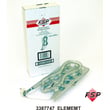
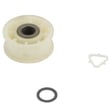
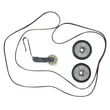
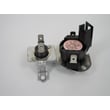
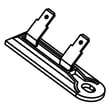
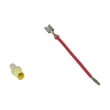
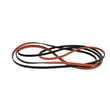

Can you get parts for a Kenmore dryer?
Yes. We carry replacement parts for Kenmore dryers, including the Kenmore electric dryer model 11068132414. You can match parts by model number and then choose common wear items like belts, drum rollers, idler pulleys, heating parts, and door hardware.
How to make sure you get the right part
- Confirm the full model number from the dryer’s door opening or cabinet label: 11068132414
- Use the part diagrams and descriptions to match what you see on your dryer
- Compare symptoms to the part’s function (heat issue vs. noise vs. no-start)
- Check installation requirements before ordering electrical or venting items (cord, strain relief, venting)
- Use the troubleshooting and maintenance steps in the 11068132414 installation guide
Common Kenmore dryer parts customers replace
Here are popular parts available for model 11068132414:
| Symptom | Likely part | Example for this model |
|---|---|---|
| Dryer tumbles but won’t heat | Heating system component | Dryer heating element WP3387747 |
| Loud thumping or squealing | Drum support or belt drive wear | Dryer drum support roller WPW10314173 or dryer idler pulley W10837240 |
| Runs but stops heating, or won’t run after overheating | Safety cutoff | Thermal fuse W10909685 |
Why it matters
Using the correct model-matched part helps restore proper drying performance and prevents repeat failures. For example, a blown thermal fuse often points to restricted airflow, so replacing the fuse without addressing venting can lead to the same problem again.
Quick checks before you order
- Clean the lint screen and confirm strong airflow at the outside vent hood
- Inspect the vent run for crushing, kinks, or heavy lint buildup
- For electric dryers, confirm you have the correct dedicated circuit (typically 30-amp) per the installation requirements
Last updated: February 2026
How do I know if my Kenmore dryer thermal fuse is blown?
If your Kenmore electric dryer model 11068132414 runs but won’t heat, or it won’t run at all, a blown thermal fuse is a common cause. The sure way to know is to unplug the dryer and test the fuse for continuity with a multimeter, following the steps in the 11068132414 owner’s manual.
Common symptoms you’ll notice
- Dryer won’t start (no motor run)
- Dryer runs but produces no heat
- Cycle stops early after starting
- “Check Vent” indicator shows (airflow restriction can overheat the dryer)
- Clothes take much longer than normal to dry
How we test the thermal fuse (safe, reliable method)
- Unplug the dryer (electric dryers use 240V).
- Access the thermal fuse (typically on the blower housing or exhaust duct area).
- Remove at least one wire from the fuse terminal.
- Set a multimeter to continuity or lowest ohms.
- Test across the fuse terminals.
What the meter reading means
| Meter result | What it means | What to do next |
|---|---|---|
| Near 0 ohms or continuity tone | Fuse is good | Keep troubleshooting heat/airflow |
| OL, infinite, or no tone | Fuse is blown | Replace the fuse and fix the overheating cause |
Parts that are often involved
If the fuse is blown, we fix the airflow problem first so the replacement lasts.
- Replace the fuse with the correct part for this model: thermal fuse W10909685
- If the dryer also won’t heat, check the heater circuit parts commonly used on this model, such as the dryer heating element WP3387747 and venting condition
Why it matters
A thermal fuse is a one-time safety device; it opens when the dryer overheats. Overheating is most often caused by restricted airflow (lint screen, vent hose, wall duct, or exterior hood). Your manual also notes that electric dryers can run with the drum turning but still have no heat if a household fuse or breaker is tripped, so we check power and airflow together. Review the venting and power checks in the 11068132414 installation guide.
Last updated: February 2026
How much does it cost to replace a dryer start switch?
For a Kenmore 11068132414 electric dryer, a replacement start switch typically costs about $10 to $30 for the part; if you hire a technician, total installed cost is usually $120 to $250 depending on local labor rates and service fees.
What’s included in the cost
- Part price: start switch (varies by supplier and whether it is OEM)
- Labor: usually 30 to 60 minutes for diagnosis and replacement
- Service call/diagnostic fee: commonly added if you do not proceed with the repair
- Optional related parts: knob, harness connector, or control panel overlay if damaged
Before you buy a start switch, rule out common “won’t start” causes
Our Kenmore dryer troubleshooting steps in the 11068132414 owner’s manual often solve a no-start complaint without replacing parts:
- Confirm the door is fully closed.
- Press and hold START/PAUSE up to 3 seconds (use the pad of your finger).
- Verify the dryer is plugged in and the outlet has power.
- Check both household fuses or breakers (many electric dryers use two).
- If you see an L2 code, verify correct power supply and cord installation.
DIY vs. pro replacement: quick comparison
| Option | Typical out-of-pocket cost | Best when |
|---|---|---|
| DIY (part only) | $10 to $30 | You are comfortable using a multimeter and removing panels |
| Pro repair | $120 to $250 | You want diagnosis included and a faster, hands-off fix |
Why it matters
A weak or failed start switch can mimic other problems (power supply, door switch, control issues). Doing the quick checks above helps you avoid buying the wrong part and gets your Kenmore 11068132414 drying again sooner.
Last updated: February 2026
How to tell if a dryer heating element is bad?
A bad heating element in your Kenmore electric dryer model 11068132414 typically shows no continuity (open circuit) when tested with a multimeter, and the dryer may run but not heat. Confirm power is correct first, then test the element directly per the 11068132414 owner’s manual.
Quick symptoms that point to the heating circuit
- Dryer tumbles normally but clothes stay cold or take much longer to dry
- “Check Vent” indicator shows (restricted airflow can overheat and damage heating components)
- Heater cycles off quickly, or heat is inconsistent
- Burning smell or unusual odor during first heat after service (some odor can be normal after first use)
- “L2” diagnostic code appears (low or no line voltage can prevent the heater from turning on)
How we test the heating element (basic method)
- Unplug the dryer (electric shock hazard) and access the heater housing.
- Remove at least one wire from the element terminal so you do not read through the circuit.
- Set your multimeter to ohms (Ω) and measure across the element terminals.
- Interpret the reading:
- Open or OL: element is bad and should be replaced.
- A steady resistance reading: element is likely intact; keep troubleshooting thermostats, thermal fuse, airflow, and power.
Typical meter readings (what to expect)
| Test result | What it usually means | Next step |
|---|---|---|
| OL / no continuity | Heating element coil is broken | Replace the element |
| Resistance present | Element coil is intact | Check power, thermal fuse, thermostats |
| Heat still missing with good element | Heater not being energized | Check “L2”, wiring, controls |
Parts that commonly get checked with the element
If the element tests good, we typically check these next because they can stop heat:
- Thermal fuse W10909685 (opens if the dryer overheats)
- High-limit thermostat (limits heater temperature)
- Thermistor (helps regulate temperature)
- Venting and lint screen (airflow problems can cause overheating and shutdowns)
Why it matters
A dryer that runs without heat is not always a failed heater. On electric models like 11068132414, a power supply issue (including the “L2” code) or an open thermal fuse can mimic a bad heating element, so testing prevents replacing the wrong part.
Last updated: February 2026
Is it worth replacing the heating element in a dryer?
Yes, replacing the heating element is worth it on a Kenmore 11068132414 electric dryer when the dryer is otherwise in good shape and you have confirmed a true “no heat” condition; the repair typically restores normal drying without replacing the whole appliance. Use the 11068132414 owner's manual to verify power and heating checks first.
Quick decision checklist
- The drum tumbles normally but clothes stay cold or take far too long to dry.
- You have verified the dryer has the correct power supply (electric dryers need 240V or 208V).
- The venting is clear and airflow is strong (restricted venting can mimic heating problems).
- The dryer is not tripping breakers or blowing fuses repeatedly.
- The cabinet, wiring, and terminal block area show no signs of overheating.
What to check before buying parts
Our Kenmore electric dryers can run the motor on 120V but still have no heat if one leg of power is missing. The manual troubleshooting also points to household fuses/breakers and incorrect power supply as common causes.
- Run a Timed Dry heated cycle (not Air Only).
- Confirm the dryer is on a dedicated, properly sized circuit and both breakers are on.
- If the drum turns but there is no heat, move to component checks.
Common parts involved in “no heat” (and when they matter)
| Symptom | Most likely area | Parts that often fix it (examples for this model) |
|---|---|---|
| Drum turns, no heat | Heating circuit | Dryer heating element WP3387747, thermal fuse W10909685 |
| Heats briefly, then stops | Overheat protection or airflow | Dryer high-limit thermostat WP8557403, vent restriction |
| Erratic temps, overdrying/underdrying | Temperature sensing | Dryer thermistor WP8577274 |
Why it matters
Replacing the heating element without confirming power, airflow, and safety cutoffs can waste time and money. A blocked vent can overheat the dryer and open a thermal fuse, and a power supply issue can prevent the heater from turning on even though the drum tumbles.
Safety notes we follow
- Disconnect power before opening panels.
- If breakers trip repeatedly or wiring looks heat-damaged, stop and have the circuit and dryer inspected.
Last updated: February 2026
What size is a Kenmore model 11068132414?
The Kenmore 11068132414 electric dryer is a full-size, 27-inch class dryer. The installation guide lists the cabinet at 42 7/8 inches high and 29 inches deep, and it also shows a door-open depth of 56 1/4 inches. Use the 11068132414 installation guide diagram to plan clearances.
Key dimensions to plan around
These are the measurements that affect fit, door swing, and vent routing.
- Height (door closed): 42 7/8 in.
- Depth (door closed): 29 in.
- Depth (door open): 56 1/4 in.
- Rear clearance for vent elbow: 6 in. minimum for most installations
- Closet installs: allow extra space for servicing and noise reduction
Quick sizing table
| What you’re measuring | Door closed | Door open |
|---|---|---|
| Height | 42 7/8 in. | Same |
| Depth (front to back) | 29 in. | 56 1/4 in. |
Why it matters
Correct sizing prevents a crushed or kinked exhaust vent, ensures the door can fully open, and helps maintain proper airflow so the dryer heats and dries efficiently.
Before you commit to the space
- Measure the tightest doorway and hallway turn the dryer must pass through.
- Confirm the dryer door can fully open without hitting a wall or washer.
- Plan the vent route to minimize elbows and avoid tight bends.
- Leave room to pull the dryer out for lint and vent cleaning.
Last updated: February 2026
Where to find model on Kenmore dryer?
On Kenmore dryer model 11068132414, the model number is printed on the appliance’s rating label. Most often, we find it on the door opening (inside the door on the cabinet frame); if it is not there, check the back of the dryer near the top. See the 11068132414 installation guide for label and setup details.
Quick places to check first
- Open the dryer door and look around the door opening on the cabinet frame
- Check the back panel near the top edge
- Look along the inside edge of the front panel near the door switch area
- If your dryer has a reversible door, check both sides of the door opening area
What the label looks like and what to copy
The rating label typically includes several identifiers. We recommend copying these exactly:
- Model number (example: 11068132414)
- Serial number (unique to your dryer)
- Type (electric dryer vs. gas dryer)
- Electrical rating (helps confirm correct parts and power hookup)
Why the model number matters for parts and troubleshooting
Kenmore model numbers are the fastest way to match the correct parts list and diagrams. It also helps when diagnosing common issues like “won’t start” or “no heat,” because the wiring, heater, and control style can vary by model.
| You need it for | What it affects |
|---|---|
| Ordering parts | Correct fit for items like a belt, heating element, or thermal fuse |
| Installation | Power supply cord type, strain relief, and hookup requirements |
| Service diagnosis | Matching symptoms to the right wiring diagram and component layout |
If the label is hard to read
- Wipe dust off with a damp cloth and mild soap; dry it fully
- Use your phone camera and zoom in (flash helps)
- Write down the model number first, then the serial number
Last updated: February 2026