Owner’s manual
 Error Codes



What is the average lifespan of a Kenmore washer?
A Kenmore washer typically lasts 10 to 15 years under normal household use. For your Kenmore top-loading high efficiency washer model 11029133412, consistent maintenance, correct HE detergent use, and avoiding chronic off-balance loads are the biggest factors that keep it running closer to the high end of that range.
Typical lifespan and what changes it
Most washers reach end-of-life due to wear in the drive system, suspension, draining, or water fill components.
- Usage frequency: multiple loads per day shortens lifespan
- Overloading: strains the drive and suspension
- Off-balance operation: repeated “off balance” events increase wear (the manual calls this out as “Ofb”)
- Water quality and debris: can affect fill and drain performance
- Routine care: cleaning and proper detergent dosing reduces buildup and odors
Quick maintenance habits that add years
These are the highest-impact habits we recommend for 11029133412 owners:
- Use HE detergent only and measure carefully (too much causes residue)
- Keep loads evenly distributed to reduce off-balance pauses and vibration
- Leave the lid open between loads to help the tub dry
- Check pockets and wash small items in a mesh bag to protect the drain path
- If draining slows, inspect the drain hose routing and connections
Common “wear-out” parts and what they affect
| Symptom | Often involved system | Example part on this model page |
|---|---|---|
| Won’t drain or drains slowly | Drain system | Washer drain pump W10876600 |
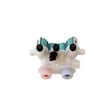
| Won’t fill or fills slowly | Water inlet system | Washer water inlet valve W11165546 |
| Loud grinding, poor agitation/spin | Drive/clutch system | Clutch assembly W10754448 |
| Lid won’t lock, cycle won’t start | Safety interlock | Washer lid lock assembly W10810403 |
Why it matters
Knowing the 10 to 15 year lifespan helps you decide when a repair is a smart investment versus when multiple wear items (like the clutch, drive assembly, and suspension) may start stacking up in cost.
For model-specific use and care guidance (including HE detergent requirements and off-balance handling), follow the owner's manual.
Last updated: February 2026
How to hard reset a Kenmore washing machine?
For Kenmore washer model 11029133412, the most reliable hard reset is a power reset: unplug the washer (or switch off the breaker) for 5 minutes, then restore power. This fully powers down the control so it can reboot and clear many temporary control glitches (including some communication errors).
Hard reset steps (power reset)
- Press Power to turn the washer off.
- Unplug the power cord (or turn the circuit breaker off).
- Wait 5 minutes.
- Restore power.
- Press Power to turn the washer on (opening the lid or turning the cycle knob can also wake the control on many Kenmore top-load models).
- Run a quick test cycle (Rinse/Spin or a small load) to confirm normal operation.
If an error code is showing
Some codes clear with a simple button action; others need a full power reset.
| What you see | What to do first | What it means |
|---|---|---|
| F## code | Press Start/Pause/Unlock Lid once to clear; press again to restart | System error code |
| F6E2 / F6E3 | Do the 5-minute power reset | UI and control communication issue |
| “--” | Turn the cycle knob until a cycle lights | Knob is not set on a cycle (not an error) |
For model-specific button names, cycle selections, and display behavior, use the owner's manual.
When a “reset” will not fix the problem
A reset will not correct a mechanical or water-flow issue. If symptoms continue after the power reset, check these common causes:
- Washer will not start or stops mid-cycle: lid not locking; inspect the washer lid lock assembly W10810403
- Washer will not drain: drain path restriction or failed pump; inspect the washer drain pump W10876600
- Washer will not fill or fills slowly: clogged inlet screens or valve issue; inspect the washer water inlet valve W11165546
- Excessive shaking or off-balance: worn suspension; inspect the damper assembly W11130356
Why it matters
Resetting restores normal control logic after a power surge, stuck key input, or control communication hiccup. It saves time by ruling out a temporary electronics issue before replacing parts like the lid lock, drain pump, or inlet valve.
Last updated: February 2026
Is it worth repairing a Kenmore washing machine?
For a Kenmore washer model 11029133412, repairing is worth it when the problem is a common, replaceable part (like a lid lock, drain pump, or inlet valve) and the washer is otherwise running normally; it typically costs far less than replacing the entire machine.
Quick way to decide (repair vs. replace)
Use these checks to make a clear call before you buy parts:
- Repair when the washer fills, drains, and spins sometimes, but has an intermittent failure (lid won’t lock, won’t drain every time, won’t fill correctly).
- Repair when the fix is a single component you can access and replace safely.
- Repair when the cabinet and tub are solid (no severe rust, no major leaks from the outer tub).
- Replace when multiple major systems are failing at once (drive, motor, control, and tub issues together).
- Replace when the basket/tub system is damaged or the washer has repeated out-of-balance shutdowns that suspension parts do not correct.
Common repairs that are usually worth it on this model
These are frequent, high-impact fixes for top-load HE low-water washers like 11029133412:
| Symptom | Likely area | Example part on this model |
|---|---|---|
| Won’t start or lid won’t lock | Lid lock system | Washer lid lock assembly W10810403 |
| Won’t drain or leaves water in tub | Drain system | Washer drain pump W10876600 |
| Won’t fill or fills slowly | Water inlet system | Washer water inlet valve W11165546 |
| Loud during spin, weak agitation, slipping | Drive/clutch | Clutch assembly W10754448 |
Why it matters
A targeted repair keeps your Kenmore 11029133412 running as designed (high-efficiency, low-water operation) and avoids the cost and hassle of replacing a full-size washer. It also helps prevent secondary damage, like a failing drain pump leading to standing water and odors.
Model-specific tip: off-balance pauses
Your Use & Care Guide notes an “Ofb” (Off Balance) condition when the load is not evenly distributed; the cycle pauses so you can redistribute the load and resume. That is a normal protection feature, not automatically a “replace the washer” situation. For the exact steps and indicator behavior, use the owner's manual.
Last updated: February 2026
How many cubic feet is a Kenmore Model 11029133412 washer?
The Kenmore washer model 11029133412 is a top-loading, high-efficiency, low-water (washplate) washer. Its tub capacity is in the large-capacity range for this style; use the specifications section in the 11029133412 owner's manual to confirm the exact cubic-feet rating for your specific unit.
How to confirm the capacity for model 11029133412
We recommend verifying capacity by model number in the manual because Kenmore 110-series washers share a similar look but can vary by basket size.
- Open the 11029133412 owner's manual
- Look for “Specifications”, “Capacity”, or “Washer dimensions”
- Match the model number exactly: 11029133412
- If the manual lists multiple models, find the line that includes 11029133412
Typical capacity range for this Kenmore HE top-load platform
This model family is a low-water, washplate design with automatic load sensing. Most washers in this platform fall into a common capacity band.
| Washer type | Typical capacity range | What you’ll notice in use |
|---|---|---|
| Kenmore HE top-load, low-water washplate | 4.0 to 5.0 cu. ft. | Some laundry sits above the water line; water level is auto-sensed |
Why capacity matters for loading and performance
Capacity affects how well items circulate on the washplate, how the washer balances in spin, and how much detergent you should use.
- Load items in loose heaps around the washplate (not packed tight)
- Expect less visible water than older agitator washers; that is normal
- Use HE detergent only to prevent oversudsing
- If you regularly overload, it increases wear on suspension and drive components
Related parts that affect “usable capacity” symptoms
If the washer feels like it “won’t handle” the loads it used to (off-balance, poor turnover), these parts are common contributors:
- Damper assembly W11130356 (controls tub movement and balance)
- Clutch assembly W10754448 (helps the basket engage properly)
- Washer washplate W10752285 (moves clothes through the low-water wash action)
Last updated: February 2026