Owner’s manual
 Error Codes


How do I tell what model Kenmore fridge I have?
You can identify your Kenmore refrigerator model by finding the model and serial tag on the cabinet or door area. On Kenmore model 79565019401 bottom-mount refrigerators, the tag is typically inside the fresh food section or freezer area, and sometimes behind the lower kickplate.
Where to look for the model number tag
Check these common locations first (use a flashlight and look for a sticker or metal plate):
- Inside the refrigerator compartment on an interior side wall
- Inside the freezer compartment on an interior wall
- On the door liner (the inside edge of the door)
- Behind or near the lower crisper drawers (on the cabinet wall)
- Behind the bottom toe grille or kickplate area
What the label looks like and what to write down
The tag usually includes both a model number and a serial number. For parts lookup and troubleshooting, we use the model number.
| What you see on the tag | What it’s used for | Example |
|---|---|---|
| Model No. | Ordering the correct parts and matching diagrams | 79565019401 |
| Serial No. | Identifying production details | (varies) |
Why it matters
Kenmore refrigerators can look nearly identical across different series, but parts like a door switch, thermistor, or door gasket can vary by model. Using the exact model number helps ensure the replacement part fits and the repair instructions match your unit.
Tip for parts matching once you find it
After you locate the model number, compare it character-for-character (including any leading zeros). Then use the parts list for your model and confirm part IDs before ordering.
For more model-specific diagrams and feature references, use the 79565019401 owner's manual.
Last updated: February 2026
How many cubic feet is my Kenmore refrigerator by model number?
Your Kenmore bottom-mount refrigerator model 79565019401 has its exact cubic-foot capacity listed on the model and serial label inside the fresh food compartment; that label is the most accurate way to confirm capacity for your specific color and configuration. Use the owner's manual to help locate the identification label.
Where to find the capacity on model 79565019401
On this Kenmore 795 series bottom freezer design, the identification label is located inside the refrigerator compartment on the right-hand side. Once you find it, look for a line that lists capacity in cu. ft. (or “total capacity”).
- Open the refrigerator door and look along the right interior wall
- Check near the crisper area and side wall trim
- Write down the model and serial numbers while you are there
- If the label is hard to read, take a clear photo and zoom in
- Match the model format shown in the manual (795.6500- / 6501- / 6520- series) to confirm you are reading the correct label
Quick ways to estimate cubic feet (when the label is missing)
If the label is damaged or unreadable, we use these practical checks to get close, then confirm with documentation.
| Method | What you need | Accuracy |
|---|---|---|
| ID label inside fridge | Flashlight, photo | Highest |
| Specs section in documentation | Manual PDF | High |
| Interior measurement estimate | Tape measure | Medium |
- Measure interior width, height, and depth (in inches)
- Multiply to get cubic inches
- Divide by 1,728 to convert to cubic feet
- Expect the usable space to be lower than the raw measurement because of shelves, bins, and air ducts
Why it matters
Cubic-foot capacity helps us choose correctly sized replacement items and accessories (like shelves, drawers, and door bins) and it also helps when comparing storage space across Kenmore bottom-mount refrigerator models.
Last updated: February 2026
What's the average lifespan of a Kenmore refrigerator?
Most Kenmore refrigerators last 10 to 15 years on average. For your Kenmore 79565019401 bottom-mount refrigerator, consistent maintenance (especially cleaning condenser coils and keeping door gaskets sealing) is what most often determines whether it lands closer to 10 years or pushes beyond 15.
Typical lifespan and what changes it
A refrigerator’s life is usually limited by heat stress on the sealed system, airflow problems, and wear on cooling and defrost components.
- 10 to 15 years: typical for most household refrigerators
- 15+ years: common when coils stay clean, doors seal tightly, and temperatures stay stable
- Shorter lifespan: common when condenser coils are clogged, airflow is blocked, or the unit runs hot
Maintenance that most extends life
These steps match the care topics covered in the owner's manual and have the biggest impact on compressor run time and temperature stability.
- Clean condenser coils regularly (dust and pet hair make the compressor work harder)
- Keep the door gaskets clean and sealing; replace if torn or warped
- Maintain proper air circulation inside the cabinet (do not pack vents with food)
- Set controls to safe targets (about 37°F fresh food, 0°F freezer)
- Fix frost buildup and warm-temperature symptoms early (often a defrost or fan issue)
Parts that commonly affect longevity on this model
When cooling performance drops, the refrigerator often runs longer and hotter, which shortens overall life. These model-matched parts are common culprits.
| Symptom | Common cause | Example part for 79565019401 |
|---|---|---|
| Lights do not turn off, warm temps | Door switch not closing | Refrigerator door push-button switch 6600JB1010A |
| Frost buildup, warming, odd cycling | Defrost sensing issue | Refrigerator defrost sensor assembly 6615JB2005C |
| Warm temps, poor temperature control | Temperature sensor drift | Refrigerator thermistor 6500JB2002T |
| Noisy or warm cabinet, poor airflow | Condenser fan problem | Refrigerator condenser fan 4680JK1001B |
Why it matters
A refrigerator that runs hot or runs constantly uses more electricity and puts extra strain on the sealed system (compressor and refrigerant loop). Keeping airflow and defrost working correctly is the most reliable way to maximize lifespan.
Last updated: February 2026
Why is the bottom of my Kenmore refrigerator leaking water?
Water at the bottom of your Kenmore 79565019401 bottom-mount refrigerator is usually caused by defrost water not draining into the drain pan, or by a small leak in the icemaker water supply line. Start by checking the defrost drain path, drain pan, and water connections using the owner's manual.
Most common causes (and what to check first)
- Clogged or frozen defrost drain: Meltwater backs up, then runs down and out at the base.
- Drain pan shifted or cracked: During defrost, water should run into the pan; if it is damaged or out of position, water can end up on the floor.
- Water line or fitting seepage: Slow drips at the supply line, valve, or tubing collect underneath.
- Door not sealing well: Warm air creates extra frost, increasing defrost water and overflow risk.
Step-by-step troubleshooting
- Unplug the refrigerator; protect the floor with towels.
- Check for ice or standing water on the refrigerator compartment floor (a strong sign of a restricted drain).
- Inspect the drain pan underneath; confirm it is seated correctly and not cracked.
- Inspect the icemaker water line connection for moisture; the manual’s water-line section highlights that plumbing issues (such as water hammer) can contribute to leaks.
- Verify door closure and sealing; clean the gasket and make sure bins or shelves are not holding the door open.
Parts that commonly relate to leaks on this model
If you find a door-seal problem or recurring heavy frost, these parts are often involved:
| Symptom you notice | What it points to | Example part for 79565019401 |
|---|---|---|
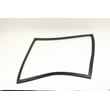
| Moisture around door edges, condensation | Door not sealing | Refrigerator door gasket ADX73350923 |
| Heavy frost, temperature swings, water after defrost | Defrost sensing issue | Refrigerator defrost sensor assembly 6615JB2005C |
| Light does not respond consistently to door opening/closing | Door switch issue | Refrigerator door push-button switch 6600JB1010A |
Why it matters
Leaks are not just a mess; water under a bottom-mount refrigerator can damage flooring and often points to a defrost-drain restriction or a water-supply seep that can worsen over time.
Last updated: February 2026
How to tell if a Kenmore refrigerator compressor is bad?
On Kenmore model 79565019401, a failing compressor typically shows up as both sections warming while the unit repeatedly tries to start (clicking) or runs for long periods with little temperature improvement. We rule out airflow and start-device problems first because they create the same “no-cool” symptoms.
Signs that strongly point to a compressor problem
- Freezer and fresh food sections are warm at the same time
- Repeated clicking from the compressor area (start attempt then shutoff)
- Compressor is very hot after trying to run (overload tripping)
- Compressor is silent when it should be running (no hum, no vibration)
- Condenser tubing has little to no warmth while the unit “runs”
Checks to do before condemning the compressor
Use the troubleshooting and “sounds you may hear” sections in the 79565019401 owner's manual to separate normal longer run times from a true failure.
- Controls and power: Confirm the control is not set to OFF; verify the unit is not simply in a defrost cycle.
- Condenser coils: Clean coils; restricted heat transfer causes long run times and poor cooling.
- Condenser fan: If the fan is not moving air across the condenser, cooling drops quickly; check the refrigerator condenser fan 4680JK1001B.
- Defrost frost blockage: Heavy frost can block airflow and mimic sealed-system trouble; check the refrigerator defrost sensor assembly 6615JB2005C.
What a technician tests to confirm
| Test result | What it usually indicates |
|---|---|
| High/locked-rotor amperage, won’t start | Compressor locked or start device issue |
| Normal amperage but weak cooling | Sealed-system inefficiency or airflow restriction |
| No power to compressor | Control board, wiring, or start circuit problem |
Why it matters
A compressor replacement is a sealed-system repair. Verifying fans, coils, and frost pattern first prevents replacing the wrong part and restores cooling faster.
Last updated: February 2026