Owner’s manual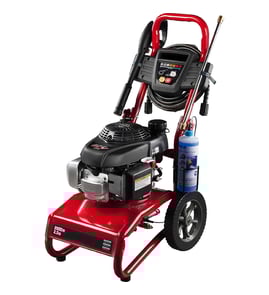



Can you put 87 gas in a pressure washer?
Yes. For the Craftsman pressure washer model 580752080, we use clean, fresh unleaded gasoline with a minimum 87 octane (87 AKI). Higher octane is fine, but don’t use unapproved fuels like E85, and don’t mix oil into the gasoline (use the crankcase oil fill instead). See the fuel section in the owner's manual.
Fuel requirements for Craftsman 580752080
Use fuel that meets these basics:
- Clean, fresh, unleaded gasoline
- 87 octane (AKI) minimum
- Up to 10% ethanol (E10) is acceptable
- Up to 15% MTBE is acceptable
- Add fuel stabilizer if the unit will sit (helps reduce gum and varnish)
Fuels to avoid (common causes of hard starting)
Avoid these because they can cause poor performance, fuel system damage, or no-start issues:
- E85 or other unapproved high-ethanol blends
- Old gasoline (especially fuel older than about 30 days without stabilizer)
- Gasoline mixed with oil (this is a 4-stroke engine setup)
- “Alternate fuels” or engine modifications intended to run them
Quick comparison: 87 vs higher octane
| Fuel choice | Works in 580752080? | When it makes sense |
|---|---|---|
| 87 octane (regular) | Yes (recommended minimum) | Normal use, best everyday option |
| 89 to 93 octane (mid/premium) | Yes | If it’s what you have available; it won’t increase cleaning power |
| E85 | No | Avoid to prevent fuel system and running problems |
Why it matters
Using the right gasoline helps your pressure washer start easier, run smoother under load, and reduces carburetor and fuel system issues that lead to surging, stalling, or loss of pressure.
If it still runs rough after using 87 octane
These checks solve most “bad gas” symptoms:
- Drain the tank and refill with fresh 87 octane
- Inspect the fuel line and fuel filter (if equipped) for restriction
- Clean the spray tip and verify strong water supply before starting
- If pressure surges, review solving pressure washer problems
Last updated: February 2026
How good is a 1900 PSI pressure washer?
A 1900 PSI pressure washer is a solid choice for light to medium cleaning, but it is not built for heavy stripping or large, ground-in jobs. For comparison, the Craftsman model 580752080 is rated up to 3,100 PSI and up to 2.8 GPM, which is a higher-output class for faster, deeper cleaning (see the owner's manual).
What 1900 PSI is best for
- Washing cars, bikes, patio furniture, grills, and outdoor toys
- Rinsing decks and fences when the wood is in good shape
- Cleaning small driveways and sidewalks (newer stains, light algae)
- Prepping surfaces with detergent and a wider spray pattern
- Quick cleanup where portability and easy setup matter
Where 1900 PSI can feel underpowered
- Large concrete areas with deep oil stains or heavy mildew
- Paint stripping or aggressive surface prep
- Caked-on mud on equipment, trailers, or farm tools
- Long hose runs or restrictive nozzles that reduce effective pressure
Quick comparison: 1900 PSI vs. this Craftsman model
| Feature | 1900 PSI class | Craftsman 580752080 (gas) |
|---|---|---|
| Max pressure | ~1900 PSI | 3,100 PSI |
| Flow rate | Often ~1.2 to 1.5 GPM | Up to 2.8 GPM |
| Typical use | Light to medium | Medium to heavy |
| Cleaning speed | Slower | Faster (more water flow) |
Why it matters (PSI vs. GPM)
We look at PSI for “cutting power” and GPM for “rinsing and speed.” Two washers can have similar PSI, but the one with higher GPM typically cleans large areas faster because it carries more dirt away per minute.
Tips to get the most from a 1900 PSI washer
- Use the widest tip that still cleans (wider spray reduces damage risk)
- Keep the nozzle moving; lingering in one spot can etch wood or concrete
- Start with detergent for grime; let it dwell, then rinse
- Confirm strong water supply and purge air from the pump before spraying
- If pressure surges or seems weak, follow a structured troubleshooting path like solving pressure washer problems
Last updated: February 2026
What are the most common issues with 580752080?
The most common problems we see on the Craftsman 580752080 gas pressure washer are no-start or hard-start conditions, low or surging pressure, detergent not siphoning, and water leaks at the hose, pump, or wand connections. Most issues trace back to fuel, ignition, water supply, or pump valve wear.
Common symptoms and what usually causes them
- Won’t start / starts then dies: stale fuel, dirty carburetor, fouled spark plug, low oil shutdown (if equipped)
- Engine loses power under load: clogged air filter, restricted fuel flow, partially blocked nozzle, unloader valve sticking
- Low pressure or pressure surging: clogged spray tip, air in the inlet, worn pump check valves, unloader valve out of adjustment
- No detergent draw: wrong nozzle (needs low-pressure soap tip), clogged chemical injector, air leak in siphon hose
- Water leaking: worn O-rings, loose fittings, cracked hose, pump seal wear
Quick checks we recommend first (fastest wins)
- Confirm a strong, steady garden-hose supply; purge air by running water through the pump before starting.
- Clean the spray tip/nozzle; a partially blocked tip can mimic pump failure.
- Verify you are using the correct spray tip for the job (soap vs high-pressure).
- Check fuel quality; drain old gas and refill with fresh fuel.
- Inspect for leaks at quick-connects and replace worn seals.
Symptom-to-fix guide
| What you notice | Most likely area | First action |
|---|---|---|
| Starts then stalls | Fuel delivery | Refresh fuel; check filter and carburetor |
| Pulsing pressure | Water inlet or unloader | Purge air; check inlet screen; inspect unloader |
| Low pressure | Nozzle or pump valves | Clean tip; check for valve wear |
| No soap draw | Injector/nozzle | Use soap tip; clean injector and siphon |
Why it matters
Running the 580752080 with restricted water flow or a clogged nozzle overheats the pump and accelerates seal and valve wear. Catching inlet, nozzle, and unloader issues early prevents bigger pump repairs.
Helpful DIY resources
- Use the 580752080 owner's manual for operating steps, maintenance intervals, and correct setup.
- If pressure is erratic, the unloader is a common culprit; see how to replace a pressure washer unloader valve.
Last updated: March 2026