Owner’s manual



How do I find the model number on my Kenmore 79671423410 dryer?
The model number for your Kenmore Elite dryer is printed on the identification plate inside the dryer door opening. Open the door and look around the door frame area; the label lists both the model and serial number for quick reference.
Where to look (fast checklist)
- Open the dryer door fully.
- Look on the cabinet frame just inside the door opening.
- Check the upper portion of the opening first, then the sides.
- Find the identification plate that lists Model No. and Serial No.
- Write the numbers down exactly as shown (including all digits).
What the label is used for
Having the correct model number helps us match the right Kenmore parts and diagrams for your dryer, including common wear items like a drum belt, idler pulley, and drum support rollers.
| You need | Where it’s found | Why it matters |
|---|---|---|
| Model number | Identification plate inside the door opening | Ensures correct parts fit your exact dryer |
| Serial number | Same identification plate | Helps confirm production details for service and parts lookup |
Why it matters
Kenmore model families can look similar, but parts like the dryer thermistor, high-limit thermostat, or lint screen can vary by model. Using the exact model number prevents ordering the wrong replacement.
For a picture-style reference and additional identification details, check the owner's manual.
Last updated: February 2026
How to reset a Kenmore 79671423410 dryer?
To reset your Kenmore Elite dryer model 79671423410, we power-cycle it: turn the dryer off, unplug it (or switch the breaker off) for about 1 minute, then restore power. This clears many control glitches and restores normal operation.
Quick reset steps (power reset)
- Press POWER to turn the dryer off.
- Unplug the dryer (or turn the circuit breaker off).
- Wait 60 seconds.
- Plug the dryer back in (or turn the breaker on).
- Press POWER, then press START/PAUSE to test a cycle.
If the dryer is unresponsive or “acting stuck”
These checks often matter more than the reset itself:
- Door switch: open and close the door firmly; the dryer will not start if the door is not sensed as closed.
- Auto shutoff behavior: if the dryer is stopped for more than about 4 minutes, it turns off and loses settings; restart the cycle from the beginning.
- Control lock: if buttons do not respond, try toggling Control Lock by pressing and holding SAVE ENERGY+ for 3 seconds (this locks or unlocks the controls).
What a reset can and cannot fix
| Symptom | Reset helps most when | Likely next step if it returns |
|---|---|---|
| Display frozen or buttons lag | Temporary control glitch | Check Control Lock; retry power reset |
| Dryer will not start | Control logic got stuck | Check door closure, cycle selection, then START/PAUSE |
| No heat or long dry times | Rarely a reset issue | Check venting and heating components |
Why it matters
A power reset is the fastest safe first step because it clears the electronic control state without changing wiring or parts. If problems come back quickly, the issue is usually a switch, airflow restriction, or a heating/control component.
For model-specific button functions (START/PAUSE behavior, Control Lock, cycle settings), use the owner's manual.
Last updated: February 2026
What are the codes for Kenmore 79671423410 dryer?
For Kenmore Elite dryer model 79671423410, the most common display codes include PF (power failure) and several F codes that point to control, keypad, heater relay, or thermistor problems. For the full list and model-specific steps, use the owner's manual.
Common error codes and what they mean
- PF: Power failure (cycle interrupted by a power loss)
- F:01: Main electronic control board failure
- F:02: Keypad or user interface failure
- F:20: Heater relay failure
- F:22 / F:23: Outlet thermistor failure
- F:24 / F:25: Inlet thermistor failure
What to do first (quick checks)
- Press Power to clear the display; then restart the cycle.
- If you see PF, confirm the outlet is working and the cord is firmly seated.
- Unplug the dryer (or switch off the breaker) for 2 minutes, then restore power.
- Clean the lint screen and confirm strong airflow at the outside vent.
- If an F code returns immediately, stop the cycle and troubleshoot before continued use.
Code-to-part area guide (helps you narrow the repair)
| Code group | What it usually points to | Common area to inspect |
|---|---|---|
| PF | Power interruption | Outlet, breaker, cord connection |
| F:01 / F:02 | Control or keypad issue | Console, wiring connections |
| F:20 | Heating control problem | Heater relay circuit, wiring |
| F:22-F:25 | Temperature sensing problem | Thermistors, airflow, lint buildup |
If you’re troubleshooting thermistor-related codes, the temperature sensor used on this model is often the dryer thermistor AGM30045804.
Why it matters
Error codes help prevent repeat shutdowns, overheating, and long dry times. On a Kenmore Elite dryer like 79671423410, airflow restrictions and temperature-sensing issues can trigger thermistor codes even when the heater is still working.
Last updated: February 2026
What are common problems with Kenmore dryers?
Common problems we see with Kenmore dryers (including Kenmore Elite model 79671423410) are long dry times from restricted airflow, no heat from a power or gas-supply issue, the drum not turning from worn drive parts, and loud thumping or squealing from drum support wear. Your owner's manual also highlights routine lint and exhaust maintenance and a built-in troubleshooting guide.
Most common symptoms and what usually causes them
- Clothes take too long to dry: lint screen clogged, crushed or blocked vent, restricted exhaust (often triggers a “Check Vent” indicator)
- Dryer runs but does not heat: tripped breaker or blown fuse (electric can run without heat), gas shutoff closed (gas models)
- Drum will not turn: broken belt, seized roller, failed idler pulley, motor issue
- Loud noise (thump, squeal, rumble): worn drum support rollers, worn idler pulley, damaged drum seal, debris in blower housing
- Stops mid-cycle or overheats: restricted airflow, thermostat/temperature sensing problem
Quick checks we recommend first (fast, no parts)
- Clean the lint screen and confirm the lint screen grille is not blocked.
- Check airflow at the outside vent hood; weak airflow points to a vent restriction.
- Verify power: reset the breaker and confirm the cord is fully seated.
- For gas models, confirm both the house gas shutoff and dryer gas shutoff valves are fully open.
- If a “Check Vent” light stays on after clearing the vent, follow the manual’s guidance for next steps.
Parts that commonly fix these problems on model 79671423410
| Symptom | Common wear item | Example part for this model |
|---|---|---|
| Drum not turning | Drum belt | Dryer drum belt 4400EL2001F |
| Thumping/rumbling | Drum support roller | Dryer drum support roller 4581EL2002H |
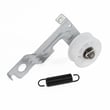
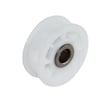
| Squealing | Idler pulley | Dryer idler pulley 4560EL3001A |
| Poor temperature control | Thermistor | Dryer thermistor AGM30045804 |
Why it matters
Most “dryer problems” trace back to airflow and heat control. Keeping the lint filter and exhaust system clean helps prevent overheating, reduces dry time, and protects key components like thermostats and the motor.
Last updated: February 2026
What is the life expectancy of a Kenmore dryer?
Most Kenmore dryers, including the Kenmore Elite model 79671423410, have a typical life expectancy of 10 to 13 years with normal household use. Regular lint and vent maintenance is the biggest factor in reaching (and often exceeding) that range; it helps the dryer heat correctly and reduces strain on key parts.
What affects how long your dryer lasts
A dryer’s lifespan is mostly about heat, airflow, and mechanical wear. These items make the biggest difference:
- Cleaning the lint filter every load and keeping the lint housing clear
- Maintaining the exhaust vent so airflow stays strong (restricted venting can trigger a “check vent” condition)
- Avoiding frequent overloading, which stresses the drum, belt, rollers, and motor
- Using the right cycle and temperature for the fabric load
- Fixing early symptoms (squealing, thumping, long dry times) before they damage other components
Maintenance that extends lifespan (high impact)
Your 79671423410 manual includes user maintenance steps such as clearing the lint filter and maintaining the exhaust system. Use the schedule below as a practical baseline:
| Task | How often | Why it matters |
|---|---|---|
| Clean lint screen | Every load | Keeps airflow and drying performance consistent |
| Check vent airflow at exterior hood | Monthly | Prevents overheating and long dry times |
| Clean vent duct (full run) | Every 6 to 12 months | Reduces heat stress on thermostats and burner components |
| Clear around and under dryer | Monthly | Helps cooling airflow and reduces lint buildup |
Parts that commonly wear as a dryer ages
If your dryer still heats but gets noisy, stops tumbling, or takes longer to dry, these are common wear items to check first:
- Dryer drum belt 4400EL2001F (broken or slipping belt can stop the drum)
- Dryer drum support roller 4581EL2002H (worn rollers often cause thumping or rumbling)
- Dryer thermistor AGM30045804 (temperature sensing issues can cause poor drying)
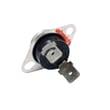
- Dryer high-limit thermostat 6931EL3003C (overheat protection; can trip if airflow is poor)
Why it matters
A dryer that is forced to run with restricted venting or heavy mechanical drag runs hotter and longer per load. That extra heat and runtime accelerates wear on thermostats, sensors, the motor, and drum support components, shortening overall life.
For model-specific care and cleaning steps, follow the owner's manual.
Last updated: February 2026