Owner’s manual
 Error Codes



How to order GE appliance parts?
You can order replacement parts for your GE DSS25KSRESS side-by-side refrigerator directly from the parts list for this model, then match by part ID and description to ensure fit. For part identification and diagrams, use the owner's manual.
- Use the full model number: DSS25KSRESS
- Match the part ID (not just the part name)
- Compare the part description to what you see on the refrigerator
- If you are replacing a water filter, confirm the filter type before buying
- Keep your serial number handy for reference during troubleshooting
These are frequently replaced items that are available for this model:
| Need | What it affects | Example part on this model |
|---|---|---|
| Water tastes or smells off | Water quality at dispenser | GE refrigerator water filter MWFP |
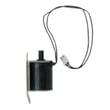
| No water dispensing or slow fill | Water supply into the unit | Refrigerator water valve WR57X33326 |
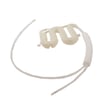
| Frost buildup, warm temps | Defrost system performance | Refrigerator defrost heater WR51X10055 |
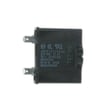
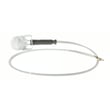
| Temperature swings | Temperature sensing/control | GE profile refrigerator temperature sensor WR55X10025 |
On many GE side-by-side models like DSS25KSRESS, the dispenser and icemaker are designed to run with a filter installed, or with a bypass plug in place. If you remove the filter and do not install the bypass plug, water and ice functions can stop.
Ordering by the exact model number and part ID helps prevent fit issues, repeat shipping, and downtime for essentials like cooling, ice production, and water dispensing.
Last updated: February 2026
How wide is a 25.6 cubic foot refrigerator?
Most 25.6 cu. ft. refrigerators are about 35 to 36 inches wide; your GE DSS25KSRESS side-by-side is designed to fit standard 36-inch-wide openings, and the exact clearance and doorway guidance is listed in the owner's manual.
Capacity alone does not set the exact width, but 25 to 27 cu. ft. full-size refrigerators commonly fall into these ranges:
- Standard full-width models: ~35 3/4 in. to 36 in.
- Counter-depth styles: often ~35 3/4 in. wide (depth is reduced, width usually is not)
- Smaller 24 to 25 cu. ft. units: sometimes ~33 in. wide
- Oversize models: can exceed 36 in. wide
For GE 25 and 27 model installation guidance, we use these practical checks before moving the refrigerator:
- Measure the narrowest doorway on the path to the kitchen.
- If an entrance is less than 38 inches wide, plan on removing the doors.
- Use a padded hand truck and secure the unit without overtightening straps.
- Remove the base grille if needed for clearance.
- If your unit has a dispenser, disconnect the water coupling at the bottom hinge before door removal.
| What you are measuring | What to use | Why it matters |
|---|---|---|
| Refrigerator cabinet width | Tape measure across the main box | Confirms fit in a 36-inch opening |
| Doorway width | Tape measure at the narrowest point | Determines if doors must come off |
| Clearance for moving | Doorway width vs. 38 inches | Prevents damage during installation |
A refrigerator that is “about 36 inches wide” can still be hard to install if doors, hinges, or handles add clearance needs. Confirming doorway width and removal steps prevents dents, broken water lines, and installation delays.
Last updated: February 2026
What is the average lifespan of a GE refrigerator?
A GE refrigerator like model DSS25KSRESS typically lasts 10 to 20 years with normal household use and basic maintenance. In many homes, around 12 years is a common average for full-size refrigerators, with longer life when airflow, temperatures, and seals are kept in good shape.
- 10 to 20 years is the normal lifespan range for most GE refrigerators
- ~12 years is a common real-world average for many full-size refrigerators
- Heavy use (frequent door openings, warm garage installs) shortens life
- Good ventilation and clean coils extend compressor and sealed-system life
- Stable temperatures reduce wear on fans, sensors, and defrost components
The longest-lasting GE side-by-side refrigerators are the ones that keep consistent temperatures and avoid overheating. Use the temperature-control guidance in the owner's manual and avoid extreme settings that cause nonstop run time.
- Keep freezer and fresh food temps stable (avoid constant “coldest” settings)
- Allow 12 to 24 hours for temperatures to stabilize after adjustments
- Clean dust from condenser areas so the unit can shed heat
- Keep door gaskets sealing to prevent moisture and long run cycles
- Use the correct water filter and replace it on schedule to protect the water system
| Symptom | What it often points to | Common next step |
|---|---|---|
| Temps swing up and down | Sensor, airflow, or control issues | Check settings; test components |
| Frost buildup, warm fridge | Defrost system problem | Inspect heater/thermostat |
| Loud fan noise | Evaporator fan wear or ice interference | Check fan and ice buildup |
| Water dispensing slows | Filter restriction | Replace filter |
If you are troubleshooting temperature problems on DSS25KSRESS, common related parts include the GE profile refrigerator temperature sensor WR55X10025 and the refrigerator defrost heater WR51X10055.
Knowing the expected lifespan helps you decide whether to repair or replace. A simple part replacement (sensor, defrost component, water filter) often restores performance and can add years of reliable cooling.
Last updated: February 2026
What is the most common problem with a GE refrigerator?
The most common GE refrigerator complaint is not cooling correctly (fresh food warm, freezer warming, or temperatures swinging). On your GE DSS25KSRESS side-by-side, the owner's manual troubleshooting section focuses first on control settings, defrost-cycle timing, and basic power checks before moving to parts testing.
- Refrigerator section is warm but freezer seems OK (or the reverse)
- Compressor runs for long periods or cycles frequently
- Frost buildup on the back wall of the freezer
- Water or ice dispenser slows down or stops
- Unusual noises (often normal water and defrost sounds)
- Water leaking inside the cabinet or onto the floor
- Confirm temperature controls are set correctly (not set to 0/off).
- Give it time after changes: after plugging in or adjusting settings, allow up to 24 hours to stabilize.
- Rule out a normal defrost cycle: if cooling seems paused, wait about 30 minutes.
- Check door closing and airflow: avoid overpacking; keep vents clear.
- If ice or water is weak: a clogged filter is a top cause; replace the GE refrigerator water filter MWFP.
If the basic checks do not fix the issue, these model-matched parts are often involved in cooling and defrost performance:
| Symptom | Common system to check | Example model-matched part |
|---|---|---|
| Warm temps, poor airflow | Evaporator fan system | Refrigerator evaporator motor WR60X10307 |
| Frost buildup, warming | Defrost system | Refrigerator defrost heater WR51X10055 |
| Temps swing or read wrong | Temperature sensing | GE profile refrigerator temperature sensor WR55X10025 |
A refrigerator that is not cooling can lead to food spoilage and can also make the compressor run longer than normal. Catching airflow, defrost, or water-filter restrictions early helps restore stable temperatures and normal operation.
Last updated: February 2026