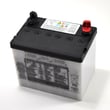
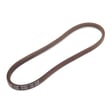
Is it worth replacing a lawn mower engine?
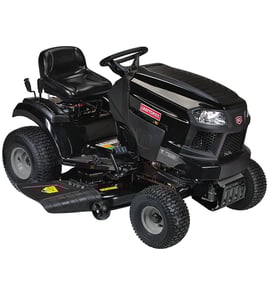
Yes, it can be worth replacing the engine on a Craftsman CMXGRAM201302 front-engine lawn tractor when the tractor is otherwise in good shape and the total repair cost stays well below the cost of replacing the whole machine. If the engine swap pushes you near the price of a new tractor, replacement usually makes more sense.
Quick decision checklist (CMXGRAM201302)
- The deck, frame, and steering are solid (no major rust-through or cracks).
- The transmission drives smoothly (no slipping, whining, or loss of pull).
- You can confirm the correct replacement engine and any required adapters (shaft size, mounting pattern, wiring).
- You are not also facing multiple big-ticket repairs (deck spindles, PTO clutch, transaxle).
- You can do the work safely or have a shop install it.
Cost rule of thumb we use
If the engine replacement (engine + any conversion parts + labor) is over about 50% of the tractor’s current replacement value, it is typically not worth it.
| Scenario | Usually worth it? | Why |
|---|---|---|
| Engine failed, tractor otherwise strong | Often yes | One major repair restores full use |
| Engine failed plus transmission issues | Usually no | Two major systems drive cost up |
| Minor engine issue (carb, ignition, fuel) | Yes | Repair is far cheaper than an engine |
| Heavy deck/frame wear | Usually no | You may chase failures after the swap |
What to check before committing to an engine swap
- Confirm the failure: compression, spark, fuel delivery, and oil condition.
- Verify compatibility: crankshaft diameter/length, keyway, PTO setup, and charging system.
- Inspect the driveline and deck: belts, pulleys, spindles, and blade engagement.
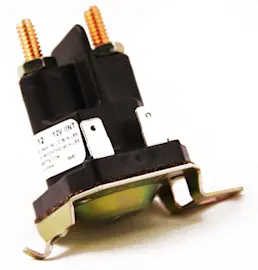
- Plan the electrical hookup: solenoid, safety switches, and charging lead routing.
A multimeter helps with basic electrical checks; our how to use a multimeter to test electrical parts video is a good starting point.
Why it matters
An engine is one of the most expensive repairs on a riding mower. Making sure the CMXGRAM201302 does not have hidden transmission, deck, or electrical problems prevents spending engine money on a tractor that still will not mow reliably.
Last updated: January 2026
What are the common problems with Craftsman lawn mowers?
Common problems we see on Craftsman riding mowers like the Craftsman CMXGRAM201302 (T100 tractor) include no-start or hard-start conditions, uneven cutting, poor drive performance, and deck or chassis wear (rust, loose mounts, and vibration-related damage). The exact “most common” failure points vary by engine and usage.
Most common symptoms and what they usually point to
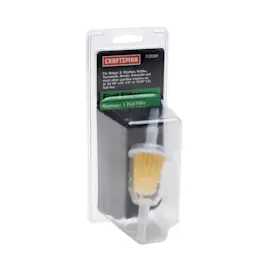
- Engine cranks but won’t start: stale fuel, dirty carburetor, bad spark plug, clogged fuel filter, or a safety switch issue
- Starts then dies: fuel cap venting problem, carburetor varnish, weak ignition coil, or debris in the fuel line
- Cuts uneven or scalps: deck not leveled, worn blades, low tire pressure, bent blade spindle, or damaged deck shell
- Won’t move or slips: worn drive belt, idler pulley issue, transmission drive problems, or linkage out of adjustment
- Excess vibration/noise: bent blade, loose engine mounting bolts, failing spindle bearings, or debris wrapped on pulleys
Wear and damage issues we often find on riding mowers
Some issues are “slow-burn” problems that show up after seasons of use:
- Rusted or sticking brake components (pins, springs, linkage)
- Grooves or thinning in the mower deck from sand and abrasion
- Hood, grille, or dash mounts cracking from vibration and sun exposure
- Wiring damage near the frame, battery, or steering column
- Loose fasteners around the deck hangers and anti-scalp wheels
Quick checks before you buy parts
| Check | What to look for | Why it matters |
|---|---|---|
| Fuel quality | Old fuel, water, varnish smell | Fuel issues cause most “won’t start” complaints |
| Battery and cables | Corrosion, loose terminals | Low voltage mimics starter or solenoid failure |
| Deck level and tires | Tire pressure side-to-side | Tire height changes cut quality |
| Blades and spindles | Bent blades, wobble | Prevents vibration and protects the deck |
Why it matters
Catching the root cause early helps prevent repeat failures, like replacing a belt when the real issue is a seized idler pulley or misaligned deck. It also protects expensive assemblies such as the transmission and deck spindles.
For model identification and correct part matching, use how to find your appliance model number (and what it means for parts).
Last updated: January 2026
What brand engine does Craftsman use?
For the Craftsman CMXGRAM201302 (2020) front-engine lawn tractor, the engine brand is typically Briggs & Stratton. Craftsman uses different engine suppliers across its overall mower and tractor lineup, but this CMXGRAM201302 model is commonly equipped with a Briggs & Stratton single-cylinder engine.
How to verify the engine brand on CMXGRAM201302
Even when a model is typically paired with one engine brand, the surest match for tune-up parts is the engine ID label.
- Look for the engine label on the blower housing, valve cover, or near the starter
- Confirm the brand name (for example, Briggs & Stratton)
- Write down the engine model and type (or code) shown on the label
- Use the engine ID when selecting maintenance parts (air filter, spark plug, oil filter)
- If the label is dirty, wipe it gently so the numbers are readable
What Craftsman uses in general (and why it varies)
Craftsman outdoor power equipment can be built with different engine brands depending on the product family (push mower vs. tractor) and year.
| Equipment type | Common engine brands you may see | Best way to match parts |
|---|---|---|
| Riding mowers and lawn tractors | Briggs & Stratton, Kohler | Engine model/type/code |
| Push mowers | Briggs & Stratton, Honda (varies by model) | Engine model number |
| Other outdoor power tools | Brand varies by product | Engine or tool data plate |
Why it matters
Engine service parts are matched to the engine’s exact model and type, not just the tractor model number. Verifying the engine ID helps prevent ordering the wrong air filter, spark plug, or fuel filter.
Helpful reference
Use our guide to locate and interpret identification tags: how to find your appliance model number (and what it means for parts).
Last updated: January 2026
What kind of engine does a Craftsman riding lawn mower have?
The Craftsman CMXGRAM201302 front-engine lawn tractor uses a gasoline, air-cooled small engine; however, the exact engine brand, horsepower, and configuration for CMXGRAM201302 cannot be verified from the model-specific information available for this tractor. The most accurate way to identify your engine is by reading the engine ID label on the engine itself.
How to identify the engine on CMXGRAM201302
Use the engine’s model and spec information (not the tractor hood decal) to confirm what you have and to match tune-up and repair parts.
- Find the engine brand name on the shroud (common examples include Briggs & Stratton or Kohler)
- Record the engine model and spec/type code from the label or stamped pad
- Count spark plugs (1 often indicates single-cylinder; 2 often indicates V-twin)
- Note displacement (cc) if listed
- Write down the engine serial number or date code
Where to look for the engine ID label
Label placement varies by engine family, but these locations are common.
| Engine style | Common label/stamp locations | What to copy exactly |
|---|---|---|
| Single-cylinder | Blower housing, near spark plug, valve cover area | Model, type/spec, code |
| V-twin | Top shroud, valve cover area, near starter | Model, spec, serial/code |
Why it matters
CMXGRAM201302 identifies the tractor chassis and mower deck. The engine ID is what we use to match engine-specific parts such as the air filter, spark plug, fuel filter, carburetor parts, starter, and ignition components.
Before ordering engine parts
- Wipe dirt and oil off the label so every character is readable
- Copy numbers exactly (including dashes)
- Use the tractor model number plus the engine ID when searching
For help locating and decoding model tags, use how to find your appliance model number (and what it means for parts).
Last updated: January 2026