 Installation guide
 Owner’s manual
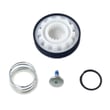


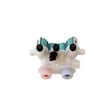
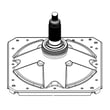
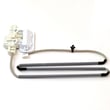
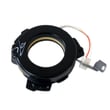
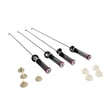
Is it worth fixing a Maytag washer?
Yes, it’s worth fixing a Maytag MVWB835DW1 washer when the problem is a single, repairable failure (filling, draining, lid locking, or suspension) and the total repair cost stays well below the price of a comparable new washer. It’s less worth it when multiple major drive or tub components are failing.
- Fix it if the washer is otherwise reliable and the issue is isolated (one symptom, one likely part).
- Fix it if the washer won’t fill, won’t drain, or won’t start because these are commonly part-related.
- Fix it if the tub is banging or walking and the suspension is worn.
- Replace it if you’re facing repeated breakdowns in a short period.
- Replace it if the repair involves multiple high-cost assemblies (drive, basket, outer tub) at the same time.
These are frequent, straightforward fixes on a top-load HE washer like the MVWB835DW1:
| Symptom | What to check first | Example part for this model |
|---|---|---|
| Won’t fill or fills slowly | Inlet hose kinks, clogged inlet screens, both faucets fully on | Washer water inlet valve W11165546 |
| Won’t drain or leaves water | Drain hose routing, pump obstruction, pump operation | Washer drain pump W10876600 |
| Won’t start, lid won’t lock | Lid strike alignment, lid lock engagement | Washer lid lock assembly W10810403 |
| Excessive vibration or banging | Leveling, load distribution, worn suspension | Damper assembly W11130356 |
If the load is not fully covered with water, that is normal for this high-efficiency, low-water design. The washer senses load size and adds the correct amount of water for cleaning; adding extra water reduces cleaning performance. For cycle and loading guidance, use the MVWB835DW1 owner’s manual.
A targeted repair keeps a solid Maytag washer running for years at a fraction of replacement cost, but chasing multiple major failures can quickly exceed the value of the machine. Using the troubleshooting steps in the manual helps confirm whether you’re dealing with a simple water-supply, detergent, or loading issue versus a true part failure.
Last updated: February 2026
What is the capacity of the Maytag mvwb835dw1?
The Maytag MVWB835DW1 top-load washer has a 5.3 cu. ft. capacity, which is designed to handle larger loads like bulky bedding and multiple towels in fewer cycles. For cycle-by-cycle loading guidance, use the MVWB835DW1 owner's manual.
A 5.3 cu. ft. washer like the MVWB835DW1 is typically a “large capacity” top-load design.
- Fits bulky items (comforters, blankets) more easily than standard-capacity washers
- Lets you wash more towels or jeans per load
- Helps reduce the number of loads per week
- Works best when items are loaded loosely (not packed down)
Overloading can reduce cleaning and increase vibration, even in a large-capacity Maytag washer.
- Load items evenly around the basket (avoid one heavy clump)
- Keep items below the top rim of the basket
- Do not press clothes down to “make them fit”
- Use the correct cycle and soil level for bulky loads
- If the washer struggles to spin, reduce the load size and retry
| What you change | What it affects | What to do |
|---|---|---|
| Bigger load size | Cleaning and rinse quality | Leave space for items to move |
| Bulky items | Balance during spin | Distribute evenly, use bulky/bedding cycle |
| Detergent amount | Suds and draining | Use HE detergent; measure carefully |
Capacity is not just “how much fits”; it impacts how well water and detergent circulate through the load. Using the MVWB835DW1 at the right fill and load level helps prevent poor rinsing, off-balance spinning, and extra wear on drive components.
Last updated: February 2026
What is the most common problem with a Maytag washer?
For the Maytag MVWB835DW1 washer, the most common customer-reported problems are spinning or draining issues (wet clothes at the end of the cycle) and excessive shaking or vibration during spin. In many cases, the root cause is an unbalanced load, oversudsing from non-HE detergent, or a restriction in the drain system.
- Won’t spin or stops mid-cycle: load is unbalanced, lid not fully locked, or excess suds
- Won’t drain or drains slowly: drain pump restriction, kinked drain hose, or a small item blocking the pump
- Shakes or “walks” during spin: load distribution issue or washer not level
- Clicking/metallic noise: coins or small objects in the drain path, or normal contact from zippers/snaps
- Not enough water showing: normal HE low-water operation (the load is not meant to be fully submerged)
Start with these no-tools steps from the MVWB835DW1 owner's manual:
- Redistribute the load in loose heaps evenly around the washplate; avoid washing single heavy items.
- Do not add extra water; it can lift clothes off the washplate and reduce cleaning performance.
- Use only HE detergent and measure carefully; oversudsing can slow or stop the washer.
- Confirm the lid is closed and press and hold START/PAUSE to restart after rebalancing.
- Check fill basics if it will not run or fill: both faucets on, hoses attached, inlet screens clear.
| Problem you notice | Most common cause | Best first action |
|---|---|---|
| Wet clothes after cycle | Not spinning or not draining | Rebalance load; run Rinse & Spin |
| Loud vibration in spin | Unbalanced load or not level | Rebalance; level the washer |
| Humming with gurgle | Normal draining sound | Let cycle finish; monitor drain |
| Clicking/metal noise | Items in pockets or normal hardware contact | Empty pockets; check for loose items |
If the washer consistently will not drain even after load and detergent checks, the drain system is the next place we look. A common replacement part for drain complaints is the washer drain pump W10876600.
Most “major” washer complaints trace back to load balance, HE detergent use, and proper water and drain flow. Fixing those basics first prevents repeat shutdowns, reduces vibration, and helps protect the drive system and control components.
Last updated: February 2026
What's the average lifespan of a Maytag washer?
A Maytag washer like model MVWB835DW1 typically lasts 10 to 13 years with normal household use. Consistent maintenance, correct loading, and avoiding “extra water” habits on HE washers help you reach the high end of that range; heavy use can shorten it.
Most top-load HE washers fall into a predictable range; how you use the machine matters as much as the brand.
- Normal family use: 10 to 13 years
- Heavy use (large loads, multiple loads daily): closer to 8 to 10 years
- Light use (few loads weekly, good care): 13 years or longer
| Usage pattern | What it looks like | Expected outcome |
|---|---|---|
| Light | 2 to 4 loads/week | Longer life, fewer wear failures |
| Average | 5 to 8 loads/week | Typical 10 to 13 years |
| Heavy | 9+ loads/week | More frequent suspension, drain, and drive wear |
Your MVWB835DW1 is a low-water HE design; the manual notes the load will not be fully submerged and warns not to add extra water because it can reduce cleaning performance.
- Run the washer’s clean washer cycle on schedule (helps odor, residue, and sensing performance)
- Use HE detergent and avoid overdosing (reduces buildup and drain issues)
- Keep loads balanced; avoid washing single heavy items alone
- Check pockets to prevent coins, screws, and pins from damaging the drain system
- If the washer struggles to drain, inspect the drain path and consider the washer drain pump W10876600 if the pump is failing
Washer lifespan is mostly about wear on high-load components (drive system, suspension, draining, and lid locking). Good habits reduce vibration, strain, and clogs, which are the most common reasons a washer becomes uneconomical to repair.
For model-specific care routines and warranty coverage language, use the MVWB835DW1 owner’s manual.
Last updated: February 2026
Where can I order Maytag washing machine parts?
You can order replacement parts for your Maytag MVWB835DW1 washer directly by looking up the model number and selecting the exact part you need (we recommend using factory specified parts so the fit and function match the original). Use the MVWB835DW1 owner's manual to confirm part names and diagrams before you buy.
- Match the model number MVWB835DW1 exactly (letters and numbers matter).
- Use the manual diagrams to identify the part location and description.
- Confirm symptoms before ordering (for example: no fill, no drain, won’t start).
- Replace related wear items together when appropriate (for example, hoses and clamps).
- Keep your old part until the repair is complete so you can compare connectors and mounting points.
If you are troubleshooting a specific issue, these are frequently replaced items for this model:
| Problem you see | Part to check first | Example part for MVWB835DW1 |
|---|---|---|
| Won’t fill or fills slowly | Water inlet valve, inlet hoses | Washer water inlet valve W11165546 |
| Won’t drain | Drain pump, drain hose, clogs | Washer drain pump W10876600 |
| Lid won’t lock or cycle won’t start | Lid lock | Washer lid lock assembly W10810403 |
Ordering by model number and confirming the exact part ID prevents returns and repeat repairs. It also helps you avoid installing a similar-looking part that has different electrical connectors or mounting points.
For part identification, cycle details, and troubleshooting steps, use the MVWB835DW1 installation guide along with the manual.
Last updated: February 2026





