Owner’s manual
 Error Codes


What size is Kenmore refrigerator model 79578512800?
Kenmore refrigerator model 79578512800 is a Kenmore Elite bottom-freezer design in the 795.7850/795.7851 model family. For exact exterior dimensions (width, depth, height) and capacity for your specific color/version, we use the 79578512800 specifications listed in the 79578512800 owner's manual.
When customers ask for refrigerator “size,” it typically refers to one or more of these:
- Overall capacity (cu. ft.): how much the refrigerator holds
- Exterior dimensions (W x D x H): whether it fits your opening
- Depth type: standard depth vs. counter-depth (affects how far it sticks out)
- Door swing and clearance: space needed to open doors and pull out freezer drawer
- Water line clearance: extra room behind the unit for the water supply line
We recommend measuring your space and then matching it to the model’s spec sheet in the manual.
- Measure the opening width (wall-to-wall) and compare to the refrigerator width.
- Measure depth from the back wall to the front edge of the counter, then add clearance for:
- door thickness and handles
- airflow behind the cabinet
- water line connection (if used)
- Measure height to the lowest cabinet or soffit.
- Plan clearance for leveling and door alignment (covered in the manual’s installation section).
| What to measure | Why it matters | Typical clearance to plan |
|---|---|---|
| Width | Prevents cabinet rubbing and vibration | A little side clearance helps airflow |
| Depth | Ensures doors close and drawers pull out | Extra room for handles and door swing |
| Height | Avoids hitting overhead cabinets | Room to level and adjust doors |
A refrigerator that is even slightly too deep or too tall can cause door-seal leaks, poor airflow, and hard-to-open doors. Using the model-specific specs helps you avoid installation headaches and cooling performance issues.
Last updated: January 2026
What does Accela ice mean on a refrigerator?
On the Kenmore Elite refrigerator model 79578512800, “Accela Ice” refers to a rapid ice-making mode. On this model, the feature is labeled Ultra Ice; when turned on, it boosts ice making and freezing for 24 hours, then shuts off automatically (or you can turn it off manually). See the 79578512800 owner's manual.
When you enable Ultra Ice on model 79578512800, the refrigerator temporarily runs more aggressively to increase ice production.
- It’s designed for short-term needs (parties, refilling an empty ice bin).
- It runs for 24 hours and then turns off automatically.
- You can stop it early by pressing the Ultra Ice button again.
- Ice output still depends on freezer temperature, room temperature, door openings, and freezer load.
- A newly installed refrigerator typically needs 12 to 24 hours to start making ice normally.
Rapid ice mode helps, but it will not overcome common airflow, bin, or water-supply issues.
- Confirm the icemaker switch is set to ON.
- Make sure the ice bank door closes tightly; a door left ajar can reduce ice production.
- If ice is piled up near the icemaker, level the ice in the bin so the icemaker can “read” the ice level correctly.
- Discard the first few batches after installation (about 20 cubes) and purge water for about 2 minutes.
- If ice looks discolored, replace the water filter and reset the filter indicator per the manual.
The automatic icemaker on this model makes 6 cubes per cycle and typically produces 80 to 130 cubes per 24 hours under normal conditions.
| Setting or condition | What you’ll notice | What to do |
|---|---|---|
| Ultra Ice on | Faster ice production for 24 hours | Use for short-term demand |
| Frequent door openings | Slower ice production | Limit openings, keep bins organized |
| Ice bin full or jammed | Icemaking stops | Empty/level ice, clear jams |
Using Accela Ice (Ultra Ice) correctly helps you get more ice without changing your normal temperature settings long-term; it also helps you diagnose whether the issue is “demand” versus a true icemaker or water-supply problem.
Last updated: January 2026
Why is my Kenmore Elite refrigerator not cooling enough?
If your Kenmore Elite refrigerator model 79578512800 is not cooling enough, the most common causes are restricted airflow (blocked vents or frequent door opening), dirty condenser coils, or controls that need adjustment. Use the steps in the 79578512800 owner's manual and allow 24 hours after any temperature change.
- Make sure food packages are not blocking air vents between the freezer and fresh food section.
- Confirm both doors close fully and seal all the way around.
- Reduce long door openings and avoid repeated opening during loading.
- If the refrigerator was recently plugged in or heavily loaded, allow up to 24 hours to cool completely.
- Verify the room temperature is roughly 55°F to 110°F; extreme room temps reduce cooling performance.
The manual recommends adjusting the refrigerator control first, then waiting 24 hours before re-checking temperatures and making another change.
| Symptom | What to do | What to expect |
|---|---|---|
| Fresh food section too warm | Set refrigerator control to the next colder setting | Improvement after 24 hours |
| Freezer too warm or ice slow | Set freezer control to the next colder setting; clear blocked vents | Ice production improves after temps stabilize |
| Sections too cold | Move the control one step warmer | Less freezing, fewer cold spots |
If airflow is clear and settings are correct but cooling is still weak, a failed fan, defrost issue, or sealed-system problem can be involved.
Common parts to inspect on this model include:
- Refrigerator evaporator fan motor 4681JB1027C (moves cold air through the compartments)
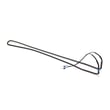
- Lg refrigerator defrost heater 5300JK1005D (helps prevent frost buildup that blocks airflow)
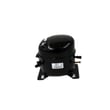
- Refrigerator compressor TCA37091209 (drives the cooling system)
Low cooling can be caused by simple airflow and control-setting issues, but it can also lead to food spoilage if temperatures stay unsafe. Following the manual’s 24-hour stabilization guidance prevents over-adjusting and helps you pinpoint whether the issue is usage, airflow, or a failing component.
Last updated: January 2026