 Installation guide
 Owner’s manual
 Error Codes


What is the life expectancy of a Kenmore washer?
A Kenmore washer like model 11026862500 typically lasts 10 to 15 years with normal household use and basic upkeep. Consistent load balancing, avoiding overloading, and addressing small issues early (drain, spin, agitation) are the biggest factors in reaching the high end of that range; see the 11026862500 owner's manual for care guidance.
Typical lifespan and what changes it
Most top-load Kenmore washers of this style land in this range:
| Usage pattern | Typical life expectancy |
|---|---|
| Light (few loads/week) | 12 to 15 years |
| Average (most households) | 10 to 15 years |
| Heavy (daily, large loads) | 8 to 12 years |
Maintenance habits that extend washer life
We see the longest-lasting washers when these basics are followed:
- Keep loads balanced so the basket can spin smoothly
- Avoid overloading; loads should move freely during washing
- Use the correct detergent amount; excess suds adds strain
- Wipe up spills and use bleach correctly (never pour undiluted bleach on fabrics)
- Check pockets and tie strings or sashes to prevent tangling and tearing
- Fix small problems early (slow drain, weak spin, unusual noise)
Parts that commonly affect “end of life” symptoms
When a washer stops agitating, won’t spin, or won’t drain, it is often a repairable wear item, not the whole machine. Common examples for this model include:
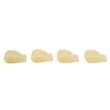
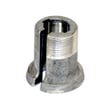
- Agitator dog 80040 (worn dogs can cause weak or no agitation)
- Motor coupling (if the motor runs but the washer won’t agitate or spin)
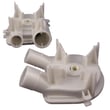
- Drain pump (if the washer won’t drain or drains slowly)
- Lid switch assembly (if the washer won’t spin with the lid closed)
Why it matters
A realistic life expectancy helps you decide whether to maintain, repair, or replace. On a 10 to 15-year washer, a low-cost fix (like an agitator or drain-related part) often restores normal washing performance and prevents bigger drivetrain wear.
Last updated: February 2026
How to do a hard reset on a Kenmore washer?
For Kenmore washer model 11026862500, a hard reset is a simple power reset: unplug the washer (or switch off the breaker) for 1 minute, then restore power and start a cycle. This clears minor control glitches like a stuck cycle or unresponsive controls.
Hard reset steps (power reset)
- Press the cycle control knob in to stop the washer.
- Unplug the washer from the outlet (or turn the breaker off).
- Wait 60 seconds.
- Plug the washer back in (or turn the breaker on).
- Close the lid and pull the cycle control knob out to start.
For normal operation details (start, stop, restart), follow the steps in the 11026862500 owner's manual.
If it still will not start or spin
These checks solve the most common “looks reset but still won’t run” situations on this direct-drive style Kenmore top-load washer:
- Confirm the lid closes fully; a failed lid switch can prevent spin.
- Try a different cycle and make sure the knob is set firmly into a cycle.
- Reduce the load size and redistribute items evenly.
- If the washer drains slowly or not at all, check for a clog at the pump or hoses.
- If the motor runs but the basket does not move, the drive coupling is a common failure.
Common parts related to “won’t run” symptoms
| Symptom | Common cause | Example part for this model |
|---|---|---|
| Won’t spin or agitate | Lid switch not closing electrically | Washer lid switch assembly WP8318084 |
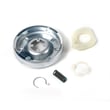
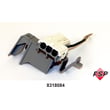
| Motor runs, no agitation/spin | Broken motor coupling | Washer motor coupling 285753A |
| Won’t drain | Clogged or failed pump | Washer drain pump WP3363394 |
Why it matters
A hard reset clears temporary electrical or control-state issues, but it will not fix a mechanical failure (like a worn coupling, failed lid switch, or clogged drain pump). Pairing the reset with quick symptom checks prevents repeat shutdowns and incomplete cycles.
Last updated: February 2026
How to identify a Kenmore washer model?
Your Kenmore washer model number is printed on the model and serial number label. On Kenmore model 11026862500 (a top-load washer), that label is located under the washer lid; record the full model number and serial number exactly as shown, then use it to match the correct parts and manuals. See the 11026862500 owner's manual.
Where to look on Kenmore washers
Most Kenmore washers place the model/serial label in one of these spots:
- Top-load washers: under the lid, around the tub opening or on the underside of the lid
- Front-load washers: inside the door opening, often on the door frame
- Some models: on the rear panel near the power cord or control console
What the model number looks like (and why it matters)
Kenmore washer model numbers often start with 110 and include additional digits (for example, 11026862500). Using the complete model number helps us match:
- Correct replacement parts (lid switch, drain pump, motor coupling)
- Correct diagrams and fit information
- Correct troubleshooting steps and cycle features
Quick check table
| What you need | Where to find it | Example |
|---|---|---|
| Model number | Model/serial label | 11026862500 |
| Serial number | Same label | Varies by unit |
| Parts match | Use model number to select parts | Washer lid switch assembly WP8318084 |
Tips to avoid ordering the wrong part
- Copy the model number character-for-character (no spaces)
- Use the model number to confirm part fit before checkout
- If the washer will not spin or drain, check common wear items first (lid switch, drain pump, motor coupling)
Why it matters
Kenmore model numbers identify the exact design series and component set. Even small differences can change which timer, clutch, or pump fits, so the label under the lid is the fastest way to get an exact match.
Last updated: February 2026
How many cubic feet is a Kenmore Model 11026862500 washer?
Kenmore washer model 11026862500 is a top-load washer; washers in this Kenmore 110 series typically fall in the about 3.2 to 3.5 cu. ft. capacity range. For the exact rated capacity for your specific unit, we recommend confirming it in the 11026862500 owner's manual.
How to confirm the exact capacity (fastest options)
- Check the specifications section in the 11026862500 owner's manual.
- Look for a model and serial tag (often under the lid or on the rim) and match it to the manual specs.
- If you are comparing baskets, measure the inside tub diameter and depth (use inches) and keep the numbers for reference.
- If your washer is noisy or off-balance, correct setup first; an unlevel washer can make the tub seem “small” because loads cannot move freely.
Typical capacity guidance for this style of Kenmore top-load washer
| Capacity class | Typical cu. ft. range | What it means for loads |
|---|---|---|
| Standard top-load | 3.0 to 3.5 | Good for everyday mixed loads |
| Large capacity top-load | 3.6 to 4.3+ | Better for bulky items and larger families |
Why it matters
Capacity affects how much laundry you can wash without overloading. Overloading can contribute to poor cleaning, tangling, and off-balance spinning. The manual also includes setup checks (leveling, shipping strap removal) that help the washer run smoothly and handle loads correctly.
Related setup detail (helps performance)
Your installation requirements, including drain standpipe height and electrical supply, are listed in the 11026862500 installation guide.
Last updated: February 2026
Is it worth replacing a motor in a washing machine?
Yes, it’s worth replacing the motor on a Kenmore washer model 11026862500 when the washer is otherwise in good shape and the motor is the clear cause of the problem; if the washer also has major drive or leak issues, the total repair cost usually makes replacement the better value.
Quick decision checklist
- The washer fills and drains normally, but won’t agitate or spin (motor or drive issue).
- The tub and basket are solid (no severe rust, cracks, or wobble).
- You have no recurring leaks from the tub or hoses.
- The repair is limited to one major failure, not multiple symptoms.
- You can complete the repair safely with power unplugged and proper grounding.
What to check before you buy a motor
Start with the most common, lower-cost drive items on this style of Kenmore top-load washer.
- Motor coupling: A broken coupling can mimic a bad motor (motor runs but basket does not move). Consider the washer motor coupling 285753A.
- Lid switch: If the lid switch fails, the washer may not spin or may stop mid-cycle. Consider the washer lid switch assembly WP8318084.
- Drain pump and drain path: A drain problem can prevent spin. Inspect the pump and hoses; the washer drain pump WP3363394 is a common fix.
Cost and value comparison
| Scenario | Typical outcome | Usually worth it? |
|---|---|---|
| Only motor-related failure, everything else works | One-part repair restores full operation | Yes |
| Motor plus coupling or lid switch | Still a contained repair | Yes |
| Motor plus gearcase/clutch/brake symptoms | Repair stack gets expensive fast | No |
Why it matters
A motor replacement only pays off when it solves the root cause. On the 11026862500, many “won’t spin/agitate” complaints trace back to the coupling, lid switch, or drain system, so confirming the failure prevents buying an unnecessary motor.
Safety notes we follow
- Unplug the washer before servicing; do not reach into the washer if the tub or agitator is moving.
- Keep the washer properly grounded and do not modify the plug; follow the installation guide.
- Use only repairs you understand and have the skills to carry out; see the owner’s manual.
Last updated: February 2026
Is it worth repairing a Kenmore washing machine?
Yes, it’s usually worth repairing a Kenmore washer, especially a proven direct-drive model like Kenmore 11026862500, when the fix targets a common wear part and the rest of the machine is in good shape. Repairs that restore agitation, draining, or spinning often cost far less than replacing the washer.
Quick decision checklist
- The washer fills, but won’t agitate or spin: a small drive repair is often a strong value.
- The washer won’t drain: a pump or hose issue is typically straightforward.
- The tub/basket and cabinet are solid with no major rust or structural damage.
- The problem is repeatable and diagnosable (not intermittent electrical issues).
- You can do the repair yourself or the labor quote is reasonable.
Common repairs that are often “worth it” on this model
These are frequent failure points on Kenmore 110 top-load designs and are typically cost-effective compared to replacement:
| Symptom | Likely area | Example part for this model |
|---|---|---|
| Won’t spin or agitate | Drive connection | Washer motor coupling 285753A |
| Won’t drain | Drain system | Washer drain pump WP3363394 |
| Won’t start or won’t spin with lid closed | Safety interlock | Washer lid switch assembly WP8318084 |
| Agitator moves poorly or “ratchets” | Agitator dogs | Agitator dog 80040 |
When replacement makes more sense
- The gearcase is noisy and leaking heavily, and multiple other parts are worn.
- The basket/tub area has severe corrosion or repeated leaks.
- You need several major repairs at once (gearcase, motor, basket drive, plus suspension).
Why it matters
A targeted repair can extend the life of a dependable Kenmore washer for years. Your manual also emphasizes avoiding overloading and keeping loads balanced, which reduces strain on the drive system and helps prevent repeat failures. Check operating and care guidance in the 11026862500 owner’s manual.
Last updated: February 2026
How to unclog drain hose on Kenmore washer?
For Kenmore washer model 11026862500, we unclog the drain hose by cutting power, draining any standing water, then clearing the hose and pump path of lint, coins, and small items. Afterward, we reinstall the hose at the correct height with an air gap to prevent repeat drain problems.
Safety first and quick prep
- Unplug the washer.
- Turn off both water faucets.
- Protect the floor with towels and a shallow pan.
- If the tub is full, bail water out or use a wet/dry shop vacuum at the standpipe end.
- Keep the washer upright; avoid leaving it tilted.
Step-by-step: clear the clog
- Pull the drain hose from the standpipe or laundry tub and confirm the household drain flows.
- Check the hose behind the washer for kinks or crushing; straighten it.
- Flush the hose with water (sink sprayer or garden hose) until it runs clear.
- If it still drains poorly, check the pump inlet area for debris; a common fix is cleaning or replacing the pump.
- Reassemble and run a rinse and spin to verify strong draining.
If the pump is jammed, noisy, or leaking after clearing debris, replacement is the reliable fix: use the washer drain pump WP3363394.
Install details that prevent repeat clogs
These setup rules stop siphoning and “won’t drain” complaints:
- Keep the top of the drain hose at least 39 in. (99 cm) above the floor.
- Do not push the hose tightly into the standpipe; keep an air gap.
- Do not tape or seal the hose to the standpipe.
- Do not force excess hose back into the washer cabinet.
Confirm routing and securing steps in the 11026862500 installation guide.
Quick checks: symptom vs. likely cause
| Symptom | Most likely cause | First check |
|---|---|---|
| Won’t drain, water remains | Clog in hose or pump | Flush hose; inspect pump |
| Cycle seems stuck filling or draining | Hose too low or sealed | Set height; restore air gap |
| Drains slowly, gurgles | Standpipe restriction | Verify household drain flow |
Why it matters
A restricted drain hose can leave water in the tub and prevent spin. Correct hose height and an air gap also prevent siphoning, which can make the washer appear to fill and drain continuously.
Last updated: February 2026





