 Owner’s manual
 Error Codes



What is the advantage of a bottom mount fridge?
A bottom-mount refrigerator like the Jenn-Air JCB2059GES keeps the fresh-food compartment at eye level, so you reach everyday items with less bending. The freezer sits below, which is convenient if you use frozen foods less often. For layout and feature details, check the JCB2059GES owner's manual.
Key advantages in daily use
- Less bending for fresh food: produce, drinks, and leftovers are easier to see and grab.
- Better organization up top: shelves and drawers are in your natural line of sight.
- Freezer storage stays roomy: the lower freezer typically holds bulk items well.
- Good fit for meal-prep households: you access the refrigerator section more frequently.
- Easier door access planning: you can allow extra hinge-side space if the unit sits near a wall.
What to plan for during placement and setup
The JCB2059GES user guide calls out a few installation basics that affect day-to-day performance.
| Setup item | Practical target | Why it helps |
|---|---|---|
| Airflow at base grille | Keep the front base area clear | Supports steady cooling and efficiency |
| Room temperature | Keep location above 55°F | Helps the freezer maintain proper temperature |
| Clearances | About 1/2 inch at back and sides (more at hinge side if near a wall) | Makes installation easier and helps door swing |
Why it matters
Bottom-mount designs reduce the “bend-and-search” routine that happens multiple times a day. That small ergonomic improvement adds up, especially when you are loading groceries, packing lunches, or checking produce drawers.
If you need replacement parts to keep features like water and ice working smoothly, we list model-matched options on this page, and you can also search by model number on Sears PartsDirect.
Last updated: February 2026
Why is my JennAir refrigerator leaking water from the bottom?
Water leaking from the bottom of your Jenn-Air JCB2059GES refrigerator is usually caused by a clogged defrost drain, a leaking water supply connection, or a problem in the ice maker or water inlet system. We recommend checking the drain path first, then inspecting the water line and valve connections using the steps in the JCB2059GES owner's manual.
Quick checks (start here)
- Look for a sheet of ice or heavy frost on the freezer floor; that often points to a defrost drain issue.
- Check the water line connection at the back of the refrigerator for drips.
- Inspect the ice maker fill area for ice buildup or overflow.
- Make sure the refrigerator is level; a tilt can route water to the front edge.
- Check door gaskets for gaps that cause excess frost and meltwater.
Most common causes and what to do
| What you see | Most likely cause | What we do next |
|---|---|---|
| Water appears after defrost cycles | Defrost drain clogged or frozen | Clear the drain opening and flush with hot water (power off first) |
| Water near back/bottom | Water supply connection leaking | Tighten fittings; replace damaged tubing |
| Ice maker area has ice clumps | Low water pressure or valve issue | Verify household pressure and test the inlet valve |
| Slow water flow, then leaking | Improper saddle valve or restricted supply | Correct the water connection method and restore proper flow |
Water supply issues specific to this model
For the JCB2059GES, the user guide calls out water connection problems that can lead to leaks:
- Plastic tubing is more prone to leaking; copper tubing is recommended.
- Self-piercing and 3/16-inch saddle valves can clog over time and cause low pressure.
- Water pressure should be 20 to 100 psi for proper operation.
If you suspect the inlet valve is seeping or not closing fully, the replacement part for this model is the refrigerator valve WP12544002.
Why it matters
Bottom leaks can damage flooring and also signal airflow or defrost problems that lead to frost buildup, warm temperatures, and ice maker performance issues. Fixing the root cause prevents repeat puddles and protects food storage temperatures.
Last updated: February 2026
What is the life expectancy of a JennAir refrigerator?
Most Jenn-Air refrigerators, including model JCB2059GES, typically last 15 years with normal household use and basic maintenance. Keeping airflow clear, doors sealing tightly, and the water system maintained helps the sealed system (compressor and tubing) run longer.
Typical lifespan ranges (what we see most often)
- Expected service life: about 15 years
- Common real-world range: 10 to 20 years
- Biggest lifespan drivers: compressor health, condenser cleanliness, door gasket seal, and defrost performance
| Refrigerator age | What to expect | What we recommend |
|---|---|---|
| 0 to 5 years | Mostly minor issues | Keep coils and seals clean; follow the JCB2059GES owner's manual maintenance guidance |
| 6 to 12 years | Wear parts start showing up | Watch for temperature swings, fan noise, and ice maker or valve issues |
| 13 to 20 years | Major repairs become more likely | Compare repair cost vs. age; address cooling problems quickly |
Maintenance that extends life
- Keep door gaskets clean and sealing; reduce warm air leaks and moisture buildup.
- Minimize long door openings; humidity and frequent openings can cause interior moisture and extra run time.
- Replace the water filter on schedule (many Jenn-Air systems call for about every 6 months).
- If you have water or ice issues, check the water inlet valve and supply line for restrictions.
- Use the troubleshooting section before scheduling service; it often points to simple fixes first.
Parts that commonly affect longevity
These parts do not “set” the lifespan, but they often show symptoms first when performance drops:
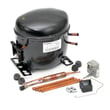
- Cooling system: Refrigerator compressor W10160407
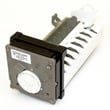
- Water and ice: Refrigerator ice maker D7824706Q, refrigerator valve WP12544002
- Door sealing: Gasket,fz d W10436252
Why it matters
A refrigerator that runs longer than it should (from dirty coils, air leaks, or water system restrictions) puts extra strain on the sealed refrigeration system. Preventive care reduces run time, stabilizes temperatures, and helps avoid expensive cooling failures.
Last updated: February 2026
What are common problems with JennAir refrigerators?
Common problems we see on Jenn-Air refrigerators like model JCB2059GES include warm temperatures or not cooling, water leaks, ice maker or dispenser issues, doors not sealing, and unusual noise. Many of these start with airflow restrictions, water pressure problems, or worn parts; use the JCB2059GES owner's manual for model-specific checks.
Most common symptoms and likely causes
- Not cooling or warm temps: blocked rear air grille under the crisper drawers, overloaded shelves, doors left open too long
- Leaking water: poor water line connection, cracked tubing, or a valve issue
- Ice maker not working: low water pressure, frozen fill tube, or a failing ice maker
- Slow water dispensing: clogged filter, air in the line, or a short delay while the internal tank fills
- Door not closing or poor seal: dirty gasket, misalignment, bins or food preventing closure
Quick checks we recommend first
- Clear packages away from the rear air grille under the crispers to restore airflow.
- Set temps correctly; most units run best near 37°F fresh food and 0°F freezer.
- Confirm household water pressure is 20 to 100 PSI for ice and water features.
- If water is slow right after setup, allow a 1 to 2 minute delay for the tank to fill.
Parts that often fix these issues
| Symptom | Part to check | Example part on this page |
|---|---|---|
| No ice or inconsistent ice | Ice maker assembly | Refrigerator ice maker D7824706Q |
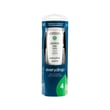
| Slow water, bad taste/odor | Water filter | Refrigerator water filter EDR4RXD1 |
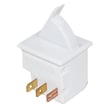
| No interior light when door opens | Door/light switch | Refrigerator switch W11396033 |
Why it matters
Airflow and water supply problems can mimic major failures (warm fridge, no ice, leaks). Fixing the root cause protects food temperatures, reduces run time, and helps prevent repeat breakdowns.
DIY help
- Use common refrigerator ice maker problems and solutions to pinpoint ice production issues.
- Use how to diagnose a faulty refrigerator water inlet valve when the dispenser or ice maker is not getting water.
You can order replacement parts for JCB2059GES from the parts list for this model, or search by model number on Sears PartsDirect.
Last updated: February 2026





