Installation guide
 Owner’s manual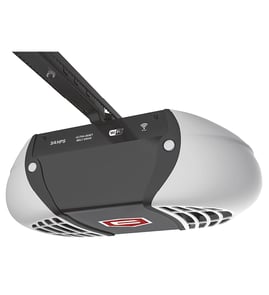



Is it worth repairing a 20 year old garage door opener?
In most homes, repairing a 20-year-old garage door opener is not worth it because it is beyond the typical 10 to 15 year lifespan; replacement is usually the more reliable long-term choice. For a Craftsman model 20057953, we focus first on safety checks and door balance before deciding on any repair.
- Replace if the opener is unreliable, noisy, or needs multiple parts at once.
- Replace if the door is unbalanced or binds; the manual warns this can cause serious injury and damage the opener.
- Repair if the issue is simple and isolated (for example, a remote programming problem or a sensor alignment issue).
- Repair if the opener is otherwise consistent and the door hardware is in good condition.
- Replace if you want modern features (rolling-code security, battery backup, smart control) that older units often lack.
Use the steps in the 20057953 owner's manual to confirm the door is safe to operate:
- Raise and lower the door by hand to check for sticking or binding.
- Look for loose hinges, damaged rollers, frayed cables, and broken springs.
- Lift the door halfway and release; it should stay in place under proper spring tension.
- Test the opener monthly to confirm it reverses on contact with a 1-1/2 inch object (or a 2x4 laid flat).
| Situation | Repair usually makes sense | Replacement usually makes sense |
|---|---|---|
| One clear symptom | Sensor alignment, remote setup, wall control issue | Multiple symptoms at once |
| Door condition | Door is balanced and moves smoothly | Door is unbalanced, binds, or has worn hardware |
| Long-term plan | Short-term fix for a limited budget | You want dependable daily use for years |
| Safety and features | Existing safety system is working correctly | You want newer safety and convenience features |
If your opener has diagnostic lights or beeps, match the symptom to a code before buying parts:
A garage door that is not properly balanced puts extra load on the motor and drive system; that increases breakdowns and raises safety risk. Starting with door balance and reversal testing helps you avoid repairing the opener when the real problem is the door hardware.
Last updated: January 2026
Can you get a universal remote for an old garage door opener?
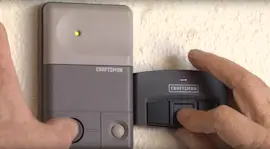
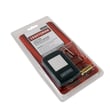
Yes. For a Craftsman garage door opener like model 20057953, you can typically use a universal remote, or add an external receiver kit if the opener’s built-in radio is too old or incompatible. We also recommend confirming your opener’s safety sensor setup before upgrading controls using the 20057953 owner's manual.
- Universal remote: Works when the remote supports your opener’s learn button or frequency.
- Universal receiver + remote kit: Adds a new radio receiver to the opener, bypassing older onboard electronics.
- Smart controller kit (if compatible): Lets you control the door with a phone; compatibility varies by model/series.
- OEM-style replacement remote: Best when you can match the opener’s learn button color and radio type.
Use this checklist before you buy:
- Learn button present on the motor unit (common on newer “rolling code” openers).
- Frequency/technology match (older fixed-code units may need a receiver kit).
- Photo-eye safety sensors installed and aligned; many openers will not close properly if the beam is blocked.
- Door type: Smart controllers are intended for residential sectional doors, not one-piece/swinging doors.
| Opener situation | What usually works | Notes |
|---|---|---|
| Has learn button (rolling code) | Universal remote | Program to the opener’s learn button |
| No learn button, very old fixed-code | Universal receiver kit + remote | Most reliable upgrade path |
| Remote range is poor | New remote battery, reprogram, check antenna | Also check for LED bulb interference |
A compatible remote or receiver prevents nuisance issues like intermittent operation, limited range, or a door that reverses because the photo-eye safety system is misaligned. For troubleshooting flashing lights or diagnostic patterns during setup, use Craftsman error codes.
Last updated: January 2026
How do I know what model my garage door opener is?
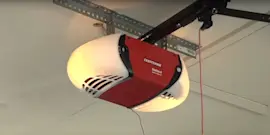
Your Craftsman garage door opener model number is typically printed on a rating label on the powerhead (the motor unit mounted to the ceiling). For model 20057953, confirm the exact number on that label, then match it to the parts list and instructions in the 20057953 owner's manual.
Check these common spots on the opener powerhead:
- Under or behind the light lens/cover
- On the side panel of the motor housing
- On the back panel near the wiring terminals
- Near the learn/program button area (often close to the antenna wire)
- On the underside of the unit facing the garage floor
When you find the label, record these items exactly as shown:
- Model number (example: 20057953)
- Manufacture date or date code (if listed)
- Electrical rating (often 120V/60Hz for residential openers)
- Series/family wording (if present)
| Item on label | Why it matters |
|---|---|
| Model number | Ensures the correct parts diagrams and compatible accessories |
| Date code | Helps confirm the correct revision of parts and electronics |
| Voltage/Hz | Confirms proper power requirements and safe replacement choices |
Use these practical identifiers to narrow it down:
- Look at the wall control style (basic button vs. multi-function panel)
- Note whether you have photo eye safety sensors installed at the door tracks
- Check whether the opener uses a chain, belt, or screw drive rail
- Compare the opener’s features and programming steps in the 20057953 installation guide
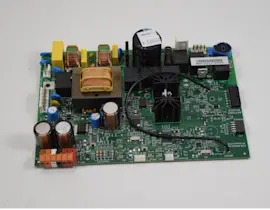
Garage door opener parts and accessories (remotes, wall controls, safety sensors, logic boards) are model-specific. Confirming the exact model number prevents ordering the wrong component and helps you follow the correct setup and safety steps.
Last updated: January 2026
How do I know which garage door opener is compatible?
For a Craftsman garage door opener like model 20057953, compatibility depends on what you’re trying to add or replace (remote, wall control, smart controller) and the opener’s series and features. For example, the Smart Controller Kit guide lists Series 100 openers (including 57953) and 53XXX models without AssureLink® as compatible, while several other Craftsman series are not.
Start by confirming the exact device you want to use and what it must “talk to” on the opener.
- Remote control: must match the opener’s radio frequency and coding type (rolling code vs DIP switches)
- Wireless keypad: must match the same radio system as the remote
- Wall control: must match the opener’s push-button terminal style and logic
- Smart controller add-on: must be listed as compatible for your opener series/model
If you’re installing a Craftsman Smart Controller Kit, the installation guide calls out these compatibility rules:
| Device type | Compatible examples | Not compatible examples |
|---|---|---|
| Smart Controller Kit (Model 57993) | Series 100 models (57933, 57943, 57953, 57963, 57973, 57983); 53XXX models without AssureLink® | 3043, 30437, 54XXX series, 57915, 57918 |
For model 20057953, confirm whether your opener is a 53XXX without AssureLink® before buying the kit.
These checks usually tell you what will and will not work.
- Read the label on the motor unit for model/series identifiers
- Check whether your opener uses AssureLink® (if present, it changes compatibility)
- Confirm whether you need remote compatibility or wired terminal compatibility
- If your opener has diagnostic flashes/codes, match symptoms using Craftsman error codes
- Verify wiring and terminal connections using the installation guide
Using an incompatible remote, keypad, or smart controller can look like a “dead opener” problem (no response, intermittent operation, or pairing failures). Confirming series, features (like AssureLink®), and connection type saves time and avoids unnecessary parts swapping.
Last updated: January 2026