




What are the common problems with F&P washers?
Common problems we see with Fisher & Paykel washers like model WL4227P1-96207-A include not draining, leaking, not spinning, excessive vibration, and fill problems (slow fill or no fill). These symptoms usually trace back to the drain system, inlet screens/valves, lid lock, or suspension.
- Washer will not drain or leaves water in the tub: drain pump issue, blockage, or a recirculation/drain hose restriction
- Leaks: loose or split hoses, pump/hose connections, or tub seal and bearing area issues
- Won’t start or stops mid-cycle: lid lock not engaging, power supply issue, or control sensing a fault
- Loud banging or walking: out-of-balance load, weak suspension, or leveling problem
- Slow fill or no fill: clogged inlet screens, low water pressure, or a failing inlet valve
- Reset power: unplug for 2 minutes, then restore power.
- Confirm draining: check the drain hose for kinks and verify the standpipe is not backing up.
- Check water supply: fully open both hot and cold valves; verify strong flow at the wall.
- Clean inlet screens: if fill is slow, clean the screens at the hose connections.
- Level the washer: adjust feet so the cabinet is stable on the floor.
| Symptom | Common suspect part | Example part for this model |
|---|---|---|
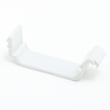
| No start, stops mid-cycle | Lid lock | Fisher & paykel lid lock 424314P |
| Slow fill, fill errors | Inlet screens/seals | Fisher & paykel washer fill hose screen and seal set 420016P |
| Won’t drain | Drain pump | Fisher & paykel washer drain pump 479627 |
| Excessive vibration | Suspension | Fisher & paykel washer suspension rod 424569P |
Catching the root cause early prevents secondary damage. For example, repeated out-of-balance spinning can stress the suspension and cabinet, and chronic slow fill can cause long cycle times and poor rinsing.
Last updated: February 2026
Why is my Fisher and Paykel washing machine leaking from underneath?
A Fisher & Paykel washer like model WL4227P1-96207-A typically leaks from underneath because water is escaping from a drain or recirculation hose, the drain pump area, or an internal tub seal and then running down the base. Start by checking for loose hose connections and pump leaks before assuming a major tub issue.
- Unplug the washer and turn off both water supplies.
- Pull the washer forward and look for a trail: front-center (pump area) vs. back (fill hoses) vs. middle (tub/shaft area).
- Check the standpipe or laundry sink for overflow; a slow drain can mimic a washer leak.
- Inspect the inlet hoses at the wall and washer for seepage; replace worn hose washers/screens.
- Look for a split or loose recirculation hose and clamps.
| Where you see water | Most likely cause | What to do next |
|---|---|---|
| Front or front-center under cabinet | Drain pump or pump hose leak | Inspect pump body and hose connections; replace the pump if it weeps from the housing |
| Back of washer | Fill hose connection or screen/seal issue | Replace hose washers/screens; confirm hoses are snug but not cross-threaded |
| Middle under tub | Tub seal, bearing/shaft area leak | Stop using the washer and plan a seal/bearing repair to prevent further damage |
| Only during drain/spin | Drain hose, standpipe overflow, or pump leak | Check drain hose for cracks and verify the home drain is flowing freely |
- If the leak is at the pump or only during draining, the washer drain pump 479627 is a common fix.
- If you find water at the recirculation line, inspect the hose recirc assy s/pump 68 424128 for splits or loose ends.
- If seepage is at the fill connections, replace the washer fill hose screen and seal set 420016P.
Even a small leak can damage the washer base, wiring, and motor components over time. Finding the exact leak path first helps you avoid replacing high-cost parts unnecessarily and prevents repeat leaks.
Last updated: February 2026
Why is my Fisher and Paykel washing machine not filling properly?
If your Fisher & Paykel washer model WL4227P1-96207-A is not filling properly, the most common causes are restricted water supply (closed valves, kinked hoses, clogged inlet screens) or a control condition that prevents filling (lid not locking, drain issue, or a failing water valve). Start with the water supply checks first.
- Confirm both hot and cold shutoff valves are fully open.
- Straighten inlet hoses; replace any hose that is crushed or internally collapsed.
- Clean the inlet hose screens; for this model, the washer fill hose screen and seal set 420016P is the correct screen and seal kit.
- Make sure the lid closes firmly; if the washer will not sense a locked lid, it may not fill.
- If the tub is slowly draining while trying to fill, check for a drain or siphoning issue.
| Symptom | Most likely cause | What to do |
|---|---|---|
| No water at all | Water supply off, screens clogged, valve not opening | Verify supply, clean/replace screens, then test valve |
| Slow fill | Partially clogged screens, low household pressure | Clean screens; confirm strong flow at the faucet |
| Fills then stops | Lid lock not engaging, control sensing a fault | Check lid closure; inspect lid lock wiring and operation |
| Keeps filling or overfills | Water valve sticking, pressure sensing issue | Shut off water; inspect valve function |
These parts are often involved when a washer will not fill or fills inconsistently:
- Valve disp bitron usa pkd 421920P (water inlet valve assembly)
- Washer fill hose screen and seal set 420016P (inlet screens and seals)
- Lid lock 424314P (prevents filling if the lid is not sensed as locked)
A restricted fill can cause poor cleaning, longer cycle times, and error conditions. Catching a clogged screen or a weak inlet valve early also helps prevent leaks and protects the washer’s electrical components.
Last updated: February 2026
Why won't my Fisher and Paykel washing machine start?
If your Fisher & Paykel washer model WL4227P1-96207-A will not start, the most common causes are a power supply issue, a lid lock problem, or a control not sensing a safe-to-run condition. We recommend checking the simple external items first, then testing the lid lock and wiring before replacing major parts.
- Confirm the outlet has power (try a lamp or phone charger).
- Reset the washer: unplug for 2 to 5 minutes, then plug back in.
- Make sure the lid is fully closed and not obstructed by the lid trim.
- Verify the load is not severely off-balance (some washers will pause and refuse to start).
- Check for a stuck button or unresponsive control panel.
A no-start condition is often caused by a safety interlock or an electrical connection issue.
- Lid lock: If the lock does not engage, the washer may not start or may appear dead. Consider inspecting or replacing the lid lock 424314P.
- Broken or damaged wiring: Look for loose connectors, pinched wires, or corrosion, especially near the lid lock and control area. Use the how to repair broken or damaged wires video as a guide.
- Motor drive system: If the washer powers on but will not agitate or spin, the drive system can be involved. On this model, the washer motor stator 438516P is a key drive component.
| Symptom | Most likely area | What we check first |
|---|---|---|
| No lights, no response | Power supply, wiring | Outlet power, cord, connections |
| Lights on, won’t start cycle | Lid lock, lid alignment | Lid closes firmly, lock engages |
| Starts filling then stops | Lid lock, wiring | Lock operation, harness connections |
| Hums but won’t move | Drive components | Motor-related parts, mechanical binding |
A washer that will not start is usually protecting you from an unsafe condition (lid not locked) or it is not getting reliable power. Finding the exact failure point prevents replacing expensive parts unnecessarily and helps restore normal wash cycles faster.
Last updated: February 2026


