Owner’s manual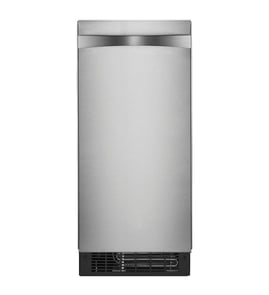


How many cubic feet is my Kenmore Elite refrigerator?
Your Kenmore model 10689589705 is a freestanding automatic ice maker, not a Kenmore Elite refrigerator, so “refrigerator cubic feet” does not apply to this model. For the correct capacity spec for your ice maker, use the model’s rating information in the 10689589705 owner's manual.
How to identify the right capacity number
Ice makers are typically described by ice production rate and storage bin capacity, not refrigerator-style cubic feet. Check these common places:
- The model and serial tag (often inside the cabinet or behind the front grille)
- The specifications section of the manual
- The “capacity” or “bin” section in the operating instructions
- Any rating label that lists electrical and performance information
If you really meant a Kenmore Elite refrigerator
If you have a separate Kenmore Elite refrigerator, we recommend using its exact refrigerator model number to find the correct cubic feet. Refrigerator capacity is normally listed as:
- Total capacity (cu ft)
- Refrigerator compartment capacity (cu ft)
- Freezer compartment capacity (cu ft)
A quick way to avoid ordering the wrong parts is to confirm the model number format and location first; our guide how to find your appliance model number (and what it means for parts) walks through what to look for.
Cubic feet calculation (when you must estimate)
If the label is missing, you can estimate interior cubic feet by measuring the usable inside space (not the outside cabinet):
- Measure inside width, depth, and height in inches
- Multiply: width × depth × height = cubic inches
- Divide by 1,728 to convert to cubic feet
| What you’re measuring | Use this for | Notes |
|---|---|---|
| Interior refrigerator space | Estimating refrigerator cu ft | Most accurate for “usable” space |
| Exterior cabinet dimensions | Not recommended | Insulation and walls inflate the number |
| Ice maker bin | Ice storage capacity | Often listed in pounds, not cu ft |
Why it matters
Using the right capacity spec helps you compare appliances correctly and prevents confusion between refrigerator volume and ice maker storage/production, which are measured differently.
Last updated: February 2026
What does oe mean on a Kenmore Elite?
On Kenmore Elite appliances, OE most commonly indicates a drain error (the unit is not draining water fast enough). For your Kenmore freestanding ice maker model 10689589705, treat OE as a drain or water removal problem and follow the drain checks in the 10689589705 owner's manual.
What to check first (fast, high-success steps)
- Power reset: Unplug the ice maker for 1 minute, then restore power.
- Drain path: Make sure the drain hose is not kinked, pinched, or routed uphill.
- Drain line blockage: Clear slime, scale, or debris from the drain line and drain outlet.
- Standing water: If water remains in the bin or reservoir area, focus on the pump and restrictions.
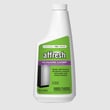
- Mineral buildup: Run a cleaning cycle using freestanding ice maker cleaner W11179302 to remove scale that can slow draining.
Likely causes and what they mean
| What you notice | Most likely cause | What to do |
|---|---|---|
| OE appears after a lot of melting water | Drain line partially blocked | Clean drain line and outlet; re-test |
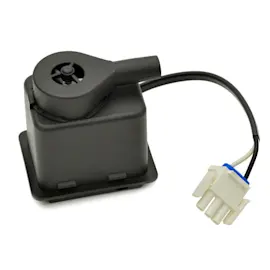
| You hear a hum but water does not move | Drain pump jammed or failing | Inspect for obstructions; replace pump if needed |
| OE appears with heavy scale or cloudy water | Mineral buildup restricting flow | Descale with cleaner; improve cleaning frequency |
| OE appears after moving the unit | Hose kink or incorrect routing | Re-route hose with smooth downhill run |
If your model uses a drain pump
Many freestanding ice makers use a drain pump to move meltwater out. If your 10689589705 has a pump and OE returns after clearing the drain line, the pump can be the next component to inspect or replace.
Why it matters
A drain error can stop ice production, cause water to back up into the cabinet, and accelerate corrosion and scale buildup. Fixing the drain issue quickly helps protect the evaporator, control board, and internal wiring.
Last updated: February 2026
What is the average lifespan of 10689589705?
A Kenmore freestanding automatic ice maker like model 10689589705 typically lasts 8 to 12 years with normal use, proper cleaning, and good water quality. Regular maintenance and quick attention to leaks or slow ice production help you reach the high end of that range.
Typical lifespan and what affects it
The biggest lifespan drivers for a freestanding ice maker are scale buildup, airflow, and how hard the sealed system has to work.
- Hard water and mineral scale shorten component life
- Dirty condenser coils raise temperatures and stress the compressor
- Poor ventilation around the cabinet reduces cooling efficiency
- Small water leaks can damage wiring and controls over time
- Infrequent cleaning can cause odors, clogs, and slow harvest cycles
Maintenance schedule we recommend
Use this as a practical baseline; follow any model-specific intervals in the owner's manual.
| Task | What to do | Frequency |
|---|---|---|
| Clean the ice system | Run an approved cleaner through the system | Every 3 to 6 months |
| Clean condenser area | Vacuum dust and lint from coil and grille | Every 6 months |
| Check water supply | Inspect tubing and fittings for seepage | Monthly |
| Sanitize bin | Wash and dry the bin and interior surfaces | Monthly |
For descaling, use a cleaner made for freestanding ice makers such as freestanding ice maker cleaner W11179302.
Signs your ice maker is nearing end of life
These symptoms usually point to a failing component (control, thermostat, valve, pump, or sealed system) rather than a simple cleaning need.
- Ice production drops even after cleaning and good airflow
- Ice is thin, hollow, or slushy repeatedly
- Unit runs constantly or gets unusually hot at the sides
- Water will not fill, overfills, or intermittently leaks
- Frequent shutdowns or inconsistent cycling
Why it matters
Knowing the expected 8 to 12 year lifespan helps you decide whether to maintain and repair (common wear items like valves, thermostats, and pumps) or plan for replacement if major cooling components start failing.
Last updated: March 2026