 Installation guide
 Owner’s manual


What is the life expectancy of a Whirlpool Cabrio washer?
A Whirlpool Cabrio top-load washer like model WTW8040DW1 typically lasts about 11 years with normal household use and routine care. Heavy weekly loads, overloading, and skipped maintenance can shorten life; good installation and HE detergent use help it reach that average.
Typical lifespan and what changes it
Most Whirlpool Cabrio-style top-load washers land in this range:
| Usage pattern | Typical life expectancy | What usually drives it |
|---|---|---|
| Light (few loads/week) | 12 to 14 years | Less wear on drive, suspension, and pump |
| Average (about 8 loads/week) | ~11 years | Normal wear items over time |
| Heavy (large family, frequent bulky loads) | 7 to 10 years | Faster wear from load stress and vibration |
How to get the full life from your WTW8040DW1
We see the biggest longevity gains from these habits:
- Use HE (High Efficiency) detergent only and measure carefully to prevent residue buildup.
- Avoid overloading; bulky loads strain the suspension and drive system.
- Run the washer’s clean washer cycle on schedule to reduce odor and buildup.
- Keep the washer level and stable; out-of-level cabinets increase vibration and wear.
- Check pockets and use garment bags for small items to reduce drain pump clogs.
Parts that commonly affect “end of life” symptoms
When a Cabrio washer starts getting loud, won’t spin, or won’t drain, these are frequent repair points:
- Damper assembly W11130356 (helps control tub movement and out-of-balance shaking)
- Washer drain pump W10876600 (draining issues, humming, slow or no drain)
- Washer lid lock assembly W10810403 (won’t start or stops mid-cycle if the lid won’t lock)
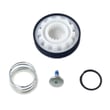
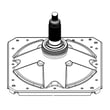
- Drive and clutch components (spin/agitate performance issues)
Why it matters
Knowing the typical life expectancy helps you decide whether to maintain, repair, or plan a replacement. If your WTW8040DW1 is near the 10 to 12 year mark, investing in basic upkeep and addressing early symptoms (noise, vibration, slow drain) often prevents bigger failures.
For model-specific care and maintenance intervals, follow the WTW8040DW1 owner’s manual.
Last updated: January 2026
Is the WTW8040DW1 a top load or front load?
The Whirlpool WTW8040DW1 is a top-load washer (it uses a lid and a top opening). You will also see top-load specific features and maintenance steps in the WTW8040DW1 owner's manual, including guidance like leaving the lid open between uses.
How we can tell it is a top-load
A top-load washer is identified by a lid on top (not a front door) and by top-load operating and care instructions.
- The manual includes a section titled “Cleaning Your Top Loading Washer”
- It references leaving the washer lid open between uses
- The cycle and loading guidance is written for a top-load design (items loaded around the washplate)
Quick comparison: top load vs front load
| Feature | Top-load washer (WTW8040DW1) | Front-load washer |
|---|---|---|
| Main access | Lid on top | Door on front |
| Typical loading | Loose heaps around washplate/agitator | Tumble in a horizontal drum |
| Common care tip | Leave lid open to dry | Leave door and gasket area dry |
Why it matters
Knowing the WTW8040DW1 is a top-load washer helps you use the right loading method, choose the right troubleshooting steps, and follow the correct cleaning routine so you get better cleaning performance and fewer odor issues.
Helpful next steps
- Confirm cycle and feature details in the WTW8040DW1 owner's manual
- Follow the recommended monthly “Clean Washer” routine to reduce odor buildup
- Use only HE detergent and measure carefully to prevent excess suds and performance problems
Last updated: January 2026
What is the most common problem with whirlpool washers?
The most common Whirlpool washer problems are no spin or weak spin, won’t drain, excessive vibration (off-balance), and won’t start. On the Whirlpool WTW8040DW1, many “problems” trace back to load balance, leveling, lid-lock issues, or a drain restriction; our WTW8040DW1 owner's manual walks through the exact checks.
Most common issues (and what they usually mean)
- Washer won’t spin or stops during spin: load is unbalanced, washer is not level, or the lid is not fully closed/locked.
- Washer won’t drain: drain hose installation issue, a blockage, or a failing pump.
- Vibration, rocking, or “walking”: leveling feet not firmly on the floor, floor flexing, or an uneven load.
- Washer won’t start or pauses: lid must be closed; some pauses are normal during cycle phases.
- Clicking, humming, gurgling, or whirring: often normal sounds; metallic clicking can be items in the drain system.
Quick checks we recommend first
- Redistribute the load: load items in loose heaps evenly around the washplate; avoid washing single heavy items alone.
- Level the washer: confirm all feet contact the floor and are locked; use a sturdy 3/4-inch plywood sheet under the washer if the floor flexes.
- Confirm lid lock conditions: remove items under the lid and remove anything sitting on top of the lid that could prevent locking or unlocking.
- Check drain setup: secure the drain hose to the standpipe or laundry tub; do not tape over the drain opening.
- Verify fill hoses: tighten connections and make sure the flat washers are seated.
Symptom-to-part guide for WTW8040DW1
| Symptom | Most likely area | Common related part |
|---|---|---|
| Won’t drain / water left in tub | Drain system | Washer drain pump W10876600 |
| Won’t start / lid error behavior | Lid lock system | Washer lid lock assembly W10810403 |
| Excessive vibration in spin | Leveling, load, suspension | Damper assembly W11130356 |
| Won’t fill or fills poorly | Water inlet | Washer water valve W11220230 |
Why it matters
Catching the root cause early prevents repeat cycle stops, reduces wear on the drive system, and helps avoid leaks from loose hoses or an unlevel cabinet.
Last updated: January 2026





