 Error Codes


Where to find part number on GE dryer?
On your GE electric dryer model DNSR473EW0AA, the model and serial tag (where you’ll find the identifying numbers you need to match parts) is typically located on the inside of the dryer door or on the door frame when you open the door.
What to look for on the tag
The tag usually includes several numbers; for parts ordering, the most important is the model number.
- Model number (use this to match diagrams and parts)
- Serial number (helps date the unit and confirm production run)
- Electrical rating (volts/amps; useful for diagnosing heat and power issues)
- Manufacturing info (sometimes includes date codes)
Common GE dryer tag locations (quick checklist)
Check these spots in order:
- Inside the door opening on the cabinet front (door frame)
- On the inside face of the door itself
- Along the front panel edge near the lint screen opening (less common)
If you meant the “part number” for a specific component
GE dryer parts usually have their own part numbers printed or stamped on the part, but the fastest way to get the correct replacement is to look it up by model and part name. For example, the drum belt for this model is the drive belt WE03X29897.
| What you have | What to use | Why it helps |
|---|---|---|
| Model/serial tag | Model number DNSR473EW0AA | Ensures parts fit your exact dryer |
| Number printed on a part | Part number on the component | Can confirm what’s currently installed |
| Symptom (won’t start, no heat, squeal) | Part diagrams and troubleshooting | Helps identify the failed part |
Why it matters
Using the correct model number prevents ordering the wrong GE dryer parts (like a door switch, idler pulley, or heating element assembly) that may look similar but mount differently or use different terminals.
Last updated: February 2026
What if I can't find my part on Sears PartsDirect?
If you can’t find a part for your GE electric dryer model DNSR473EW0AA, we recommend confirming the model number from the dryer’s ID tag and then searching by the part name or part ID. If it’s still not showing up, our parts specialists can help you match the correct replacement.
Quick checks that usually solve it
- Recheck the model number character-by-character: DNSR473EW0AA (one wrong letter changes the parts list)
- Search using a common part name (belt, thermostat, door switch, blower wheel)
- Try searching by a known part ID from this model’s list, such as drive belt WE03X29897
- Look for alternate names: “lint trap” vs “lint screen housing”, “idler pulley” vs “belt tension pulley”
- If you have the old part, use the number printed on the part (manufacturer number) to cross-reference
If you’re not sure what the part is
A fast way to narrow it down is to match the symptom to the system involved (heat, drum movement, airflow, door safety).
| Symptom | Most likely system | Example part from this model |
|---|---|---|
| Drum won’t turn, motor runs | Drum drive | Drive belt WE03X29897, idler pulley WE03X31620 |
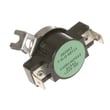
| No heat or overheating | Heating and temperature control | T'stat saf. WE4M137, dryer operating thermostat WE4M216 |
| Long dry times, weak airflow | Lint and venting/airflow | Trap lint WE18X25100, dryer blower wheel WE16M15 |
| Dryer won’t start when door closes | Door safety circuit | Door switch WE4M415 |
Why it matters
Ordering by the exact model number and a confirmed part ID helps prevent returns and downtime. GE often uses similar-looking parts across model families, but mounting points, wiring terminals, and lengths can differ.
Best next step when the part still won’t appear
Use the model number DNSR473EW0AA and the appliance serial number when you contact Sears PartsDirect so we can identify the correct part and any approved substitutions.
Last updated: February 2026
How do I know if my GE dryer heating element is bad?
If your GE electric dryer model DNSR473EW0AA runs but won’t heat (or heats only sometimes), the heating element is a top suspect. We confirm it by checking the element for continuity and inspecting for a broken coil; either finding means the element is bad.
Quick symptoms that point to a bad heating element
- Dryer tumbles normally but clothes stay cold and damp
- No heat on any heat setting (timed dry and auto cycles)
- Heat cuts in and out during a cycle (can also be airflow or thermostat related)
- Burning smell or visible hot spot marks near the heater housing area
- Breaker trips when heat should turn on (can be element shorted to the housing)
How we test it (continuity and basic checks)
Safety first: unplug the dryer (and shut off the breaker) before opening panels.
- Access the heater circuit (commonly from the rear on many GE electric dryers).
- Pull at least one wire off the heating element terminal so you don’t read back through the circuit.
- Set your meter to continuity (or the lowest ohms range if available).
- Touch one probe to each heating element terminal.
- Continuity present: the coil is not open (element may still be shorted to the housing).
- No continuity: the coil is broken; replace the heating element assembly.
- Check for a short to ground: probe from an element terminal to the metal heater housing.
- Any continuity to the housing: the element is shorted; replace it.
What the results mean
| Test result | What it usually means | Next step |
|---|---|---|
| No continuity across terminals | Element is open | Replace the heater assembly |
| Continuity across terminals, no heat | Heat circuit issue (thermostat, timer, wiring, power) | Check thermostats, power supply, connections |
| Continuity to metal housing | Element shorted | Replace the heater assembly |
Parts that commonly get checked with the element
If the element tests good, we typically move to the safety and operating temperature controls:
- Heater housing WE11M23 (heating element assembly area)
- T'stat saf. WE4M137 (high-limit thermostat that can open on overheating)
- Dryer operating thermostat WE4M216 (regulates normal cycling temperature)
Why it matters
A failed element stops heat entirely, but restricted airflow can also cause overheating that trips thermostats. Cleaning lint paths and verifying venting helps prevent repeat failures and improves dry times.
For additional GE dryer diagnostics, use GE cleanspeak dryer error codes if your dryer displays codes.
Last updated: February 2026
What is the life expectancy of a GE dryer?
A GE electric dryer like model DNSR473EW0AA typically lasts about 10 to 13 years with normal household use. Regular airflow maintenance and replacing wear items (belt, drum supports, thermostats) on time are the biggest factors in reaching the upper end of that range.
What affects dryer lifespan the most
- Vent restriction and overheating (long dry times, extra heat stress on the heater and thermostats)
- Drum support wear (squealing, thumping, scraping)
- Belt and idler wear (drum not turning, burning rubber smell)
- Lint buildup inside the cabinet (higher operating temperatures, more strain on the motor)
- Load habits (frequent overloading shortens life of the drum, belt, and motor)
Maintenance that extends life
- Clean the lint screen every load; replace a damaged lint screen or housing such as the trap lint WE18X25100.
- Check airflow at the outside vent hood; weak airflow usually means the vent line needs cleaning.
- Avoid overloading; heavy loads accelerate wear on the drive belt WE03X29897 and drum supports.
- If you hear squealing or scraping, inspect drum support parts like the drum bearing WE3M26 and drum slides.
- If the dryer overheats or shuts down, test safety controls such as the t'stat saf. WE4M137.
Quick symptom-to-part guide
| Symptom | Most common cause | Parts to check on DNSR473EW0AA |
|---|---|---|
| Drum won’t turn, motor runs | Broken/slipping belt | Drive belt, idler pulley |
| Squealing or scraping | Worn drum support | Drum bearing, slide drum, felt |
| Long dry times | Poor airflow or lint restriction | Lint trap area, air duct, venting |
| Overheating | Restricted airflow or failed thermostat | Air duct, operating thermostat, high-limit thermostat |
Why it matters
A dryer that runs hot or takes too long to dry wears out the heating system, motor, and drum supports faster. Keeping airflow strong is the simplest way to protect expensive components like the heater housing and motor.
Last updated: February 2026






