Installation guide
 Owner’s manual


How to do a hard reset on a Kenmore dishwasher?
To hard reset (control reset) a Kenmore Elite dishwasher model 66513969K014, we reset the control by canceling the current cycle and draining, then restarting a new cycle. On this model, the documented reset method is using CANCEL/DRAIN twice, then START/RESUME (see the 66513969K014 owner's manual).
Control reset steps (recommended)
- Open the door slightly to stop the cycle; wait for spraying to stop.
- Open the door fully.
- Press CANCEL/DRAIN twice to reset the control.
- Close the door.
- Select your new cycle and options.
- Press START/RESUME.
If the dishwasher is unresponsive
These steps often restore normal operation after a keypad glitch or interrupted cycle.
- Make sure the door is fully latched (a loose latch can prevent START/RESUME).
- Wait about 2 minutes after Cancel/Drain for the drain portion to finish.
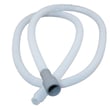
- If the tub is not draining, check for a kinked or clogged drain line; the dishwasher drain hose 8269144A is the correct drain hose part for this model.
- If you hear the drain motor but water remains, the drain system may be restricted or the pump may be failing.
What “hard reset” means on this model
On 66513969K014, a “hard reset” is typically a control reset that clears the current cycle state and forces the dishwasher back to a fresh start.
| Reset type | What it does | When to use it |
|---|---|---|
| Cancel/Drain reset | Clears the cycle and drains water | Stuck cycle, wrong cycle selected, odd behavior |
| Restart cycle | Starts a new wash program | After you reset the control |
Why it matters
Resetting the control the right way prevents standing water, clears a paused or confused cycle, and helps you avoid repeating a wash with an open detergent dispenser.
Last updated: January 2026
What are common problems with Kenmore dishwashers?
Common problems we see on the Kenmore Elite 66513969K014 dishwasher include not starting, poor draining, detergent not dispensing, odors, noisy operation, and rack or door issues. Many of these trace back to loading interference, a kinked drain hose, hard water buildup, or a worn rack or door component.
Most common symptoms and what usually causes them
- Dishwasher will not run: door not fully latched, Start/Resume light blinking, no power (tripped breaker or blown fuse)
- Detergent remains in dispenser: large items blocking the dispenser or wash system area; loading prevents the door from latching
- Not draining: disposer knockout plug not removed, kinked drain hose, food obstruction in drain/disposer
- Hard water residue or cloudy glassware: mineral deposits; lack of rinse aid; filters need cleaning
- Odors: standing water from slow drain, dirty filters, infrequent use without a rinse cycle
- Door/rack problems: worn rollers, adjusters, or rail stops; door balance parts out of position
Quick checks we recommend first (fast, no parts)
- Confirm the door is closed and latched; if Start/Resume is blinking, close the door and press Start/Resume.
- Check your home breaker or fuse.
- Inspect the drain path: disposer inlet knockout removed (if connected), no kinks, no clogs.
- Clean the dishwasher filter and run a monthly dishwasher cleaner cycle.
- Use rinse aid and fresh detergent, especially with hard water.
Parts that commonly fix these issues on this model
| Symptom | Common part involved | Example part for 66513969K014 |
|---|---|---|
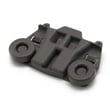
| Rack won’t slide smoothly | Rack wheels/rollers | Dishwasher dishrack roller assembly, lower WPW10195417 |
| Poor draining or standing water | Drain pump or drain hose | Dishwasher drain pump WPW10348269 or dishwasher drain hose 8269144A |
| Not filling or weak fill | Water inlet valve | Dishwasher water inlet valve W11175771 |
| Odors, residue, poor cleaning | Filter cup | Dishwasher filter W10872845 |
Why it matters
These problems often get worse over time: a partial drain restriction can lead to odors and poor cleaning, and hard water buildup can reduce wash performance and leave residue on dishes.
For model-specific operating steps, cycle behavior (including normal pauses), and troubleshooting, use the 66513969K014 owner's manual.
Last updated: January 2026
Are Kenmore dishwashers quiet?
Yes, many Kenmore dishwashers are designed to run quietly, and your Kenmore Elite 66513969K014 is built as a premium undercounter dishwasher where low operating noise is a common design goal. Actual loudness depends most on installation, load, and wear items like rack rollers and the pump.
What “quiet” usually means for a dishwasher
Dishwasher noise is typically described in dBA (decibels). Lower numbers are quieter.
| Noise level (dBA) | What it sounds like in a kitchen | Typical expectation |
|---|---|---|
| 38 to 45 | Very quiet, often masked by normal conversation | Premium models |
| 46 to 55 | Noticeable but not disruptive | Many mid-range models |
| 56+ | Clearly loud | Older units or units with a problem |
Common reasons a dishwasher sounds louder than it should
We see “not quiet” complaints most often tied to installation details or a part starting to wear.
- Dishes or utensils contacting the spray arm during rotation
- A clogged filter causing the wash system to cavitate or grind (cleaning is key)
- A failing drain pump or wash motor making a growl or buzz
- Loose mounting brackets or the unit not leveled, causing vibration against cabinets
- Worn rack wheels or stops causing rattling when racks move
Quick checks that often reduce noise
These steps are safe and effective for the Kenmore Elite 66513969K014.
- Confirm the dishwasher is firmly mounted and level (see the installation guide)
- Re-load so nothing hangs below the lower rack or blocks the spray arm
- Clean the filter area regularly; hard water buildup can make operation noisier over time
- Check the drain hose for kinks and confirm the disposer knockout plug is removed (if connected)
- If you hear loud rattling when sliding racks, inspect rack wheels and rail stops
Parts that commonly affect noise on this model
If noise is coming from rack movement (not during washing), these are frequent fixes.
- Dishwasher dishrack roller assembly, lower WPW10195417
- Dishwasher dishrack slide rail stop, upper WPW10195622
Why it matters
A dishwasher that suddenly gets louder often signals restricted water flow, vibration from installation, or a wearing pump or rack component. Addressing noise early helps prevent poor cleaning, draining issues, and additional part wear.
Last updated: January 2026
What is the code f4e1 on a Kenmore Elite dishwasher?
On the Kenmore Elite dishwasher model 66513969K014, the F4-E1 code points to a wash motor or wash pump problem (the dishwasher is not circulating water correctly). Clearing the code after the repair is part of restoring normal operation; use the reset steps in the 66513969K014 owner's manual.
What you’ll usually notice with F4-E1
- Dishes come out dirty because spray pressure is weak or missing
- You hear a hum but little or no water movement inside the tub
- The cycle may stop mid-wash or drain out early
- The dishwasher fills, then seems to do nothing
- You may see repeated error beeps or the code returns after restarting
Quick checks before replacing parts
- Power reset: Turn off power at the breaker for 1 minute, then restore power.
- Check the filter area: Remove and clean the filter cup and sump area; debris can restrict circulation.
- Confirm spray arm movement: Make sure the spray arm spins freely and isn’t blocked by tall items.
- Verify water level: If the unit is underfilling, the wash motor can cavitate and trigger errors.
If you find heavy soil buildup in the filter, replacing the dishwasher filter W10872845 after cleaning the sump area can help prevent repeat circulation problems.
Resetting the code after a repair
Many Kenmore Elite dishwashers clear stored faults using a keypad sequence. A common method is:
- Press any 3 keys in a 1-2-3 pattern
- Repeat the same 1-2-3 pattern three times (1-2-3, 1-2-3, 1-2-3)
If your console layout differs, follow the exact diagnostic and reset procedure in the 66513969K014 owner's manual.
Parts commonly involved (what they do)
| Part | What it affects | When it’s suspect |
|---|---|---|
| Wash motor / pump and motor assembly | Circulates water to spray arms | Hums, no spray, poor cleaning |
| Filter cup | Protects pump from debris | Clogged, gritty sump, repeat issues |
| Spray arm | Delivers wash spray | Clogged jets, not spinning |
Why it matters
The wash motor is what creates the spray action that actually cleans dishes. When circulation is weak or stops, detergent does not dissolve correctly, soil redeposits, and the dishwasher may shut down to protect the motor.
Last updated: January 2026