 Owner’s manual



How long does a Maytag Neptune washer last?
A Maytag Neptune washer typically lasts 10 to 13 years with normal household use and basic maintenance. For your Maytag PAV3300AWW top-load washer, keeping it level, preventing leaks, and replacing aging fill hoses on schedule helps you reach the full expected lifespan; see the PAV3300AWW owner's manual.
Typical lifespan and what affects it
Most washers fall into a predictable range, but real-world life depends on usage and care.
- Typical washer lifespan: 10 to 13 years
- Heavy use (large family, daily loads): often shorter
- Light use (few loads per week): often longer
- Water quality and detergent habits: can speed up wear or reduce performance
- Maintenance and early repairs: can extend service life
Maintenance that helps this washer last longer
The PAV3300AWW manual includes practical “before you call” checks and safety guidance that also support long life.
- Replace inlet hoses every 5 years (hoses deteriorate over time and can leak)
- Keep the washer level and stable to reduce vibration and suspension wear
- If filling is slow, clean the hose filter screens at the water valve connections
- Avoid overloading; it strains the drive system and can reduce spin performance
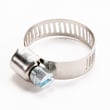
- Address leaks quickly; a worn clamp or hose can turn into cabinet or floor damage
Quick reference: what “normal use” means
| Household use pattern | Loads per week | Expected outcome |
|---|---|---|
| Light | 1 to 3 | Often exceeds typical lifespan |
| Average | 4 to 7 | Matches typical lifespan |
| Heavy | 8+ | More wear; earlier repairs common |
Why it matters
Washer lifespan is mostly about preventing the failures that end a machine’s service life: water leaks, fill/drain problems, and excess vibration. Simple steps like replacing hoses on time and keeping connections tight reduce the most common, costly issues.
Last updated: January 2026
What is the capacity of a Maytag 3000 series washer?
For the Maytag PAV3300AWW, the washer is labeled “Oversized Capacity Plus” in the literature; that term describes a larger top-load tub, not a single universal cubic-feet number across “Maytag 3000 series” washers. Use the PAV3300AWW owner's manual to confirm the exact capacity specification for your unit.
What to use as the “capacity” spec
Different Maytag washer families use different capacity labels and measurements. For PAV3300AWW, rely on the model-specific spec wording and any listed tub volume in the manual.
- Use the model number from the lid frame or cabinet opening: PAV3300AWW
- Look for capacity, tub volume, or oversized capacity wording in the manual
- Compare only washers with the same washer type (top-load vs. front-load)
- If you are shopping by size, compare cubic feet when it is provided
- Avoid comparing marketing terms alone (for example, “oversized”) without a numeric spec
Typical capacity range (for context)
Many Maytag top-load washers from this design era commonly fall in the about 3.2 to 3.8 cu. ft. range, while many front-load “3000 series” style washers are often about 3.5 to 4.0 cu. ft. Use the manual for the exact number for PAV3300AWW.
| Washer style people mean by “3000 series” | Common capacity range | How to verify |
|---|---|---|
| Top-load (Performa style like PAV3300AWW) | About 3.2 to 3.8 cu. ft. | Manual and model tag |
| Front-load (different model family) | About 3.5 to 4.0 cu. ft. | Manual and model tag |
Why it matters
Using the correct capacity helps prevent overloading (poor agitation and rinsing), reduces out-of-balance spinning, and helps you choose the right load size and water level settings.
Last updated: January 2026
What is the most common problem with a Maytag washer?
For the Maytag PAV3300AWW washer, the most common service complaints are not spinning and not draining. These symptoms are often tied to simple causes like the lid not closing fully, a kinked drain hose, or a restriction at the inlet screens, and they can also point to a failing drain pump or water-level control.
Quick checks we recommend first
- Confirm the lid is fully closed before spin starts (this model uses a lid safety switch).
- Verify the washer is plugged in and the breaker is not tripped.
- Check the drain hose for kinks, crushing, or an improper standpipe setup.
- If the motor stops, wait 30 minutes and restart; the motor overload protector can trip and reset after cooling.
- If fill is slow or inconsistent, clean the hose filter screens at the water inlet.
Most common symptoms and likely causes
| Symptom | Most likely causes | What to do next |
|---|---|---|
| Won’t spin | Lid not closed, lid switch issue, overload protector tripped | Check lid closure; let motor cool; follow PAV3300AWW owner’s manual troubleshooting |
| Won’t drain | Clogged/failed pump, restricted drain hose | Inspect hose routing; consider replacing the pump |
| Leaks | Loose hose connections, drain hose not secured | Tighten connections; secure drain hose; replace worn hose/clamp |
| Won’t fill or fills slowly | Plugged inlet screens, faucet/temperature setting issue | Clean screens; verify hot-to-hot and cold-to-cold hookups |
Parts that commonly relate to these problems
If your troubleshooting points to a failed component, these are common repair items for the PAV3300AWW:
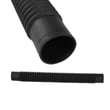
- Washer drain hose WP21001872 if the hose is split, brittle, or collapsing
- Water valve WP21001932 if the washer won’t fill or only fills on one temperature
- Washer water-level switch WP21001554 if water level is incorrect or fill behavior is erratic
Why it matters
Spin and drain problems can leave clothes soaking wet and can also cause odor and residue buildup if water is not fully removed. Catching a kinked hose, clogged inlet screens, or an overload condition early prevents repeat shutdowns and reduces strain on the drive motor and pump.
Last updated: January 2026


