Owner’s manual


How to read Kenmore washer model numbers?
Kenmore washer model numbers are structured so the first 3 digits identify the manufacturer, followed by digits that identify the base design and specific feature variations. For model 11020922991, the 110 prefix is the key clue for matching the correct parts and manual. See the 11020922991 owner's manual for the model and serial plate location.
How to break down a Kenmore model number
Most Kenmore washer model numbers follow this pattern:
- First 3 digits (prefix): manufacturer code (example: 110)
- Middle digits: base model series and engineering design
- Last digits: feature set, color, or production variation
Quick example using your model
| Section | Example from 11020922991 | What it tells you |
|---|---|---|
| Manufacturer prefix | 110 | Who built the washer design |
| Base model digits | 20922 | Core platform and configuration |
| Variation digits | 991 | Version changes (features, revisions) |
Where to find the model number on the washer
Your Kenmore washer’s model and serial numbers are printed on the model and serial number plate. We use that exact number to ensure parts like a lid switch, drain pump, or inlet valve match correctly.
- Check the model and serial number plate on the washer cabinet
- Write down both model and serial numbers before ordering parts
- Match the full model number (all digits), not just the 110 prefix
Why it matters for parts and troubleshooting
Kenmore washers can look similar across years, but internal parts can differ by revision. Using the full model number helps prevent ordering the wrong component (for example, a washer lid switch WP3949238 that fits one 110-series design but not another revision).
Last updated: January 2026
How to unclog drain hose on Kenmore washer?
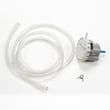
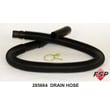
For Kenmore washer model 11020922991, we unclog the drain hose by safely draining any standing water, removing kinks, then disconnecting and flushing the hose and pump inlet to clear lint, coins, or small socks. Reinstall the hose with the correct clamp position and an air gap per the 11020922991 owner's manual.
Safety first (before you touch the hose)
- Unplug the washer.
- Turn off both water faucets.
- If the tub is full, bail water into a bucket or use a wet/dry vac.
- Keep towels and a shallow pan ready; hoses and the pump can hold water.
Steps to clear the clog
- Check for a simple kink: Pull the washer forward and straighten the drain hose.
- Verify standpipe setup: The drain hose should not be sealed or taped into the standpipe; it needs an air gap to prevent siphoning.
- Disconnect and flush the hose:
- Remove the hose from the standpipe/laundry tub.
- If needed, disconnect the hose at the washer outlet and flush it with hot tap water.
- Clear the pump inlet: If the hose is clear but draining is still slow, check the pump inlet for debris and consider replacing the washer drain pump WP3363394 if it is jammed or leaking.
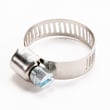
- Reinstall correctly: Push the hose fully onto the washer drain connector until it hits the stop, then position the clamp about 1/4 inch (6 mm) from the end as described in the manual.
Quick checks after reassembly
- Run a drain/spin and watch for leaks at the clamp.
- Confirm the hose is not kinked behind the washer.
- Make sure the standpipe connection is secure but not airtight.
Common symptoms and likely causes
| Symptom | Most likely cause | What we do first |
|---|---|---|
| Won’t drain or drains slowly | Kinked or clogged drain hose | Straighten, then flush hose |
| Drains but then refills or “siphons” | No air gap (hose sealed in standpipe) | Loosen fit; remove tape/seal |
| Hums but won’t drain | Pump jammed | Check pump inlet; replace pump |
Why it matters
A partially clogged drain hose can cause “won’t drain/won’t spin” complaints and leave loads wet. Correct hose routing and an air gap also prevent siphoning that can make the washer seem like it is stuck in a fill or drain loop.
Last updated: January 2026
What is the life expectancy of a Kenmore washer?
Most Kenmore washers, including model 11020922991, typically last 10 to 15 years with normal household use. Lifespan depends most on load size, installation, and routine care; many issues that shorten life are repairable with common parts and basic maintenance.
Typical lifespan and what affects it
A washer’s service life is mainly driven by mechanical wear (drive system, clutch, pump) and water-related issues (valves, hoses, leaks).
- Usage volume: multiple loads per day shortens life faster than a few loads per week
- Overloading: strains the gearcase, clutch, and drive components
- Out-of-balance loads: increases wear on suspension and drive parts
- Water quality: sediment can reduce inlet valve performance
- Preventive care: cleaning, leveling, and hose checks reduce breakdowns
Parts that commonly determine “end of life” (and are often repairable)
On Kenmore top-load washers like 11020922991, these parts are frequent wear items. Replacing one or two can restore performance and extend service life.
- Washer lid switch WP3949238
- Washer drain pump WP3363394
- Coupling 285753A
- Clutch 285785
- Gear case 3360629
Quick care checklist to help your washer reach 10 to 15 years
Use these habits to reduce stress on the basket, agitator, and drive system.
- Keep loads evenly distributed (mix items, avoid single heavy items alone)
- Do not wrap items around the agitator (loading guidance is in the 11020922991 owner's manual)
- Use the right amount of detergent to limit residue and odors
- Check fill and drain hoses for leaks, bulges, or soft spots
- Level the washer to reduce vibration and out-of-balance spinning
What “normal” vs heavy use looks like
| Use pattern | Typical life expectancy | Notes |
|---|---|---|
| Light (1 to 3 loads/week) | 12 to 15 years | Best-case with good care |
| Average (4 to 7 loads/week) | 10 to 13 years | Most households |
| Heavy (multiple loads/day) | 7 to 10 years | Faster wear on drive and pump |
Why it matters
Knowing the typical 10 to 15 year lifespan helps you decide whether to troubleshoot a symptom (no spin, no drain, won’t start) or plan a larger repair. On this model, many “washer is done” problems trace back to a single replaceable part.
Last updated: January 2026
What is the cubic foot of my Kenmore washer model 11020922991?
The cubic foot capacity for Kenmore washer model 11020922991 is found in the specifications information included with the product documentation. Use the 11020922991 owner's manual to locate the capacity or the basket/tub size details used to identify the correct load size.
How to find the capacity in your documentation
Look for a section labeled “Specifications,” “Product features,” or similar.
- Check the front pages and the table of contents for a “Specifications” section
- Search within the PDF for terms like “capacity,” “cu. ft.,” “cubic,” “basket,” or “tub”
- Confirm the model number on the model and serial plate matches 11020922991
- If the manual lists load size guidance (small, medium, large) but not cubic feet, use that guidance for day-to-day loading
What to do if you only find basket or tub details
Some washer manuals emphasize operating instructions and load sizing instead of listing cubic feet. When that happens, basket/tub identifiers still help you compare capacity and choose cycles correctly.
| What you find in the manual | How to use it | Why it helps |
|---|---|---|
| Load size guidance (small to extra large) | Match load size to water level and cycle | Prevents poor cleaning and out-of-balance spinning |
| Basket/tub description | Compare to similar Kenmore top-load designs | Helps set expectations for bulky items |
| Cycle and water level charts | Follow recommended settings | Reduces wear on drive and suspension parts |
Why it matters
Washer capacity affects how much laundry you can wash per load, how well items circulate around the agitator, and how often the washer goes out of balance. Correct loading also helps protect parts like the coupling 285753A and washer lid switch WP3949238.
Last updated: January 2026