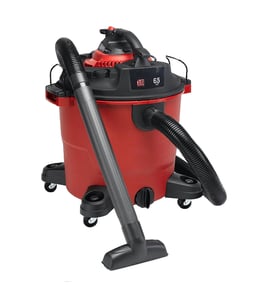

Who makes the best wet dry shop vacuum?
For most DIYers and home shops, the “best” wet/dry shop vacuum is the one that matches your cleanup type (fine dust vs. water), tank size, and hose/attachment needs. If you already own a Craftsman 75817870 wet/dry vacuum, keeping it running with the right filters, hose, and seals usually delivers the best value.
What “best” means for a wet/dry shop vacuum
Different brands excel in different areas; we recommend choosing based on how you actually use the vac.
- Power and airflow: better for heavy debris and longer hose runs
- Filtration: critical for drywall dust, sawdust, and ash (use the correct filter type)
- Capacity (gallons): larger tanks reduce emptying, smaller tanks store easier
- Hose and attachments: determines how well it cleans cars, corners, and tools
- Durability and serviceability: latches, casters, switches, and hoses take the most abuse
Quick comparison: which size is “best” for your job?
| Your typical cleanup | Best-fit tank size | Why it works |
|---|---|---|
| Car interiors, small messes | 2 to 6 gal | Easy to carry and store |
| Garage and DIY projects | 8 to 12 gal | Balanced capacity and footprint |
| Shop, renovation debris, frequent wet pickup | 12 to 16+ gal | Fewer dump trips, handles bigger messes |
How to choose the best brand for you
Rather than chasing one “best overall,” we recommend using these decision points:
- If you do fine dust often, prioritize high-efficiency filtration and a good filter seal.
- If you pick up water regularly, prioritize float shutoff reliability and easy tank dumping.
- If you use power tools, prioritize hose diameter, clog resistance, and useful nozzles.
- If noise matters, look for lower dB designs and better muffling.
- If you want long-term value, prioritize parts availability by model number.
Why it matters
A wet/dry vacuum that is oversized, under-filtered, or missing the right attachments can feel “weak” even when the motor is fine. Matching capacity, filtration, and hose setup to your cleanup type is what makes a vac perform like the best one.
For model-specific part matching and diagrams, use your model number and reference how to find your appliance model number (and what it means for parts).
Last updated: February 2026
Are wet dry vac filters universal?
Wet/dry vac filters are not universal. For a Craftsman wet/dry vacuum like model 75817870, the correct filter depends on the vacuum’s tank size, filter mounting style (cartridge, foam sleeve, bag), and whether you are picking up dry debris, fine dust, or liquids.
What “universal” really means
Some filters are marketed as “universal,” but that usually means they fit a range of wet/dry vacs with similar dimensions and a similar mounting method, not every model.
Common fit factors include:
- Gallons and motor head design (filter cage and lid clearance vary)
- Mounting type (center hole and nut, quarter-turn, band clamp, slip-on)
- Filter shape (cartridge vs foam sleeve vs bag)
- Seal style (rubber end caps, gasketed flange, open ends)
- Intended pickup (wet pickup needs a foam sleeve or wet-rated cartridge)
How to choose the right filter for Craftsman 75817870
Use these checks before ordering:
- Match the model number 75817870 exactly when searching
- Compare the old filter’s mounting (how it attaches) and overall shape
- Choose a filter rated for your job:
- Fine dust (drywall, cement): high-efficiency cartridge style
- General debris: standard cartridge
- Wet pickup: foam sleeve or wet-rated cartridge (paper filters can be damaged by water)
Quick filter type guide
| Cleanup job | Typical filter type | Notes |
|---|---|---|
| Dry debris (shop cleanup) | Standard cartridge | Good everyday option |
| Fine dust (drywall, cement) | High-efficiency cartridge | Helps protect the motor and reduce blow-by |
| Water pickup | Foam sleeve or wet-rated filter | Remove paper cartridge unless it is wet-rated |
Why it matters
Using the wrong filter can reduce suction, let fine dust pass through to the motor, or cause a wet filter to clog and collapse. The right filter keeps airflow strong and helps prevent overheating.
Helpful tip for finding the correct match
If the filter packaging lists a “fits” range, confirm it includes Craftsman 75817870 or matches your filter’s mounting and dimensions. Our model-number lookup steps in how to find your appliance model number (and what it means for parts) help you confirm you are searching with the right identifier.
Last updated: February 2026
What is the list of vacuum cleaner parts?
For the Craftsman 75817870 wet/dry vacuum, the main parts you’ll typically see are the powerhead (motor and switch), filter system, hose and attachments, collection tank, and seals/latches that keep airflow tight. These are the components that most often drive suction, filtration, and leak issues.
Common parts you’ll find on a wet/dry vacuum
Most wet/dry vacuums like the Craftsman 75817870 are built around these assemblies:
- Motor and fan (powerhead): creates airflow and suction
- On/off switch and power cord: supplies and controls power
- Filter (cartridge, foam sleeve, or bag depending on setup): protects the motor and traps debris
- Hose and cuffs: carries airflow; cuffs seal to the inlet and tools
- Wand and nozzles (crevice tool, floor nozzle, utility nozzle): direct suction where you need it
- Collection tank (drum/canister): holds dry debris or liquid
- Float/cage (wet pickup shutoff): helps prevent overfilling during wet pickup
- Gaskets, seals, latches, and clamps: prevent air leaks between the powerhead and tank
Quick “parts list” by function
| What you’re trying to do | Parts that matter most | What goes wrong when they fail |
|---|---|---|
| Get strong suction | Motor/fan, hose, seals, filter | Weak suction, high-pitched leak sound |
| Keep dust out of the air | Filter, bag (if used), lid seal | Dust blow-by, clogged filter smell |
| Pick up liquids safely | Foam filter (if used), float, tank seal | Water reaches motor, sudden suction stop |
| Use attachments effectively | Hose cuffs, wands, nozzles | Tools fall off, poor pickup at nozzle |
Why it matters
Wet/dry vacuums are very sensitive to air leaks and filter restriction. A small crack in a hose cuff, a flattened lid gasket, or a clogged filter can reduce performance more than a motor problem.
Practical tips when identifying what you need
- Match parts to the exact model number 75817870 before ordering.
- If suction is low, check filter condition first, then inspect the hose for splits.
- If you hear a whistle, focus on lid seals, latches, and hose connections.
- For wet pickup, confirm the float moves freely and the tank is not overfilled.
For help confirming the correct model number format before you shop, use how to find your appliance model number (and what it means for parts).
Last updated: February 2026
What is the highest rated wet dry vacuum?
For a Craftsman wet/dry vacuum like model 75817870, “highest rated” is best interpreted as the best-performing vacuum for your specific cleanup jobs (shop debris, fine dust, or liquid pickup) and the easiest to maintain. Comparing ratings across very different wet/dry categories is less useful than matching features to your needs.
What to look for when comparing wet/dry vacuums
- Pickup type: fine dust (drywall), larger debris (shop/garage), or liquid pickup
- Tank size: larger tanks reduce emptying; smaller tanks are easier to carry and store
- Filtration setup: cartridge-style filters for dry pickup; foam-style sleeves are commonly used for wet pickup
- Hose and tool fit: hose diameter, length, and whether common nozzles fit your use (floor, crevice, car)
- Maintenance effort: how easy it is to clean the tank, clear clogs, and service filters
Quick comparison: common wet/dry vacuum categories
| Category | Best for | Typical tradeoff |
|---|---|---|
| Compact wet/dry vac | Small messes, car interiors, quick spills | More frequent emptying, smaller airflow path |
| Shop-style wet/dry vac | Garage/shop debris, renovation dust, water pickup | Bulkier storage, louder operation |
| Floor-cleaning “vacuum mop” | Routine sealed hard-floor cleaning | Not designed for shop debris or heavy wet pickup |
How to decide what is “best rated” for you
Use these practical checks before you buy or compare:
- Confirm the model number so you get compatible accessories and replacement items.
- Prioritize the mess you clean most often (fine dust vs. chunks vs. water).
- Choose filtration that matches your environment (workshop dust needs better dry filtration).
- Consider storage and portability if you move the vacuum between rooms or vehicles.
Why it matters
Wet/dry vacuums get high ratings for different reasons. A unit that excels at shop debris and liquid pickup can feel inconvenient indoors, while a floor-cleaning combo can struggle with garage messes. Matching the vacuum type to the job delivers the “highest rated” experience.
For help confirming the exact model number before you compare accessories or parts, use how to find your appliance model number (and what it means for parts).
Last updated: February 2026