

Can I use .095 trimmer line in a .080 trimmer?
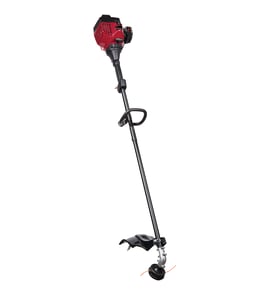
Yes, you can often use .095-inch trimmer line in a head rated for .080-inch, but only if the cutting head and spool can physically accept it and still feed correctly. On a Craftsman CMXGTAMD29SS, thicker line commonly reduces maximum RPM and can make bump-feed less consistent.
What changes when you go thicker
Thicker line is tougher and lasts longer, but it also takes more power to spin and to advance through the head.
- More durability when trimming thick weeds and around fences
- Slightly slower line speed at the tip (less “snap”)
- More load on the clutch and drive system when the line is long or the grass is dense
- Increased chance of feed problems if the spool is designed for .080 only
- More vibration if the line is wound unevenly
Quick compatibility check
Use these checks before you load a full spool of .095:
- The cutting head cap or label lists .095 as an approved diameter
- The line fits the eyelets without binding
- The spool can be wound without forcing the line into place
- Bump-feed advances smoothly on a flat surface at moderate throttle
.080 vs .095 comparison
| Line diameter | Best use | What you may notice |
|---|---|---|
| .080 in | Routine trimming, edging | Faster acceleration, smoother feeding |
| .095 in | Heavier weeds, thicker growth | More durability, more load and possible feed issues |
If performance drops or feeding gets worse
- Switch back to .080 line, or shorten the exposed cutting length slightly
- Clean the head, eyelets, and debris shield so the line can slide freely
- Confirm the bump-feed parts are not worn; a worn knob can cause poor advancing (see mtd line trimmer bump feed knob 753-09365)
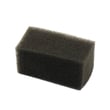
- If the engine bogs or misfires, do a tune-up; start with the mtd lawn & garden equipment engine air filter 753-05254 and mtd lawn & garden equipment engine spark plug 794-00082
Why it matters
Cutting load comes mostly from what you are trimming (density, thickness, moisture) and how much line is spinning. A thicker diameter adds some extra drag and inertia; in heavy growth that added load can be enough to affect RPM and feeding.
Last updated: February 2026
How to replace line on Craftsman gas trimmer?
On the Craftsman CMXGTAMD29SS gas line trimmer, replacing trimmer line is usually a quick job: remove the bump knob, load the correct diameter line into the cutting head, then wind it evenly so it feeds smoothly when you bump the head.
Before you start (safety and setup)
- Shut the engine off and let the muffler cool completely.
- Disconnect the spark plug boot so the trimmer cannot start accidentally.
- Wear gloves and eye protection.
- Clean grass and debris off the cutting head so the line can seat correctly.
- Use the correct line diameter for your head (most gas trimmers use about 0.080 in to 0.095 in line).
How to reload the bump-feed head (typical Easy Wind style)
- Set the trimmer on a flat surface with the cutting head facing up.
- Unscrew and remove the bump knob.
- Pull out the spool (if it lifts out) and note how the line routes through the eyelets.
- Cut two equal lengths of new line (many heads take about 10 to 20 ft per line, depending on diameter).
- Feed each line end into its own channel/anchor hole on the spool (if your spool uses two separate channels).
- Wind the line in the direction of the arrow on the spool; keep tension so it lays neatly without crossing.
- Thread the line ends through the eyelets, reinstall the spool, then reinstall and tighten the bump knob.
- Pull both line ends to confirm they move freely and extend evenly.
Quick checks if the line will not feed
- Line wound backwards (rewind in the arrow direction).
- Line crossed or overlapped on the spool (rewind neatly in layers).
- Line too thick for the head (switch to a smaller diameter).
- Debris packed under the spool (clean the head and eyelets).
- Worn bump knob or spool components (inspect and replace as needed).
Parts that commonly affect line feeding
| Symptom | Most common cause | What to inspect/replace |
|---|---|---|
| Line will not advance | Worn bump knob | Mtd line trimmer bump feed knob 753-09365 |
| Line breaks constantly | Wrong line size or brittle line | Fresh line, correct diameter |
| Head binds or vibrates | Debris or missing spacer | Line trimmer cutting head spacer 748-05052 |
Why it matters
Correctly wound line prevents tangles inside the spool, improves bump-feed reliability, and reduces vibration that can wear the cutting head and drive components over time.
For more step-by-step visuals and tune-up tips, use our how to tune up a grass line trimmer video.
Last updated: February 2026
Where to find model number on CRAFTSMAN Weedwacker?
On a Craftsman weedwacker like model CMXGTAMD29SS, the model number is printed on a small ID label attached to the trimmer. We most often see it on the engine housing (shroud), the shaft near the handle, or close to the fuel tank area.
Common places to check
Look for a sticker or metal tag with letters and numbers (often near a barcode). Check these spots first:
- Side of the engine cover or recoil starter housing
- Under or behind the air filter cover
- On the shaft tube near the throttle grip
- Near the fuel tank or on the tank mounting area
- Around the guard or debris shield mounting area
What the label usually looks like
The label typically includes a model number and sometimes a serial number.
| Label item | What it’s used for | Example |
|---|---|---|
| Model number | Identifies the exact trimmer version for parts fit | CMXGTAMD29SS |
| Serial number | Helps identify production run details | Varies |
Tips to make it easier to read
If the label is dirty or faded, these quick steps usually help:
- Wipe the area with a damp rag and mild soap; avoid soaking the label
- Use a flashlight at an angle to highlight raised printing
- Take a close-up photo and zoom in
- Write the model number down exactly (include all letters, numbers, and dashes)
Why it matters
We use the model number to match the correct parts and diagrams for your Craftsman gas line trimmer. That prevents ordering the wrong items, especially for tune-up parts like the mtd lawn & garden equipment engine spark plug 794-00082 or the mtd lawn and garden equipment engine air filter 753-05254.
Last updated: February 2026