

How do I fix error code 5D on Kenmore washer?
Error code 5D on a Kenmore washer usually points to a suds (too much soap) condition that can slow draining and stop the cycle. On Kenmore model 11092588410, the fastest fix is to clear excess suds, then confirm the washer drains strongly and consistently.
Quick fixes to clear the 5D (suds) condition
- Press Pause/Cancel to stop the cycle and let suds settle for 5 to 10 minutes.
- Run a Rinse/Spin (or Drain/Spin) with no detergent.
- If suds return, run an empty cold-water cycle with no detergent (a small amount of white vinegar can help break down residue).
- Switch to HE detergent and use less; most oversudsing comes from over-measuring.
- Avoid “extra suds” boosters unless the label says they are HE-safe.
If 5D keeps coming back: check for a real drain problem
Oversudsing and slow draining often show up together. If the tub drains slowly, inspect the drain path and pump.
What to check
- Drain hose: not kinked, crushed, or shoved too far down the standpipe.
- Standpipe/sink: not clogged; water should flow freely.
- Pump filter area (if accessible): clear coins, socks, lint.
- Drain pump: listen for a steady pump sound during drain.
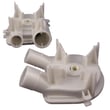
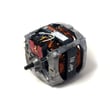
If the pump hums but water barely moves, the washer drain pump WP3363394 is a common fix on this style of Kenmore washer.
Detergent and load sizing guide
| Situation | What to do | Why it helps |
|---|---|---|
| Small load | Use about 1 to 2 tablespoons HE detergent | Prevents oversudsing |
| Soft water | Use less than the bottle suggests | Soft water makes more suds |
| Suds visible after rinse | Run an extra rinse, no detergent | Flushes residue |
Why it matters
Too many suds can cushion the load so it does not agitate or spin correctly, and it can also trap debris that contributes to slow draining. Fixing the soap amount and confirming strong draining helps prevent repeat 5D errors.
Last updated: January 2026
How to unlock Kenmore top load washer door?
On Kenmore washer model 11092588410, the lid typically unlocks after the cycle stops and the tub stops spinning. If it stays locked, we recommend unplugging the washer for 1 minute to reset the lid-lock circuit, then trying to open the lid again.
Quick unlock steps (safe first)
- Turn the cycle knob to Off and wait 2 to 3 minutes for the lock to release.
- If the tub is still moving, do not force the lid; wait until it fully stops.
- Unplug the washer (or switch off the breaker) for 60 seconds, then restore power.
- Try Spin/Drain; if it completes, the lid usually unlocks at the end.
- If the lid is locked with water in the tub, focus on draining first (see below).
If the washer will not drain (common reason the lid stays locked)
A top-load washer can keep the lid locked when it senses water remaining in the tub. Check these items:
- Kinked or clogged drain hose, or standpipe backing up
- Coins, socks, or debris blocking the pump inlet
- Pump not running or making a loud grinding/humming noise
If the pump is noisy, leaking, or not moving water, replacing the washer drain pump WP3363394 is a common fix.
What the symptoms usually point to
| What you see | Most likely cause | What to check next |
|---|---|---|
| Locked lid and water still in tub | Drain problem | Hose, pump, clogs |
| Locked lid, tub empty, won’t start | Lid switch/lock issue | Lid strike alignment, switch wiring |
| Stops mid-cycle, then locks | Control/timer or drive issue | Try reset, then inspect drive system |
Why it matters
Forcing a locked lid can bend the lid, damage the latch area, or turn a simple drain issue into a bigger repair. Restoring normal draining and a clean stop is the fastest path to a reliable unlock.
Last updated: January 2026
What is the UL code on the Kenmore Elite Oasis HE washer?
On the Kenmore washer model 11092588410, the UL code indicates an unbalanced load condition during spin. Most of the time it is caused by load size, load distribution, or the washer not sitting level; if it repeats with normal loads, check for a mechanical drag or suspension problem.
What to do first (quick fixes)
- Pause the cycle and redistribute items evenly around the basket.
- Remove a few items if the load is too large or waterlogged.
- Run a Spin/Drain again with the load balanced.
- Level the washer: all four feet should be firmly on the floor with no rocking.
- Avoid washing a single heavy item alone; add a few towels to balance.
When UL keeps coming back (common mechanical causes)
If UL happens with small, well-balanced loads, we treat it like a vibration or drag issue. These are common checks on top-load Kenmore designs:
| Symptom you notice | Likely area to inspect | Example part that can contribute |
|---|---|---|
| Tub bangs cabinet, excessive shaking | Suspension support | Washer suspension spring WP63907 |
| Basket struggles to reach full spin | Drive system drag | Clutch 285785 |
| Agitation seems weak, then UL during spin | Drive coupling slipping | Coupling 285753A |
Why it matters
A true unbalance event protects the washer from walking, damaging the tub, or wearing out the drive system. Fixing repeated UL events early helps prevent bigger repairs like gear case or basket damage.
Helpful troubleshooting reference
For additional Kenmore top-load error code guidance and what to check next, use our Kenmore 110 vmax top load washer error codes reference.
Last updated: January 2026
What is the cubic feet capacity of a Kenmore washer model 11092588410?
The exact cubic-feet capacity for Kenmore washer model 11092588410 varies by the specific tub and basket configuration used on that platform; most Kenmore 110-series, direct-drive top-load washers of this era are typically about 3.2 to 3.5 cu. ft. Use your basket dimensions to confirm the closest match.
Quick ways to estimate capacity (no special tools)
- Measure the inside diameter of the wash basket (inches).
- Measure the depth from the basket bottom to the top rim (inches).
- Estimate tub volume as a cylinder: diameter and depth drive the result.
- Compare your estimate to common top-load ranges (below).
- If your washer is not cleaning well or seems overloaded, treat it as a smaller-capacity unit.
Typical capacity ranges for Kenmore top-load washers
| Washer type | Typical capacity range |
|---|---|
| Standard top-load (older, agitator) | 2.9 to 3.5 cu. ft. |
| Large-capacity top-load (older, agitator) | 3.5 to 3.8 cu. ft. |
| Modern high-efficiency top-load | 4.0 to 5.5+ cu. ft. |
Why it matters
Capacity affects how much laundry you can wash per load, how well the agitator circulates clothes, and how often out-of-balance or poor-spin issues show up. Overloading can also accelerate wear on drive components like the motor coupling and clutch.
Parts that often relate to “capacity” complaints (overloading, poor agitation, weak spin)
If the washer seems “too small” because it is not moving clothes well, these common wear items are worth checking:
- Agitator dog 80040 (worn dogs can stop the upper agitator from grabbing)
- Coupling 285753A (a failing coupling can reduce agitation and spin)
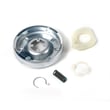
- Clutch 285785 (a worn clutch can cause weak or slipping spin)
Last updated: January 2026