Error Codes


How long do Kenmore dryers last?
Most Kenmore dryers last about 15 years. For your Kenmore gas dryer 11087405110, lifespan depends mainly on airflow (lint and venting), load size, and how quickly you address wear items like the drum belt and idler pulley.
Typical lifespan and what changes it
- Average service life: ~15 years
- Heavy use (multiple loads daily): often shorter
- Light use and good airflow: often longer
- Overloading: accelerates belt, drum support, and motor wear
- Poor venting: increases heat stress and cycling, shortening component life
Maintenance that extends dryer life
- Clean the lint screen every load.
- Check and clean the exhaust duct and outside hood regularly.
- Avoid overfilling; the drum should tumble freely.
- Listen for squealing or thumping and fix it early (belt, idler, blower wheel).
- Keep the area around the dryer clean to reduce lint buildup.
Parts that commonly affect “end of life” symptoms
If the dryer runs but makes noise, won’t tumble, or dries slowly, these parts are common culprits on model 11087405110:
| Symptom | Common cause | Example part for this model |
|---|---|---|
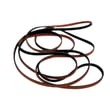
| Drum won’t turn, motor runs | Broken/slipping belt | Belt 341241 |
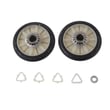
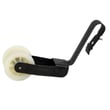
| Squealing, intermittent tumbling | Worn idler pulley | Dryer idler pulley WP691366 |
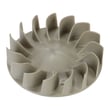
| Loud rumble or vibration | Airflow wheel damage or lint buildup | Dryer blower wheel WP694089 |
Why it matters
A dryer usually does not “wear out” all at once. Good airflow and quick replacement of wear parts can prevent overheating, reduce strain on the motor and gas heat system, and keep drying times consistent.
Last updated: February 2026
How to replace a Kenmore dryer thermistor?
For Kenmore gas dryer model 11087405110, the thermistor is typically mounted on the blower housing (airflow path). We replace it by unplugging the dryer, accessing the blower area, swapping the sensor, and restoring all wiring exactly as found; then we confirm normal heat cycling.
Safety first (gas dryer)
- Unplug the dryer from the wall outlet.
- Shut off the gas supply valve to the dryer.
- Let the dryer cool completely before touching internal parts.
- Work in a well-lit area; keep screws and panels organized.
- If you smell gas at any point, stop and have the gas connection checked by a qualified technician.
Steps to replace the thermistor
- Disconnect power and turn off gas.
- Remove the lint screen and any screws that secure the top or front (access varies by build).
- Open the cabinet enough to reach the blower housing area (near the lint duct).
- Locate the thermistor (small sensor with a wire connector, usually held by 1 screw).
- Take a quick photo of the wire routing.
- Disconnect the wire connector, remove the mounting screw, and lift off the thermistor.
- Install the new thermistor, reconnect the wiring, and reassemble panels.
- Restore gas and power; run a timed dry cycle and verify the burner cycles on and off normally.
What to check if drying is still inconsistent
- Lint buildup or restricted venting (most common cause of overheating and cycling issues).
- Loose or corroded sensor connector at the thermistor.
- Airflow problems from a damaged blower wheel such as dryer blower wheel WP694089.
- Burner ignition issues (igniter, radiant sensor, or coils) if the dryer tumbles but heat drops out.
Quick symptom guide
| Symptom | Common cause | What we check first |
|---|---|---|
| Overheats, shuts down, or cycles rapidly | Poor airflow | Lint screen, lint chute, vent duct |
| Runs but clothes stay damp | Weak airflow or burner not staying lit | Venting, burner ignition parts |
| Heat starts then stops | Gas valve coils failing | Coil kit, radiant sensor |
Why it matters
The thermistor helps the control regulate temperature using exhaust air readings. When it drifts out of range, the dryer can overheat, underheat, or cycle erratically, which increases dry times and stress on components like the blower and gas burner.
Last updated: February 2026
What are common problems with Kenmore dryers?
Common problems we see on Kenmore dryers like model 11087405110 (gas dryer) include no heat, long dry times, won’t start, drum not turning, and unusual noises. Most issues trace back to airflow restrictions (lint and venting) or normal wear on drive and burner components.
Most common symptoms and what usually causes them
- Dryer won’t heat: weak gas ignition components, failed sensor, or burner/valve issues (also check airflow first)
- Long drying times: clogged lint screen, lint chute, or vent duct; restricted outside vent hood
- Won’t start: door switch not closing, motor/switch problem, or timer/control issue
- Drum not turning: broken belt, worn idler pulley, or motor drive problem
- Loud thumping/squealing: blower wheel damage, belt wear, or idler pulley wear
Quick checks we recommend before replacing parts
- Clean the lint screen and confirm strong airflow at the outside vent.
- Run a timed dry cycle and listen for burner ignition (click, whoosh, steady flame).
- Check the door closes firmly and the switch “clicks.”
- If the drum won’t turn, stop using the dryer and inspect the belt path.
- If you smell gas, shut off the gas supply and ventilate the area before troubleshooting further.
Parts that commonly fix these problems on 11087405110
| Symptom | Commonly involved part | Example from this model’s parts |
|---|---|---|
| Drum won’t turn | Drum belt, idler pulley | Belt 341241, dryer idler pulley WP691366 |
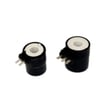
| No heat / intermittent heat | Gas valve coils, igniter, radiant sensor | Dryer gas valve coil kit 279834, dryer igniter 279311, dryer radiant sensor WP338906 |
| Won’t start when door shuts | Door switch | Door switch W10820036 |
| Loud rumble or poor airflow | Blower wheel | Dryer blower wheel WP694089 |
Why it matters
A gas dryer that runs with poor airflow can overheat and shut down, and a worn belt or idler pulley can fail suddenly and stop the drum. Catching these early helps protect the motor, drum, and burner system.
For more Kenmore troubleshooting patterns (especially if your dryer shows a code), use our Kenmore 110 series electronic control model dryer error codes reference.
Last updated: February 2026
How many cubic feet is a Kenmore 11087405110 dryer?
Kenmore gas dryer model 11087405110 is a full-size 27-inch platform; dryers in this class run about 6.5 to 7.4 cu. ft. capacity. To get the exact cubic feet for your specific unit, measure the drum interior and calculate volume.
How to get the exact cubic feet (fast and accurate)
Use a tape measure and the drum dimensions.
- Unplug the dryer (and shut off gas if you will reach inside)
- Measure drum diameter (inside wall to inside wall, through the center)
- Measure drum depth (front inside lip to back inside wall)
- Convert inches to feet (divide by 12)
- Calculate: cu. ft. = π × (diameter/2 in feet)² × depth in feet
Capacity cheat sheet (what your result means)
| Dryer size class | Typical capacity | Common cabinet width |
|---|---|---|
| Compact | 3.4 to 4.4 cu. ft. | 24 in. |
| Standard full-size | 5.5 to 6.5 cu. ft. | 27 in. |
| Large full-size | 6.5 to 7.4 cu. ft. | 27 in. |
Why it matters
Correct capacity helps you load the drum properly for better airflow, faster drying, and fewer wrinkles. If the drum struggles to turn with larger loads, the drive system can be the limiting factor; inspect the belt 341241 and idler path for wear.
Last updated: February 2026
How do I tell what model my Kenmore dryer is?
Your Kenmore dryer’s model number is printed on the appliance’s identification label; once you find it, match the full number exactly (for example, 11087405110) to get the right parts and troubleshooting info for your specific gas dryer.
Where to find the model number label
On most Kenmore dryers, we find the model/serial label in one of these spots:
- Inside the dryer door opening on the cabinet frame
- On the back panel of the dryer
- Around the lint screen housing area (near the lint filter opening)
- Behind the lower access panel (on some designs)
What to write down (and why)
Record the model number and serial number exactly as shown. The model number is what we use to match diagrams and parts; the serial number helps identify production details.
- Copy every digit and letter (no spaces)
- Take a clear photo of the label for reference
- Use the full model number, not just the first three digits
- If the label is worn, try a flashlight at an angle to make the print easier to read
Quick guide: model number vs. serial number
| Item on label | What it’s used for | Example format |
|---|---|---|
| Model number | Choosing correct parts and repair info | 11087405110 |
| Serial number | Identifying production run details | Letters and numbers |
Why it matters
Kenmore model numbers can look similar across different dryer versions, but small design changes affect fit and wiring. Using the exact model number helps us match the correct belt, door switch, igniter, and other common replacement parts.
Helpful next steps
- If your dryer won’t start, use our gas dryer wont start troubleshooting video to narrow down common causes.
- If you’re ordering a common wear item for this model, start with the belt 341241 and confirm your dryer’s configuration before disassembly.
Last updated: February 2026