Installation guide
 Owner’s manual
 Error Codes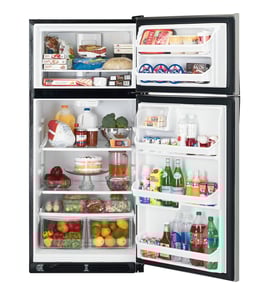
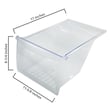



What is the most common problem with a Frigidaire refrigerator?
Cooling complaints are the most common issue we see with Frigidaire refrigerators like model LFHT1817LFA: the fridge or freezer is too warm, temperatures swing, or food spoils early. The fastest wins are checking airflow, cleaning, and confirming the controls are set correctly per the LFHT1817LFA owner's manual.
Most common causes to check first
- Dirty condenser coils causing poor heat release and weak cooling
- Freezer airflow problems (frost buildup, blocked vents, or a fan issue)
- Door not sealing (warm air leaks in, moisture and frost increase)
- Controls set too warm or accidentally turned to 0 (cooling disabled)
- Power supply issues (loose plug, tripped breaker, blown fuse)
Quick triage: symptoms and likely culprits
| What you notice | Most likely area | What to do first |
|---|---|---|
| Fresh food warm, freezer OK | Airflow from freezer to fridge | Clear vents, avoid overpacking, allow 24 hours after adjustments |
| Freezer warm too | Condenser coils, compressor run issues, defrost system | Clean coils, verify power, listen for fans |
| Frost on back wall of freezer | Defrost system or door leak | Check gasket seal, reduce door openings |
| Fridge “off” but light still works | Controls at 0 | Reset controls; unplug to fully remove power |
Why it matters
A top-mount refrigerator cools the fresh food section by moving cold air from the freezer. Anything that reduces airflow (frost, blocked vents, fan problems) or adds heat and moisture (door leaks) quickly shows up as “not cooling” and can lead to food loss.
When a part is commonly involved
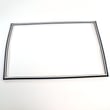
If you confirm a door seal is torn, warped, or not gripping the cabinet evenly, replacing the gasket is a common fix. For this model, examples include the Frigidaire refrigerator door gasket (white) 242193206 (fresh food door) or the Frigidaire refrigerator freezer door gasket (black) 242193209 (freezer door), depending on your door color and location.
Last updated: January 2026
What are the advantages of a top mount fridge?
A top-mount refrigerator like the Frigidaire LFHT1817LFA puts the freezer up high for easy access to frozen foods, typically gives you a wide, usable fresh-food section, and is a simple, proven layout that’s easy to live with and maintain. For setup details, use the LFHT1817LFA installation guide.
Key advantages you’ll notice day to day
- Frozen foods at comfortable reach: the freezer is on top, so you’re not bending down for everyday frozen items.
- Straightforward organization: wide shelves and door bins make it easy to see what you have.
- Simple installation and leveling: this style is usually quick to level and get doors sealing correctly.
- Good airflow when installed correctly: the guide calls out clearances (typically 3/8 inch at sides and top, 1 inch at the back) for proper circulation.
- Easy door-seal checks: the installation checklist emphasizes making sure the door seals completely on all sides.
Setup details that help you get the most from a top-mount
A top-mount performs best when it’s installed and leveled correctly.
- Level the cabinet so it’s side-to-side level and tilted slightly back (the guide notes about 1/4 inch (6 mm) front-to-back) so doors close freely.
- Keep the toe grille unblocked for proper air circulation.
- Allow the recommended installation clearances for airflow and easier service access.
- If you are not connecting a water line right away, keep the ice maker OFF.
| Feature | Top-mount refrigerator | Bottom-freezer refrigerator |
|---|---|---|
| Freezer access | Higher, easier reach | Lower, more bending |
| Fresh-food access | Mid-height shelves | Often more eye-level |
| Layout | Traditional, simple | Often more drawer-based |
Why it matters
A refrigerator’s layout affects comfort and food visibility every day. With a top-mount, you typically get quick freezer access and a roomy fresh-food compartment, and correct leveling and clearances help the doors seal and temperatures stay stable.
Last updated: January 2026
What is the upper part of a fridge called?
On the Frigidaire LFHT1817LFA top-mount refrigerator, the upper section is the freezer compartment. It’s the colder compartment designed to keep frozen foods solid and, on models equipped for it, support ice maker operation.
What the freezer compartment does
- Maintains freezing temperatures for long-term food storage
- Shares cooling with the fresh food section through airflow and vents
- Often houses the evaporator area and circulating fan system
- May include an ice maker (if installed and connected to water)
Quick terminology guide
| Common name | Where it is | What it’s for |
|---|---|---|
| Freezer compartment | Upper section (top-mount) | Freezing and frozen storage |
| Fresh food compartment | Lower section | Refrigerated (not frozen) storage |
| Toe grille | Bottom front | Airflow for proper operation |
Why it matters
Knowing the correct name helps when you’re ordering parts, reading diagrams, or troubleshooting cooling issues. For example, airflow between the freezer and refrigerator sections is important; blocking cold air vents with food can reduce cooling performance.
Helpful tips for this model
- Set temperatures and then wait 24 hours before making additional adjustments.
- Keep vents clear so air can circulate between compartments.
- If you do not have a water supply connected, turn the ice maker OFF to prevent valve noise.
- Make sure the doors seal completely; poor sealing can cause temperature problems.
For model-specific compartment and control details, use the LFHT1817LFA owner’s manual.
Last updated: January 2026
Why is my Frigidaire top mount freezer not freezing?
If your Frigidaire LFHT1817LFA top-mount freezer is not freezing, the most common causes are incorrect temperature control settings, blocked airflow, dirty condenser coils, or a failed evaporator fan. Start by confirming the controls are not set to “0” (cooling off) and allow 24 hours after any adjustment. See the LFHT1817LFA owner's manual for the exact control locations and operating guidance.
Quick checks we recommend first
- Make sure the refrigerator/freezer control is not set to “0” (this stops the compressor and cooling).
- Adjust temperatures gradually (small knob moves) and wait 24 hours for the temperature to stabilize.
- Confirm food packages are not blocking freezer air vents; airflow must circulate for proper cooling.
- Clean condenser coils (dust buildup reduces cooling efficiency).
- Check that the freezer door closes fully and the gasket seals all the way around.
- Listen for the evaporator fan in the freezer; if it is not running, cold air will not circulate.
What the controls should be doing
The manual notes that turning the refrigerator/freezer control changes temperatures in both compartments, and the auxiliary freezer control does not shut off power to the refrigerator.
| Control or condition | What it affects | What to look for |
|---|---|---|
| Refrigerator/freezer control | Cooling in fridge and freezer | Not set to “0”; adjust in small steps |
| Air vents and circulation | Temperature stability | Vents not blocked by food |
| Evaporator fan operation | Cold air movement | Fan sound and airflow in freezer |
| Condenser coils | Overall cooling efficiency | Coils free of dust and pet hair |
When a part is likely involved
If the freezer is warm and you do not hear or feel airflow from the freezer vents, the evaporator fan system is a prime suspect.
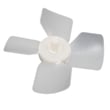
- If the fan blade is damaged or loose, replace the refrigerator evaporator fan blade 5308000010.
- If the fan motor is not running (and the blade is not jammed), replace the refrigerator evaporator motor 242077705.
- If you see heavy frost on the freezer back wall, a defrost problem is likely; the refrigerator defrost heater 242044008 is one common failure point.
Why it matters
A freezer that is not freezing usually means the refrigerator cannot move heat out efficiently or cannot circulate cold air. Fixing airflow and control settings first prevents unnecessary parts replacement and helps protect food safety.
Last updated: January 2026