 Installation guide
 Owner’s manual

What is the life expectancy of a Kenmore washer?
Most Kenmore washers, including model 11028432700, typically last 10 to 15 years with normal household use. Lifespan depends most on load size, installation conditions, and routine care; many issues that shorten life are preventable with basic maintenance.
What affects washer lifespan the most
- Overloading: loads should move freely during washing to reduce strain on the drive system.
- Unbalanced loads: repeated out-of-balance spinning increases wear on suspension and drivetrain.
- Cold-weather storage: operating or storing at or below 32°F can leave water inside and cause damage.
- Installation quality: a level, sturdy floor and correct drain setup reduce vibration and component stress.
- Wear items: parts like couplings, clutches, and pumps wear over time and are often repairable.
Quick care checklist (helps reach the 10 to 15 year range)
- Keep loads balanced; mix large and small items.
- Avoid packing the basket tight; leave room for agitation.
- Use the correct detergent amount; excess suds can contribute to poor draining and residue.
- If the washer is in a cold area, follow winterizing guidance in the 11028432700 owner's manual.
- Fix small problems early (leaks, slow drain, lid not sensing) before they stress the motor and gearcase.
Common repairs that can extend life
If the washer won’t drain, leaks, or stops mid-cycle, these parts are frequent fixes on many Kenmore top-load designs:
| Symptom | Often-related part | Example from this model |
|---|---|---|
| Won’t drain / drains slowly | Drain pump | Washer drain pump WP3363394 |
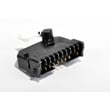
| Won’t spin / stops when lid opens | Lid switch assembly | Washer lid switch assembly WP8318084 |
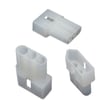
| Agitates poorly / slipping | Motor coupling or clutch | Coupling 285753A |
Why it matters
A washer that is level, not overloaded, and protected from freezing runs with less vibration and less drivetrain stress. That directly reduces wear on high-impact components like the motor coupling, clutch, and drain pump, helping you get the full expected service life.
Last updated: January 2026
How many cubic feet is a Kenmore Model 11028432700 washer?
The exact tub capacity (cubic feet) for Kenmore washer model 11028432700 is typically listed in the product specifications section of the documentation; use the 11028432700 owner's manual to confirm the precise cubic-foot rating for your specific washer.
How to find the capacity in the manual
Look for these common headings in the 11028432700 owner's manual:
- Product specifications or features
- Capacity (sometimes listed as “washer capacity” or “tub capacity”)
- Model information (near the product record section)
Typical capacity range for Kenmore 110 top-load washers (helpful benchmark)
If you are comparing washers or estimating load size, most Kenmore 110-series traditional top-load washers commonly fall into this range:
- Standard capacity: about 3.0 to 3.5 cu. ft.
- Larger traditional top-load: about 3.6 to 4.0 cu. ft.
- High-efficiency top-load designs: often 4.0 cu. ft. and up
Why capacity matters for everyday washing
Capacity affects how much laundry can move freely during agitation and spin. Overloading can reduce cleaning performance and increase wear on drive components.
Quick guide: what changes as capacity increases
| Capacity (cu. ft.) | What it usually means | Common result |
|---|---|---|
| 3.0 to 3.5 | Standard-size tub | Best for smaller to average loads |
| 3.6 to 4.0 | Larger traditional tub | Handles bulkier loads more easily |
| 4.0+ | High-capacity designs | Fewer loads, but load balance becomes more important |
Related care tip we recommend
To help protect the washer over time, replace the inlet hoses every 5 years (a common maintenance interval noted in Kenmore washer documentation).
Last updated: January 2026
Is Kenmore Elite high end?
Yes. Kenmore Elite is positioned as Kenmore’s higher-end line, typically offering upgraded performance, quieter operation, and more feature-rich controls than standard Kenmore models. For your Kenmore washer model 11028432700, the best way to confirm which “Elite-level” features apply is to compare the feature list in the 11028432700 owner's manual.
What “high end” usually means for Kenmore Elite
Kenmore Elite models commonly add premium features that improve cleaning results, convenience, and durability.
- Larger capacity or more flexible load handling
- More cycle and temperature options (including specialty cycles)
- Better vibration control and quieter operation
- More robust drive and wash action components
- Higher-end fit and finish (controls, lid, cabinet)
How to tell if your washer is an Elite model
We recommend checking the model label and the feature list for 11028432700.
| What to check | Where to look | What it tells you |
|---|---|---|
| Model number | Lid opening or cabinet label | Confirms the exact unit you own |
| Control panel branding | Console area | May say “Elite” on some versions |
| Feature list | Manual and cycle chart | Shows what your washer actually includes |
Why it matters
“Elite” is a product-line label, but the practical difference is the feature set and the parts design. When you’re troubleshooting agitation, spinning, or draining, using the correct model information helps match the right repair steps and replacement parts.
If you’re diagnosing wash performance issues on this style of Kenmore top-load washer, common wear items include the agitator dog 80040 and the coupling 285753A, depending on the symptom.
Last updated: January 2026
How to hard reset kenmore washer?
To hard reset the Kenmore washer model 11028432700, unplug it (or switch off the breaker) for 2 minutes, then restore power and start a normal cycle. This clears many temporary control glitches; if the washer still will not start, focus next on the lid switch and cycle control.
Hard reset steps (safe and effective)
- Press Pause/Cancel (if your model has it) to stop the cycle.
- Unplug the washer or turn OFF the circuit breaker.
- Wait 2 minutes (this lets the control fully power down).
- Restore power.
- Set the timer to a regular wash cycle and pull the Cycle Control knob to start.
- If the washer does not start, open and firmly close the lid, then try again.
If it still will not start after a reset
These checks match how this style of Kenmore top-load washer is designed to run (lid must be closed to start or restart).
- Lid not sensing closed: a failed lid switch can prevent agitation and spin; check the strike area and wiring, then test/replace the washer lid switch assembly WP8318084.
- Timer or cycle control issue: if the knob will not advance or the washer is stuck in one portion of the cycle, the timer can be the cause.
- Drain problem causing a “stuck” cycle: if the tub will not drain, the washer may not move into spin; inspect the pump and hoses for clogs.
- Motor coupling failure: if the motor runs but the washer will not agitate or spin, the coupling can be worn.
Quick symptom guide
| What you see | Most common next check | Why |
|---|---|---|
| Won’t start, no agitation/spin | Lid switch | Washer will not run with lid “open” signal |
| Hums, won’t drain | Drain pump, hoses | No drain often blocks spin |
| Motor runs, tub doesn’t move | Motor coupling | Power is not transferring to the drive system |
Why it matters
A hard reset is a fast first step because it can clear a temporary control state without replacing parts. If the problem returns immediately, the washer is usually reacting to a real input issue (like a lid switch not closing) rather than a one-time glitch.
For model-specific operating steps (including stopping and restarting by pushing in and pulling out the Cycle Control knob), use the 11028432700 owner's manual.
Last updated: January 2026







