 Owner’s manual
 View engine
What is the bar on the back of a tiller for?
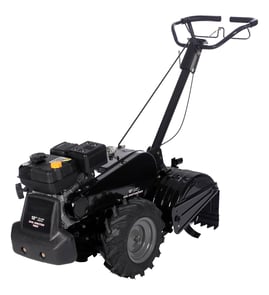
On the Craftsman 917296020 rear-tine tiller, the bar at the back is the depth stake (sometimes called a drag stake); it controls how deep the tines dig and helps keep the tiller from “running away” by adding resistance as you move forward.
What the depth stake does
- Sets tilling depth from shallow cultivating to deeper digging
- Stabilizes the tiller so it tracks straighter in the row
- Adds drag to slow forward travel so the tines can bite into soil
- Helps prevent excessive bouncing and tine “skipping”
- Protects the tines during transport when set to the transport position
How to adjust it (basic steps)
Follow the procedure shown in the 917296020 owner's manual. In general, you:
- Release the depth stake pin
- Slide the stake up for deeper tilling, or down for shallower tilling
- Reinsert the pin through the desired hole to lock the setting
Quick setting guide
| What you want | Depth stake position | What you will notice |
|---|---|---|
| Cultivating or loosening topsoil | Higher (shallower) | Easier handling, less digging |
| Breaking new ground | Lower (deeper) | More resistance, slower travel |
| Moving across the yard | Transport position (top hole) | Tines stay out of the ground |
Why it matters
Depth control affects performance and safety. If the stake is set too deep, the tiller can bog down and strain the drive system; if it is too shallow, the tines may skip over the ground instead of digging.
Last updated: January 2026
How deep can a rear tine tiller dig?
On the Craftsman 917296020 rear-tine tiller, we recommend a best tilling depth of about 4 to 6 inches for most garden prep; the depth stake controls how deep the tines dig. In ideal soil and with multiple passes, rear-tine tillers can work deeper, but going too deep too fast can overload the machine.
How to set digging depth on model 917296020
Use the depth stake to limit or increase tine penetration, then make gradual passes until you reach your target depth.
- Start shallow, then deepen a little each pass
- Keep throttle moderate until you are comfortable controlling the tiller
- In hard ground, lower the depth stake and let the tiller work; do not force it
- Avoid trying to till too deep at too fast a rate (this can cause bouncing and poor control)
- If the tines catch and the tiller surges forward, release the handlebars
For control locations and operating guidance, use the 917296020 owner's manual.
Typical depth ranges (what to expect)
Depth varies with soil moisture, tine condition, and how many passes you make.
| Task | Typical working depth | Notes |
|---|---|---|
| General garden tilling | 4 to 6 in. | Best depth for turning and loosening soil |
| Cultivating between rows | 1 to 3 in. | Shallow to uproot weeds without damaging roots |
| Breaking new ground | 2 to 6 in. per pass | Multiple passes are more effective than one deep pass |
When shallow digging points to a maintenance issue
If your tiller suddenly will not dig as deep as it used to, check wear items and drive components.
- Inspect tines for wear, bending, and dull edges
- Check tine spacing; excessive gap indicates worn tines
- Verify the drive control cable adjustment and belt condition
- Look for broken shear pins after a jam
- Confirm guards and shields are installed correctly
If you are troubleshooting tine engagement or drive performance, a worn belt is a common cause; the husqvarna rear-tine tiller drive belt 591372401 is one of the model-matched parts used on this unit.
Why it matters
Correct depth improves soil structure and reduces strain on the transmission, belt, and engine. Shallow, controlled passes also give better handling and more consistent seedbed prep.
Last updated: January 2026
Where is the model number on a Craftsman tiller?
On the Craftsman rear-tine tiller model 917296020, the model number is printed on the model ID label (also called the product identification tag). On many Craftsman tillers, that label is typically placed on the tine shield/guard area or on the frame near the engine and fuel tank; confirm the exact location using the 917296020 owner's manual.
Where to look first
Check these common label locations on Craftsman rear-tine tillers:
- On the tine shield or tine guard (near the tines, above the ground line)
- On the main frame rail, left or right side
- Near the engine mounting area
- Near the fuel tank area (on the frame, not on the tank itself)
- Near the handle support or control panel area
What the label looks like
The model ID label is usually a small sticker or metal tag. It often includes:
- Model number (example: 917296020)
- Serial number
- Basic product information (sometimes engine details)
Quick check table
| What you see on the label | What it means | What to do with it |
|---|---|---|
| Model number (917296020) | Identifies the tiller chassis | Use it to match diagrams and order parts |
| Serial number | Identifies your specific unit | Keep it for service records |
| Engine model info | Identifies the engine | Use it for engine-specific parts |
Why it matters
We use the model number to match the correct Craftsman 917296020 parts diagrams and ensure you get the right items for your tiller, such as a drive belt, clutch cable, or tine hardware.
If the label is missing or unreadable
Use these practical options:
- Clean the suspected label area with a damp rag and mild detergent; dirt and oil often hide the print
- Look for an outline where a sticker used to be on the tine guard or frame
- Compare your tiller’s assemblies to the parts diagrams (tines, wheels, and controls)
- If you are servicing the tine area, match hardware by application (for example, the spring retainer 532003146 is used in the tine assembly)
Last updated: January 2026
What are the common problems with lawn tillers?
Common problems on the Craftsman 917296020 rear-tine tiller include hard starting, poor tilling performance (bouncing or not digging), and driveline issues where the tines or wheels do not pull correctly. Most causes trace to fuel/ignition basics, soil conditions, or worn drive components; our 917296020 owner's manual covers safe checks and operating limits.
Most common symptoms and likely causes
- Engine will not start or runs rough: stale fuel, clogged fuel path, dirty/worn spark plug, choke/throttle set incorrectly
- Tines will not dig or the tiller bounces: soil too dry and hard, depth stake set too shallow, operator leaning on the handle (reduces traction)
- Tines jam and the machine stops suddenly: obstruction in hard ground; shear pins may break to protect the transmission
- Tines or wheels do not drive well: worn or loose drive belt, stretched/misadjusted clutch cable, driveline wear
- Poor control or unsafe handling: trying to till too deep too fast, operating at high speed on slippery surfaces
Quick checks we recommend (safe, fast, and effective)
Before any inspection or adjustment:
- Shut the engine off and wait for all moving parts to stop
- Disconnect the spark plug wire and keep it away from the plug
- Work with guards and shields in place
Then check these items in order:
- Fuel freshness and fuel shutoff (if equipped)
- Spark plug condition and wire connection
- Depth stake setting and tilling depth (most gardens do best around 4 to 6 inches)
- Soil moisture (moisten hard soil; avoid tilling when soil is extremely wet and clumps)
- Drive engagement feel at the handle (cable tension and belt grip)
Parts that commonly wear on this model
If the engine runs but the tiller will not pull or the tines will not stay engaged, these parts are frequent fixes:
| Symptom | Common wear item | Example part for 917296020 |
|---|---|---|
| Tines/wheels slip under load | Drive belt glazed or stretched | Husqvarna rear-tine tiller drive belt 591372401 |
| Engagement feels loose or inconsistent | Cable stretched or binding | Tiller clutch cable 532110675 |
| Noisy/jerky driveline | Chain wear or damage | Tiller chain, #25-50 532102134 |
Why it matters
A tiller that is overloaded (too deep, too fast) or used in hard ground can become difficult to control; the tines can catch and propel the machine forward. Keeping the driveline tight and using the right depth and soil conditions improves safety, protects the transmission (including shear pins), and delivers better soil breakup.
Last updated: January 2026